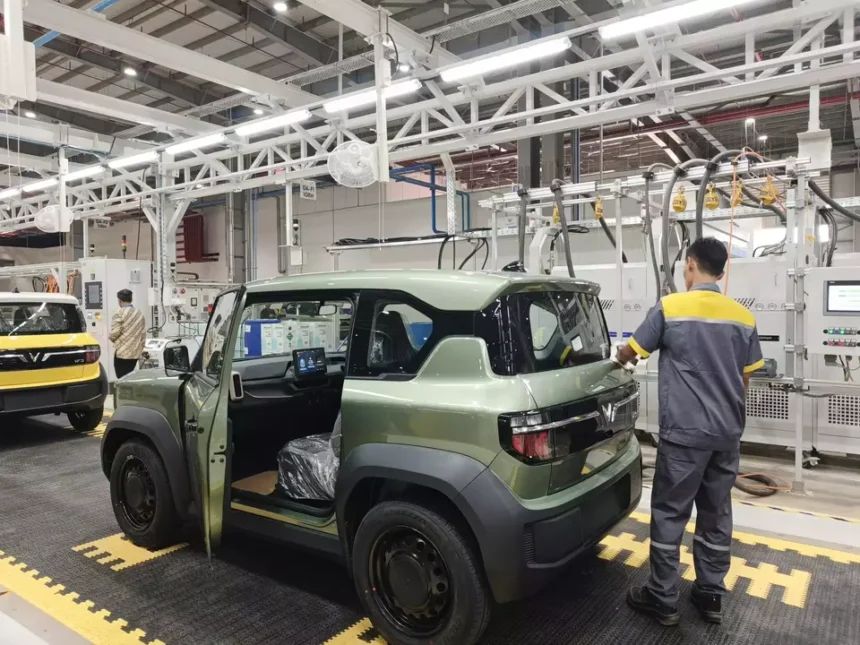
Unprecedented Growth In Regional EV Adoption Rates
Indonesia has achieved a historic milestone in its clean energy journey as the national EV adoption rate officially surpassed that of the United States for the first time this year. According to the latest research conducted by the London-based think tank Ember Energy, electric vehicles now represent more than fifteen percent of all new car sales across the country.
This remarkable surge highlights the accelerating pace of the transition toward sustainable mobility within Southeast Asia, positioning the archipelago as a surprise leader in the global electrification race. The primary catalyst for this shift has been a series of strategic government incentives, specifically the substantial value-added tax reductions for vehicles that meet strict local content requirements.
Furthermore, the administration has successfully attracted major manufacturers by offering import permits to those companies committing to domestic production facilities within the next few years. This policy framework has transformed the nation into a primary destination for high-quality exports, particularly from China, where the growth of shipments to the Indonesian market is now ranked as the second fastest globally.
The broader ASEAN region is simultaneously emerging as a powerhouse for green transport, with penetration rates in neighboring Singapore and Vietnam already exceeding thirty percent. This rapid movement from a low historical base to a position of international leadership proves that emerging economies can leapfrog traditional internal combustion technologies when supported by robust policy.
As the global landscape shifts, Indonesia remains at the forefront of this industrial revolution, signaling a permanent change in how the region approaches transportation and environmental responsibility. The government continues to refine its roadmap to ensure that the infrastructure keeps pace with the sheer volume of new electric cars entering the city streets and rural highways alike.
Market Dynamics And Regional Leadership In Southeast Asia
The transformation of the automotive landscape is not limited to a single nation but reflects a broader systemic shift across the entire Southeast Asian corridor. Data reveals that while the Indonesian market experienced a general contraction of eleven percent in the third quarter of 2025, the electric vehicle segment moved in the opposite direction by growing nearly fifty percent.
This counter-cyclical performance underscores the resilience of the green sector and the strong underlying appetite for modern technology among local consumers. In Vietnam, the change has been even more dramatic, moving from less than one percent market share just a few years ago to become a regional frontrunner alongside Singapore.
These statistics indicate that EV adoption is effectively outpacing penetration levels in mature markets such as Japan, the United Kingdom, and the European Union. The surge in availability of diverse models has allowed the region to bypass the slow adoption cycles seen in other parts of the world where legacy automotive interests are more entrenched.
Leading experts suggest that the accessibility of charging infrastructure and the decreasing cost of batteries are making these vehicles a practical choice for the growing middle class. Despite the Philippines leading the region in terms of potential buyers, Indonesia currently holds the title for the highest owner satisfaction rate, with nearly all current users reporting a positive experience.
This high level of satisfaction is a critical indicator of long-term market stability, as early adopters become ambassadors for the technology. The regional synchronization of supply chains and manufacturing hubs is further solidifying the position of these nations as essential players in the global electric value chain.
Consumer Satisfaction And The Future Of Sustainable Mobility
While the current trajectory of the market is overwhelmingly positive, there are nuanced challenges that the industry must address to maintain the current momentum of EV adoption in the long term. A significant majority of owners in the region cite lower operating costs and improved battery life as the primary reasons for their continued loyalty to electric platforms.
However, a segment of the Indonesian user base has expressed concerns regarding higher-than-expected maintenance expenses and the overall driving range compared to traditional engines. These sentiments highlight the need for continued investment in specialized service centers and a more comprehensive network of fast-charging stations across the provincial highways.
Addressing these secondary costs and technical anxieties will be vital for converting the large pool of potential buyers into permanent owners. Beyond individual ownership, the transition is also being felt in the logistics and public transport sectors, where electrification offers a path toward reduced urban pollution and lower fuel imports.
The ongoing legislative efforts to pass climate change and renewable energy bills will provide the necessary legal backbone to support this infrastructure expansion. As the regional gross domestic product continues to rise, the demand for high-tech, eco-friendly transportation will only intensify, creating a self-sustaining cycle of innovation and investment.
The successful integration of these vehicles into the national grid will also require a parallel increase in renewable energy generation to ensure that the environmental benefits are fully realized. Ultimately, the progress seen in 2025 serves as a compelling proof of concept for the entire developing world, showing that a clean energy transition is not only possible but economically advantageous.
Analytical Commentary On Capital Flows And Supply Chain Integration
From a professional financial and analytical perspective, the recent data regarding the Indonesian automotive sector represents a fundamental rerating of the regional energy and transport complex. The fact that electric vehicle penetration has decoupled from the broader automotive market contraction is a strong indicator of a structural shift rather than a temporary trend.
We observe that the high satisfaction rates among current owners act as a powerful de-risking mechanism for institutional investors and lenders who are considering large-scale infrastructure projects. Furthermore, the competitive positioning of the ASEAN region against established markets like the US and EU suggests that global capital will increasingly flow toward Southeast Asian manufacturing hubs.
The strategic importance of the local nickel supply chain provides an additional layer of vertical integration that few other regions can match, offering a significant competitive advantage in battery production costs. Investors should pay close attention to the potential compression of risk premiums as the regulatory environment becomes more transparent and the charging network reaches critical mass.
However, the reported concerns regarding maintenance costs suggest a current gap in the secondary service market, which presents a high-value opportunity for specialized technical firms. We anticipate that as the regional electricity grid becomes greener, the carbon credits associated with these fleets will become a significant source of non-dilutive revenue for corporate operators.
The long-term outlook remains bullish, with the region expected to set the global standard for rapid, policy-led energy transitions in the emerging world. As manufacturing capacity ramps up, Indonesia is poised to transition from a pure consumer market into a dominant regional exporter, fundamentally altering the trade dynamics of the automotive industry.