Indonesia Maintains Strong Stance Against Israel Despite Trade Growth
Indonesia delivered another powerful condemnation of Israel’s recent military aggression against Doha during an emergency high-level summit in the Qatari capital, yet this sharp political criticism unfolded even as data revealed that Indonesia-Israel trade had increased by almost 19 percent this year as of the end of July.
The emergency summit brought together foreign dignitaries from across the Arab and Muslim world, specifically convening about a week after the Israeli military launched airstrikes on Doha, an attack reportedly intended to target Hamas leadership operating from Qatar.
Discussions among members of the Arab League and the Organization of Islamic Cooperation (OIC) were largely dominated by the implications of this airstrike and the broader push for Palestinian statehood.
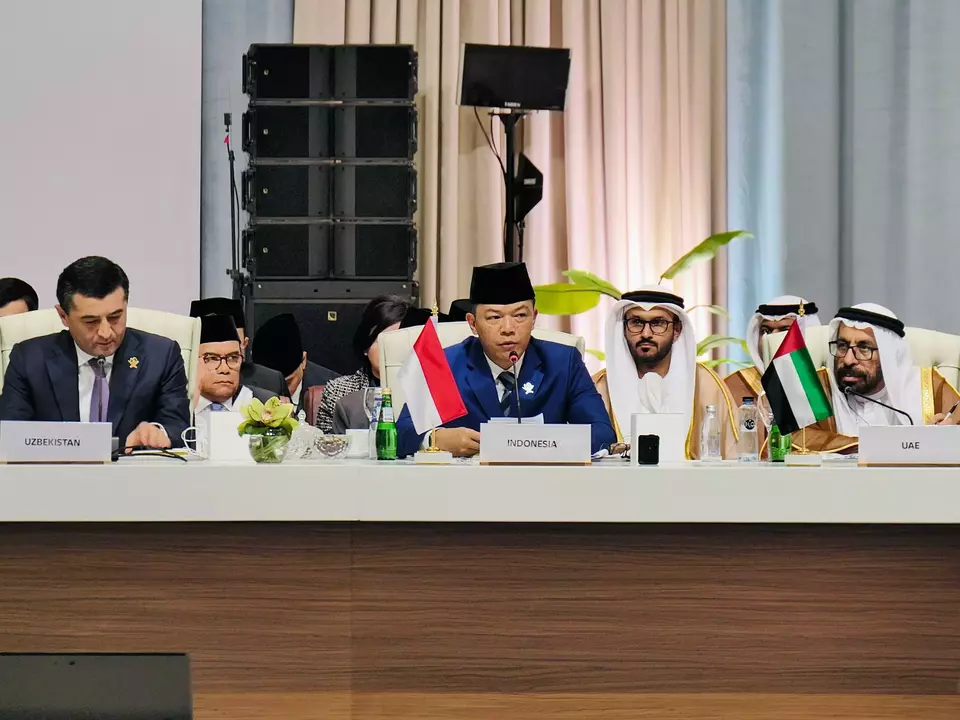
Indonesia, as an active OIC member, sent its chief diplomat, Sugiono, to participate in the crucial talks.
Sugiono addressed the session, extending apologies for President Prabowo Subianto’s absence but noted that the Indonesian leader had met with Qatari Emir Tamim bin Hamad Al Thani just a few days prior.
According to a speech transcript provided by his ministry, Sugiono emphasized that “[Prabowo’s] visit was a clear message of Indonesia’s unwavering support for Qatar, following the horrific and cowardly attack on Doha by Israel,” underscoring Jakarta’s solidarity with the host nation.
Indonesia’s official position stated that the airstrike was not merely an attack on Qatar’s national sovereignty but also posed a “grave threat” to regional and global peace and could jeopardize ongoing peace talks, a critical context given Qatar’s role as a primary mediator between Israel and Hamas militants.
Diplomatic Pressure Mounts for UN Action and Palestinian Statehood
During the emergency OIC and Arab League gathering, Indonesia’s diplomatic representative leveraged the platform to strongly advocate for the immediate realization of Palestinian independence and urged the United Nations Security Council to take definitive, urgent action against the continued aggressive policies of Israel.
Sugiono used his address to reiterate Indonesia’s long-standing commitment to the Palestinian cause, going beyond the immediate issue of the attack on Qatar.
He explicitly called upon the UN Security Council to take “firm and urgent measures” to address the ongoing conflict and its root causes.
The chief diplomat emphasized Indonesia’s non-negotiable position on the conflict’s ultimate resolution, stating, “For Indonesia, the path to lasting peace remains unchanged: the realization of a sovereign and independent State of Palestine, with East Jerusalem as its capital, based on relevant UN resolutions.”
This diplomatic pressure underscores Jakarta’s consistent support for the two-state solution as the only viable path to peace.
The summit concluded with the adoption of a 25-point communique, a strong multilateral declaration that “firmly” condemned any act of aggression against OIC and Arab League members.
The document specifically included a call for all states to take concrete steps to prevent Israel from continuing its actions against the Palestinians.
Crucially, this comprehensive call to action included a demand for the suspension of all arms supplies to Israel and a thorough review of any existing economic relations with the country, putting significant global pressure on governments that maintain ties with Israel.
Contradiction in Foreign Policy and Economic Realities
A striking contradiction emerged from the summit as official data highlighted the robust, growing economic relationship between Indonesia and Israel, despite Jakarta’s firm refusal to establish formal diplomatic relations and its consistent political condemnation of Israel’s actions.
Indonesia has never established formal diplomatic ties with Israel, maintaining a political distance that reflects its staunch support for the Palestinian cause.
However, Trade Ministry data released concurrently with the summit disclosures painted a different picture of the underlying economic reality.
The ministry reported that the total value of Indonesia-Israel trade reached $165.7 million between January and July 2025.
This figure represents a substantial increase of approximately 18.77 percent from the $139.5 million recorded during the same seven-month period in the preceding year, demonstrating a growing commercial engagement.
Furthermore, annual trade between the two nations also registered a notable jump, rising from $187.7 million in 2023 to $237.9 million in 2024.
This upward trajectory in trade volume highlights the complexities of foreign policy, where political and ideological stances—such as Indonesia’s strong anti-Israel position—are often navigated alongside practical, market-driven economic interests.
The continued business between the two sides, despite the lack of diplomatic recognition and the renewed political criticism directed at Israel over its recent aggressive actions in the Middle East, underscores a real-world duality in Indonesia’s engagement with the global economy.