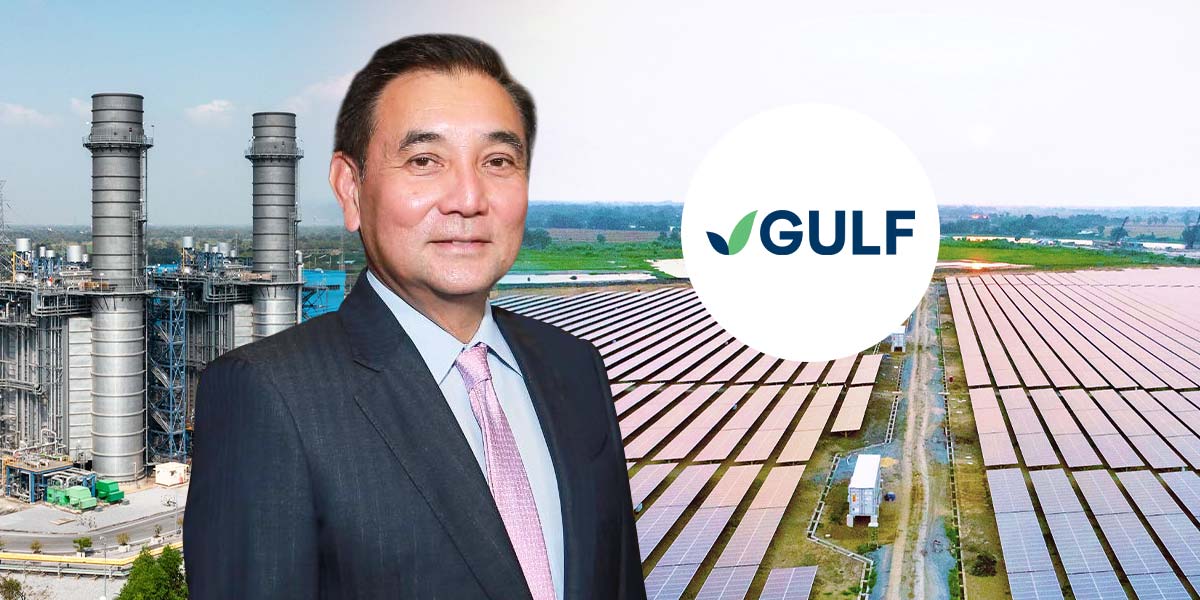
Significant Block Trade Recorded in GULF Shares with JPMorgan as Counterparty
On September 5, 2025, a significant block trade was formally recorded in the shares of Gulf Development Public Company Limited (SET: GULF), involving a single transaction of 62 million shares, with JPMorgan Structured Products B.V. identified as the transaction’s counterparty.
The trade was executed with a total valuation of 2.914 billion baht, at an average price of 47 baht per share, which closely matched the market price at the time of the sale.
According to the latest disclosure made to the Securities and Exchange Commission (SEC), Sarath Ratanavadi, who serves as GULF’s CEO and a board director, officially reported the divestment.
The transaction involved the sale of 62 million ordinary shares, a quantity that represents approximately 1.40% of the total voting rights within the company.
The shares were sold at the average price of 47 baht each, culminating in a total transaction value of approximately 2.914 billion baht.
The involvement of JPMorgan Structured Products B.V. as the counterparty suggests the transaction was likely structured to provide liquidity or facilitate a specific financial arrangement, such as a derivative trade or a structured financing deal, rather than a simple, outright open market sale to a diverse set of investors.
Following the execution of this substantial block trade, Mr. Sarath’s direct stake in GULF has been adjusted, decreasing from a previous holding of 4,424,078,293 shares down to a current holding of 4,362,078,293 shares, reflecting the impact of the 62 million share sale.
Market Activity and Investor Focus on GULF Stock
The block trade involving GULF and JPMorgan occurred on a day marked by significant overall market activity in the stock, underscoring the high investor interest and volume being traded in the energy sector giant.
On the day the block trade was executed, GULF shares closed at 47.50 baht, demonstrating resilience in the face of a large-scale divestment by the CEO.
Throughout the trading session, the stock experienced notable volatility, reaching an intraday peak of 48.25 baht and hitting a low of 47 baht, the exact price at which the block trade was conducted.
The total trading value for GULF shares on September 5, 2025, was substantial, reaching 4.99 billion baht.
This high trading value, which far exceeded the value of the block trade itself, suggests that there was robust activity among public investors and institutional funds beyond the private transaction involving JPMorgan.
Such large block trades are closely monitored by the market, as they can sometimes signal a change in the confidence or financial strategy of a company’s top executives or major shareholders.
However, the market’s ability to absorb the 1.40% stake at a price matching the low of the day, yet still closing higher, indicates strong underlying demand and a continued positive view on GULF’s long-term prospects, particularly given its prominent position in Thailand’s power and energy infrastructure.
The transparency of the disclosure to the SEC ensures that investors are kept fully informed of major changes in insider holdings and key corporate transactions, maintaining market integrity.
Implications of Structured Product Involvement
The identity of the counterparty, JPMorgan Structured Products B.V., carries specific implications, suggesting the transaction may not be a simple cash sale but a component of a more sophisticated financial engineering strategy.
Structured products divisions, like the one involved from JPMorgan, often engage in these types of block transactions to hedge exposure related to warrants, convertible bonds, collar transactions, or other complex financing instruments that have been previously issued to the shareholder or the company.
It is highly probable that the 62 million shares sold by Mr. Sarath were immediately utilized by JPMorgan to hedge a previously agreed-upon structured deal, such as a prepaid forward sale, a variable prepaid forward (VPF), or a total return swap, rather than being placed directly into the open market for immediate liquidation.
Such instruments allow major shareholders like CEOs to monetize a portion of their holdings for liquidity without immediately relinquishing full ownership control or causing significant market disruption.
The key benefit for the seller is often the ability to maintain voting rights or future exposure to potential stock appreciation while receiving cash upfront.
The fact that the transaction was executed at the market price, without a deep discount, further supports the view that it was a carefully negotiated, pre-arranged structured deal designed to minimize negative market perception and efficiently manage the financial needs of the major shareholder.
The transaction therefore highlights the increasing role that complex financial institutions and structured products play in managing the wealth and liquidity requirements of Asia’s corporate leaders.