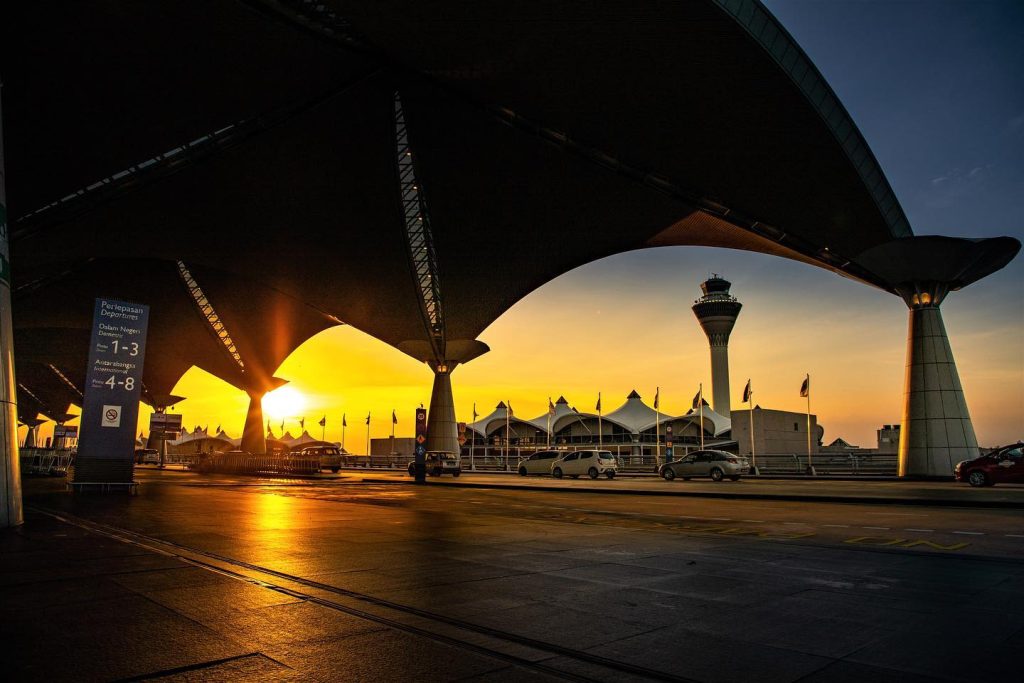
KLIA Poised to Become Premier Regional Air Cargo Hub
Malaysia’s transport strategy is taking a major leap forward as the government strengthens Kuala Lumpur International Airport’s (KLIA) position as the region’s premier air cargo hub, capitalizing on growing e-commerce demand and ASEAN’s fast-expanding economy.
Transport Minister Anthony Loke Siew Fook affirmed that this strategic move builds decisively on KLIA’s existing logistical strengths and its prime geographical location, with comprehensive plans already underway to significantly enhance cargo infrastructure and logistics connectivity across the entire Southeast Asian region.
He emphasized that cargo operations are an increasingly vital and indispensable component of modern airport functionality, a role particularly well-supported by KLIA’s substantial land availability and extensive regional connectivity. The Minister stressed that the airport should not narrow its focus solely to passenger traffic but must also prioritize its significant cargo operations, a sector where the airport already possesses a competitive operational base. This commitment to cargo is not merely supplementary; it is a fundamental shift in strategy aimed at maximizing the airport’s potential.
The Transport Ministry is actively working to solidify KLIA’s enhanced position through a combination of strategic international partnerships and robust industrial ecosystem support. A key recent development is the formalization of cooperation with China under the influential Air Silk Road initiative, which directly links KLIA with the Henan Airport Group in Zhengzhou. Minister Loke explained that this crucial government-to-government collaboration will allow Malaysia to effectively tap into China’s vast logistics network while simultaneously and strategically positioning KLIA as the central cargo hub for the entire ASEAN region, maximizing its role as an international gateway.
Leveraging Connectivity and E-Commerce Growth
KLIA’s extensive and highly diverse route network has been identified as a core, non-replicable factor driving this new strategy.
Minister Loke proudly noted that the airport was recently recognized as the most connected airport in Asia, and it ranks among the world’s top networks for low-cost airlines, serving more than 100 destinations. Crucially, this network includes a large number of secondary and tertiary cities across ASEAN, many of which are not currently served by other major international airports in the region, providing KLIA with a distinct competitive edge.
The Minister emphasized the imperative to fully capitalize on this advantage, especially given the explosive growth of the e-commerce sector and the demographic reality of ASEAN’s young population, which totals almost 700 million consumers. Many parts of the region still suffer from insufficient logistical connections, and KLIA’s pre-existing connectivity to most of these second-tier cities positions it perfectly to service the burgeoning demand for fast, reliable air freight. The enhanced focus on cargo operations is a direct response to the global demand for e-commerce logistics, where speed and direct routing are paramount to competitive success.
The strategic repositioning is a comprehensive initiative that also includes accelerating industrial and aerospace development in Selangor to create a powerful, integrated cargo ecosystem around the airport. This integration ensures that the physical movement of goods is supported by advanced manufacturing and maintenance capabilities, strengthening the entire supply chain. This holistic approach ensures that the title of regional hub is supported by physical assets and policy backing, cementing KLIA’s long-term role in international trade.
Anchoring the Ecosystem in Selangor Aeropark
The industrial component of the strategy is strongly anchored in the development of the Selangor Aeropark, which has been earmarked as a core component of the master plan due to its ideal proximity to KLIA’s cargo terminals and its suitability for large-scale logistics expansion.
Minister Loke confirmed that the Aeropark’s strategic location and the ready availability of infrastructure have already attracted significant interest from major international investors. GE Aerospace has been confirmed as the launch tenant, committing to occupy 100 acres within the development to establish advanced engine test and Maintenance, Repair, and Overhaul (MRO) facilities. This commitment by a global aerospace leader validates the Aeropark’s strategic importance and its future role in the regional aerospace supply chain.
Although a specific overall investment figure is difficult to quantify at the moment, Loke noted that the Aeropark has created “significant interest among major investors,” signaling strong confidence in Malaysia’s transport and industrial vision.
The development is expected to drive substantial growth across Malaysia’s aerospace, high-tech manufacturing, and supply chain sectors, creating high-value jobs and economic spillovers.
The Minister underscored Selangor’s pivotal role in the country’s overall transport strategy, attributing it to the state’s unique geographical advantage and its existing industrial potential.
He highlighted that the majority of Malaysia’s critical public transport infrastructure, including all major airports, ports, and the extensive MRT and LRT lines, are either directly located within or seamlessly connected to Selangor. This inherent advantage ensures that Selangor benefits immensely from these major projects, particularly by providing the necessary industrial base and logistics support required for sustained investment and industrial growth, making it the logistical powerhouse backing the KLIA cargo hub ambition.