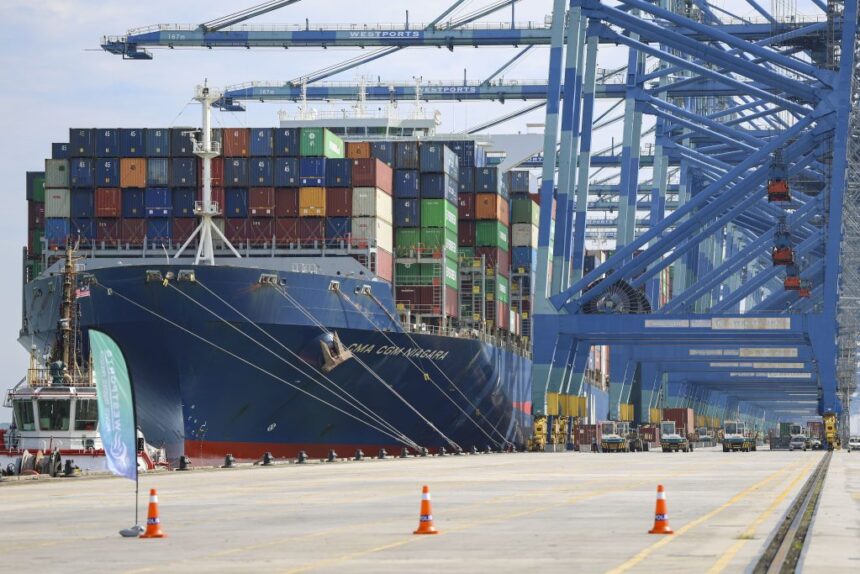
Strategic Hedging Drives Record Malaysian Exports Amid Global Trade Volatility
Malaysia’s exceptional economic performance in October, achieving its highest-ever monthly value for exports at RM148.32 billion, representing a 15.7 percent year-on-year increase, directly validates its proactive geoeconomic hedge strategy. The success of this approach, according to IPPFA Sdn Bhd director and country economist Mohd Sedek Jantan, lies in aggressively pursuing diversified product offerings and wide multi-market penetration, which collectively function as an effective buffer against severe, concentrated global economic shocks.
The sustained strength was broad-based, with significant gains recorded across critical sectors including electrical and electronics (E&E) products, optical and scientific equipment, and palm-oil-based goods. This heterogeneity in the nation’s product mix reflects a conscious structural shift toward greater sectoral resilience, a strategy highly consistent with modern frameworks designed to counteract trade-policy uncertainty.
This successful diversification effort has demonstrably minimized Malaysia’s reliance on any single market or product category, allowing it to navigate a volatile global trade environment better than less agile competitors. The impressive exports surge, which contributed to the nation’s 66th consecutive month of trade surplus, is further bolstered by an observable rise in capital goods imports, a crucial leading indicator suggesting that domestic producers are continually upgrading their manufacturing capacity and deepening their integration into the rapidly reconfiguring global value chains, preparing for future expansion.
Tariff Asymmetry Fuels Supply Chain Relocation and Trade Diversion
The simultaneous expansion of Malaysian exports across major trading blocs, including the Association of Southeast Asian Nations (ASEAN), China, the European Union (EU), and notably achieving record highs in shipments to Taiwan and Hong Kong, provides compelling evidence that Malaysia is directly benefiting from global tariff-driven trade diversion. This economic phenomenon is a direct consequence of persistent geopolitical tensions, specifically the sharp and asymmetric rise in U.S. effective tariff rates, which climbed from 2.2 percent in January to 10.55 percent by August 2025, with China-specific rates soaring to 39.2 percent.
This drastic increase in the cost of trade between the world’s two largest economies has forced multinational corporations to fundamentally recalibrate their global supply chain networks, directing flows of Investment and production capacity toward neutral and diversified production hubs such as Malaysia. The continued existence of global tariff asymmetry, particularly with U.S. effective tariff rates reaching between 30 percent and 40 percent for specific categories like steel, aluminum, and China-origin goods, serves as a powerful, ongoing incentive for firms to shift their manufacturing base.
This strategic movement of production away from high-tariff zones positions Malaysia strongly to capture a sustained influx of foreign direct Investment and production activity, ensuring that its overall exports trajectory remains constructive even if temporary month-on-month moderation occurs due to standard year-end production and holiday cycles, making this geopolitical shift a key economic tailwind for Malaysia’s trade performance.
Constructive Trajectory Supported by Diversified Demand and New Trade Corridors
Mohd Sedek Jantan forecasts a constructive near-term trajectory for Malaysia’s exports, emphasizing that its evolving multi-sector export architecture is inherently stable due to a broad and diversified demand base. Key export demand remains robust across multiple geographic regions, with significant contributions coming from ASEAN (20.1 percent of total demand), the EU (23.8 percent), and Taiwan (38.7 percent), alongside steady growth from China (7.5 percent).
This wide dispersion of market exposure significantly reinforces the sector’s stability against potential policy uncertainty or slowdowns in any single major trading partner. The commitment to sustaining this strong exports momentum into early 2026 is further bolstered by key domestic and international initiatives.
The increasing trend of capital goods imports signals continuous capacity expansion within Malaysian manufacturing facilities, positioning the nation to handle greater production volumes driven by trade diversion. Furthermore, the proactive establishment of new trade corridors, such as the Malaysia-United Arab Emirates (UAE) Comprehensive Economic Partnership Agreement (CEPA), which became effective on October 1, 2025, is strategically enhancing Malaysia’s capacity to access and penetrate new markets.
The CEPA, in particular, leverages the UAE as a strategic gateway into the rapidly growing West Asia region and beyond, creating new avenues for Malaysian goods and services. Coupled with ongoing production upgrading, robust demand across multiple markets, and the persistent geopolitical drive for supply chain diversification, these factors collectively ensure that Malaysia is well-equipped to maintain its accelerated exports growth performance for the foreseeable future.
Regional Implications: ASEAN Competition and the Hedging Cost
Malaysia’s successful geoeconomic hedging strategy, highlighted by its record exports in October, carries significant competitive implications for the broader ASEAN region. While Malaysia is benefiting from trade diversion, this dynamic intensifies its rivalry with neighbors like Vietnam, who are also aggressively positioning themselves as alternative manufacturing and trade hubs to circumvent US-China tariffs.
The qualitative difference lies in Malaysia’s established strength in high-value electrical and electronics (E&E) exports, a sector that is deeply embedded in global supply chain resilience strategies, giving it a potential advantage over competitors whose exports are concentrated in lower-value manufacturing. The sustained 66-month trade surplus, combined with strong capital goods imports, indicates not just resilience but active, sustained domestic Investment in manufacturing capacity upgrade (production upgrading), which represents a long-term threat to competitors who are struggling to finance or attract similar deep-technology Investment.
The financial cost of this hedging strategy is also critical. While trade diversion boosts top-line exports revenue, it often requires the nation to make subtle geopolitical concessions or bilateral trade adjustments, as seen by the simultaneous signing of the Malaysia-UAE CEPA to secure new markets, potentially introducing complex diplomatic balancing acts between major powers.
This requires the Malaysian government to invest heavily in diplomatic and Business resources to manage these shifting trade dynamics effectively, ensuring that the economic gains from increasing exports are not negated by unexpected costs or political repercussions from its strategic ambiguity between competing global powers.
Local Market Analysis: Inflationary Pressures and Capital Market Liquidity
The robust, record-breaking exports performance, particularly the double-digit growth in October, has a complex and dual-sided impact on Malaysia’s local market, affecting both inflation and capital market liquidity. The immediate impact on the Economy is a substantial strengthening of the current account surplus and a corresponding upward pressure on the ringgit (MYR), making the local currency more attractive for foreign Investment flows.
However, the surge in capital goods imports, while positive for future production capacity, creates short-term demand-pull inflationary pressure on domestic prices for non-tradable goods and services, potentially complicating the central bank’s (Bank Negara Malaysia) monetary policy trajectory. The robust performance, particularly in the E&E sector, disproportionately benefits large-cap companies listed on Bursa Malaysia that are directly involved in the global supply chain, such as technology and logistics firms.
This concentration of gains can create a liquidity imbalance, with capital flowing heavily into a few high-performing Business segments, leaving small and medium-sized enterprises (SMEs) outside the export ecosystem struggling for Finance and attention. Furthermore, the sustained period of large trade surpluses provides the Finance Ministry with greater fiscal space to manage its national debt burden and allows for strategic, counter-cyclical Investment in infrastructure, which is a key necessity for maintaining the long-term competitiveness of Malaysia’s exports base.
In summary, while the record exports are a net positive for the macroeconomy, local Investment decisions must filter the gains carefully, recognizing the inherent risk of sector concentration and the potential for imported inflation to temper real wage growth.