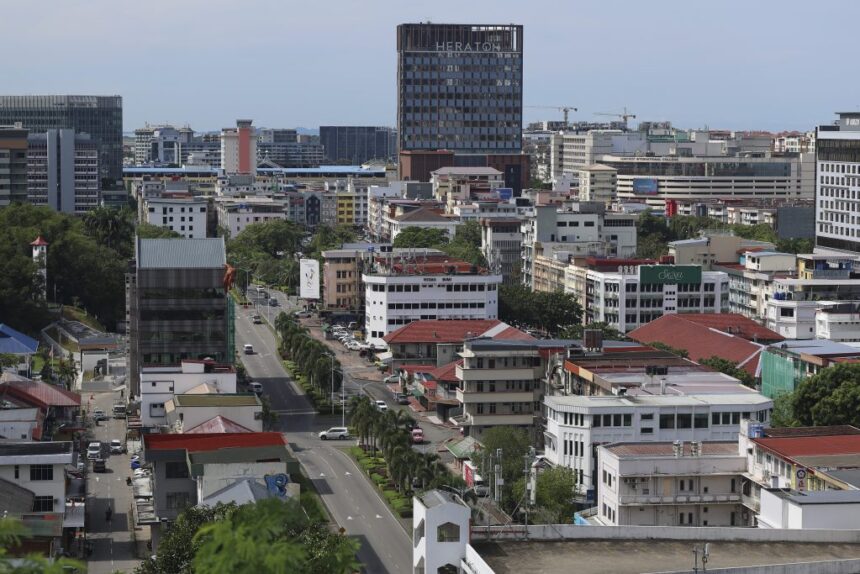
Strategic Regional Partnerships For MINDET And Sabah Investment
The Sabah Ministry of Industrial Development, Entrepreneurship and Transport, widely known as MINDET, is actively working to enhance its collaborative efforts to promote Sabah as a premier competitive investment destination. Sabah Deputy Chief Minister III Ewon Benedick recently highlighted that these strategic partnerships between the state government and various regional organizations, such as the Junior Chamber International, play a vital role in driving economic growth, trade, and overall business development in the region. By leveraging the expertise of non-governmental organizations and international networks, the ministry aims to create a more robust and interconnected economic ecosystem that benefits local entrepreneurs and global investors alike.
The state government remains deeply committed to supporting the next generation of business leaders and young entrepreneurs through a comprehensive suite of initiatives designed to lower the barriers to entry for new enterprises. These initiatives include providing better access to specialized financing, tailored entrepreneurship training, and extensive capacity building programmes that are essential for long term success. Furthermore, the ministry is facilitating strategic networking opportunities with major industry players and seasoned investors to ensure that local talent has the necessary exposure to global market trends.
As the 2026 fiscal year progresses, the focus of the ministry will continue to be on creating a stable and attractive environment for foreign direct investment while nurturing the homegrown industries that form the backbone of the Sabahan economy. Through these concerted efforts, the administration is building a resilient foundation for sustainable development that will serve the community for decades to come. The integration of regional bodies into the state’s industrial roadmap signifies a move toward more inclusive and transparent governance, which is a key requirement for attracting institutional capital from more mature markets in East Asia and beyond.
Expanding Market Access And Enhancing Logistics Infrastructure
A critical component of the current economic strategy involves expanding market access for local businesses and assisting ambitious entrepreneurs in their efforts to penetrate competitive international markets. The leadership at MINDET understands that for Sabah to truly thrive as a regional hub, it must strengthen its internal logistics and supply chain systems to support consistent and sustainable business growth across all sectors. This involves not only physical infrastructure improvements but also the implementation of digital solutions that streamline the movement of goods and services within and beyond the state borders.
By intensifying these efforts, the ministry aims to position the region as a key destination for high value investment, modern industry, and dynamic business operations. During the recent Association of JCI Senators in The South East Asian Nations board meeting, it was emphasized that the ministry will continue to provide the necessary tools for local companies to scale their operations globally. This includes providing market intelligence, export readiness training, and participation in international trade fairs that connect Sabahan products with buyers in the ASEAN region and beyond.
As a central pillar of the state’s growth agenda, the ministry is also working closely with transport authorities to ensure that the maritime and air connectivity of the region is optimized for trade. Such a comprehensive approach to economic development ensures that local businesses are not just participating in the economy but are leading the way in innovation and efficiency. By reducing transit times and lowering operational costs, the ministry is making the state a more attractive base for manufacturing and assembly operations that require rapid access to regional consumers.
Fostering Leadership And Nurturing Competitive Entrepreneurship
The synergy between government initiatives and the active participation of non-governmental organizations is essential for nurturing capable leaders and highly competitive entrepreneurs who can navigate the complexities of the modern marketplace. Close collaboration in these areas ultimately contributes to the overall economic development and the well being of the entire community by creating high quality jobs and fostering social mobility. Through the ongoing support of MINDET, the state is creating a culture of excellence where young leaders are encouraged to take risks and innovate in fields ranging from green technology to digital services.
This holistic approach to human capital development ensures that the workforce is prepared for the challenges of the future and can compete on a global stage. The ministry is also focusing on inclusive growth, ensuring that entrepreneurs from all backgrounds have equal access to the resources and networks they need to succeed. By prioritizing capacity building and strategic networking, the government is effectively de-risking the entrepreneurial journey for many individuals, leading to a more vibrant and diverse business landscape.
As the regional economy becomes more integrated, the role of the ministry in facilitating these cross border relationships will only become more significant. The long term vision is to transform the region into a center of excellence for entrepreneurship and industrial development, where the collaboration between public and private sectors serves as a global benchmark. This dedicated focus on leadership and competitiveness is what will distinguish the state in an increasingly crowded global market, ensuring that the economic dividends of growth are shared by all citizens.
Institutional Re-Rating And Strategic Analysis Of Regional Economic Hubs
The 2026 strategic outlook for the Sabah industrial landscape highlights a definitive shift in the valuation of regional economic hubs within the broader ASEAN framework. We analyze that the proactive collaborative efforts led by MINDET are not merely localized administrative initiatives but represent a structural effort to align the state’s investment profile with global institutional standards for industrial resilience. From a professional financial perspective, the integration of non-governmental organizations into the state’s development agenda provides a layer of institutional gravity that is essential for re-rating the region’s investment potential.
This suggests that the local market is entering a phase of heightened transparency and sophistication, where the ability to coordinate across multiple stakeholders outweighs traditional isolated growth strategies. Furthermore, we project that the focus on logistics and supply chain optimization will act as a localized buffer against the global economic volatility and tightening liquidity conditions that currently pressure emerging market benchmarks. For institutional investors, this transition toward a more integrated and logistics centered growth narrative provides a unique entry point into the East Malaysian economy.
We observe that the market is already beginning to distinguish between traditional resource based economies and those that actively pivot toward service and industry based leadership. This shift toward a more agile and transparent economic model provides a more fertile environment for long term capital investment and regional trade expansion. The long term impact on the regional market will manifest as a structural stabilization of industrial valuations, as standardized management protocols and improved administrative coordination reduce the idiosyncratic risks historically associated with regional developments.