Strategic Oversight And The Role Of Minister Purbaya In Industrial Protection
The Indonesian government is intensifying its efforts to shield domestic manufacturers from the negative impacts of illegal international trade through the direct leadership of Minister Purbaya Yudhi Sadewa. Within the first sixty words of his recent address, the Finance Minister made it clear that the Directorate General of Customs and Excise must operate at peak efficiency to eliminate the influx of smuggled goods.
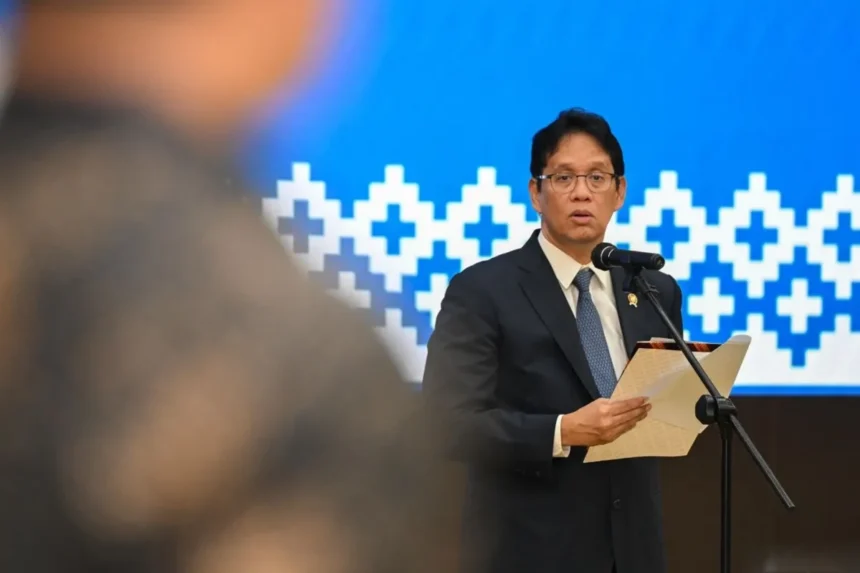
During a significant induction ceremony for several high-ranking officials in Jakarta, he warned that the continued presence of illicit imports creates an uneven playing field that stifles the growth of national enterprises. When the domestic market is saturated with illegal products, local companies struggle to remain competitive, leading to a potential stagnation in industrial innovation and output.
The minister emphasized that these officials are the vanguard of a broader strategy to sustain internal market growth, noting that any lapse in oversight directly threatens the integrity of the nation’s economic borders. By enforcing stricter border controls, the government aims to ensure that legitimate businesses can thrive without being undermined by cheap, unregulated alternatives that bypass national standards and tariffs.
Fiscal Sustainability And The Optimization Of National Revenue Streams
The current fiscal landscape in Indonesia necessitates a more aggressive approach to revenue collection, particularly as the state budget faces challenges from unmet targets in previous years. Minister Purbaya has pointed out that a failure to protect the internal market from illegal activity does not only harm businesses but also leads to a substantial decline in vital excise and tax revenues.
With limited fiscal space available for 2026, the Ministry of Finance is prioritizing the optimization of every possible income stream to support the country’s ambitious development agenda. Strengthening the oversight role of the customs department is seen as a primary method to bolster economic growth, which has maintained a stable trajectory of around five percent.
This growth is essential for maximizing job absorption among the productive-age workforce, ensuring that the labor market remains resilient amidst global economic shifts. The state treasurer has committed to a continuous restructuring of leadership within the customs agency to ensure that performance remains high and that misconduct is systematically rooted out to prevent revenue leakage and reassure the public.
Structural Reforms And The Future Of Indonesia’s Economic Resilience
The recent inauguration of thirty-six echelon officials across multiple directorates marks a pivotal moment in the government’s plan to modernize its financial and industrial governance. Under the guidance of the finance ministry, these new leaders are tasked with integrating advanced technological solutions, such as artificial intelligence, to detect irregularities like under-invoicing more rapidly at major ports.
This move toward digital transformation is part of a larger effort to transition the Indonesian economy toward a more sophisticated, value-added model that can withstand geopolitical tensions and supply chain disruptions. By ensuring that the Directorate General of Customs and Excise, along with the Directorate General of State Assets, works in a highly coordinated manner, the government can better manage its diverse resources and liabilities.
The commitment to directness in addressing inefficiencies reflects a new era of proactive management that seeks to fix long-standing weaknesses in the bureaucratic system. Ultimately, these structural reforms are intended to create a more predictable and attractive environment for both domestic and foreign investors. As the nation moves toward its long-term goals of sovereignty, the stability of the state budget will remain a foundational pillar.
Strategic Analysis Of Trade Protectionism And Fiscal Multiplier Effects
The systemic overhaul of the Indonesian customs apparatus represents a critical shift in the regional trade equilibrium of Southeast Asia, signaling a move toward high-precision protectionism. We interpret the decision to replace officials at major maritime gateways as a strategic effort to eliminate the shadow economy that has historically drained billions from the national treasury. From a professional analytical perspective, this aggressive stance on illegal imports is expected to have a significant multiplier effect on the manufacturing sector contribution to the gross domestic product.
By reducing the volume of contraband, the government is effectively increasing the internal demand for locally produced goods, which in turn incentivizes domestic firms to expand their production capacity and invest in modern technology. This alignment of customs enforcement with industrial policy is a sophisticated maneuver to protect the domestic value chain while maintaining the fiscal discipline required by international creditors. Furthermore, the integration of automated oversight systems at key entry points will likely reduce the lead times for legitimate shipments, improving the overall ease of doing business across the archipelago.
We observe that these reforms are timed to coincide with a period of tight global liquidity, making the optimization of domestic revenue sources even more vital for maintaining sovereign credit ratings. The potential for the government to implement radical restructuring serves as a powerful deterrent against corruption and high-level rent-seeking within the bureaucracy. This credible threat of institutional change reinforces the message that the Ministry of Finance prioritizes fiscal health over bureaucratic legacy.
Ultimately, the successful stabilization of the domestic market through these measures will position Indonesia as a more reliable and transparent partner in regional trade agreements. By securing the tax base and fostering a fair competitive environment, the administration is laying the groundwork for a more sustainable economic cycle that can support social welfare programs and infrastructure development without increasing the national debt burden.