Government Steps Up to Ensure Fuel Investment Certainty
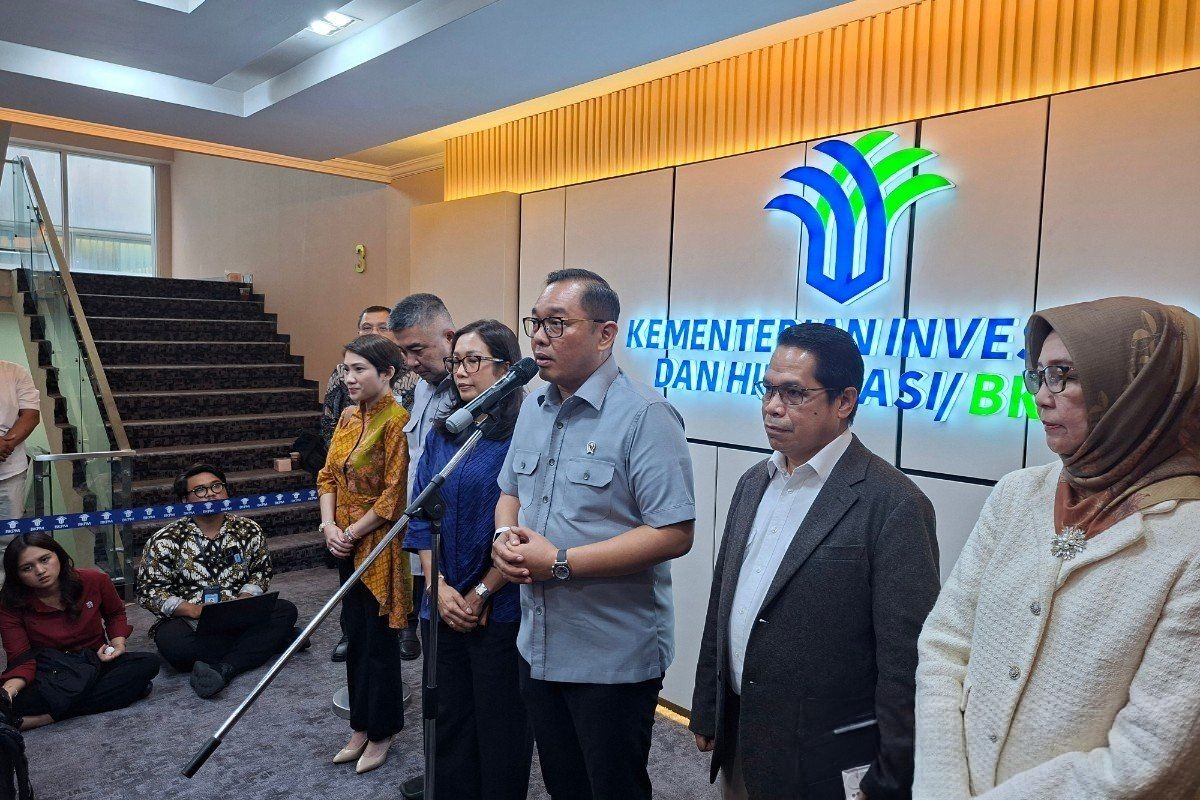
Deputy Minister for Investment and Downstreaming, Todotua Pasaribu, strongly emphasized the government’s crucial role in guaranteeing investment certainty for private fuel station operators across Indonesia.
He stressed that while the Ministry of Investment does not interfere with technical policy matters related to the energy sector, its core mission is to ensure a stable and predictable environment for both foreign and domestic investors operating within the country. This commitment to certainty is paramount for attracting and retaining the capital needed to support national infrastructure.
The ministry recently convened a high-level meeting that included the Director General of Oil and Gas at the Ministry of Energy and Mineral Resources (ESDM), Laode Sulaeman, representatives from the Downstream Oil and Gas Regulatory Agency (BPH Migas), Pertamina Patra Niaga, and key private fuel station operators. This collaborative effort was prompted after the Ministry of Investment received a formal letter from private business actors expressing concerns about the certainty and continuity of their investments in Indonesia. The central issue revolved around restrictions on the import quota of non-subsidized fuel that is sold by these private gas stations.
Pasaribu explained that the private fuel stations have recently faced persistent shortages of non-subsidized fuel, a situation driven primarily by a significant shift in consumer demand away from cheaper subsidized products. This market change highlights the operational challenges faced by operators when policy directly impacts supply. The government views its presence as mandatory in managing these issues, especially since these private business actors have existing and substantial future investment plans that depend on regulatory stability.
State Intervention to Resolve Supply Shortages
The core problem addressed by the Ministry of Investment involves ensuring a consistent supply of non-subsidized fuel to private operators, a matter that transcends simple market dynamics and directly affects the government’s duty to protect capital investment.
Pasaribu clearly articulated that the state must be actively present to address any issues that threaten investment certainty in Indonesia’s fuel distribution network.
He emphasized, “We want to ensure that the state is present in managing issues related to their investments, because these private business actors already have existing and future investment plans.” These plans are vital not only for the companies themselves but also for the broader economic ecosystem, as their operations significantly impact job creation and foster growth in related industries, particularly among small and medium-sized businesses that rely on their services.
The Ministry’s involvement aims to broker a solution between the private operators and the regulatory bodies (ESDM and BPH Migas) concerning the import quotas.
The reliance on non-subsidized fuel imports is critical for these private fuel stations, and any sudden or unpredictable restriction on quotas can severely undermine their business models and the security of their previously committed capital investment.
The shifting consumer preference, though a market trend, must be managed through predictable policy adjustments, not arbitrary restrictions. The government acknowledges its profound obligation to provide consistent investment certainty, whether this is delivered through efficient licensing services, robust and stable regulations, or transparent policy implementation.
Protecting Investment and Economic Ripple Effects
The economic significance of supporting these private fuel station investments extends far beyond the immediate concerns of the operators, creating ripple effects that are crucial for national development.
Pasaribu highlighted that these investments contribute meaningfully to the overall economy by supporting thousands of jobs and facilitating industrial and commercial growth across various sectors.
When investment confidence is high, private operators are more likely to expand their networks, improving fuel access for consumers and businesses, particularly in areas that may be underserved by state-owned enterprises.
The government’s intervention in this fuel quota dispute is therefore a necessary defense of the business climate itself, demonstrating to all domestic and foreign capital that Indonesia takes its commitments to investors seriously.
The resolution of issues like the non-subsidized fuel import quota will serve as a benchmark for the government’s dedication to providing a reliable regulatory framework.
The Deputy Minister concluded his remarks by reaffirming the fundamental obligation of the state. He asserted that the government has a mandate to provide comprehensive investment certainty, which encompasses everything from streamlining licensing services and maintaining regulatory stability to ensuring that policy decisions are predictable and fair.
By actively engaging with all stakeholders in the fuel distribution sector, from private operators to state-owned bodies like Pertamina Patra Niaga, the Ministry of Investment aims to secure the continuity of capital flow and reinforce Indonesia’s standing as an attractive, reliable destination for major infrastructure investment.