Institutional Reform Metrics
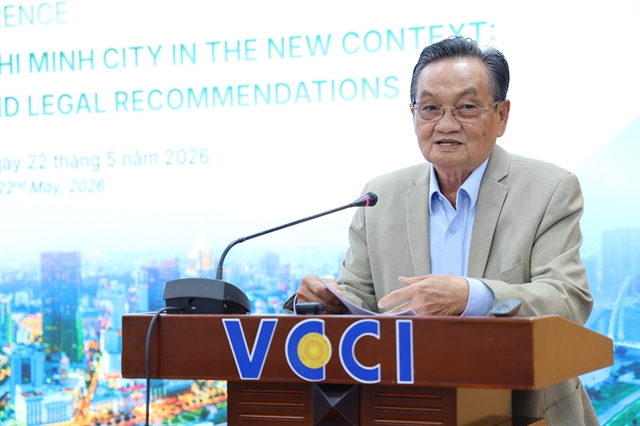
The economic development landscape across Southeast Asia is undergoing a profound structural transformation, opening massive pathways for capital deployment inside HCM City as international business networks expand operations. According to legal experts convening at a recent national investment conference, this commercial center has officially entered an unprecedented strategic phase. This era is heavily characterized by major institutional modernization, decentralization of administrative authority, and targeted infrastructure expansion across the metropolitan area, positioning it as a highly attractive zone for institutional asset placement.
Regulatory authorities are actively clearing long-standing bureaucratic bottlenecks by integrating key industrial corridors, maritime container terminals, and global logistical networks to streamline regional trade. Furthermore, cutting-edge digital research hubs are being rapidly established across municipal boundaries to facilitate seamless technological integration and support high-tech industries. This coordinated regulatory shift provides exceptional long-term utility for sovereign wealth funds and multinational enterprises looking to restructure their cross-border asset allocations effectively.
To accelerate this transition, central planning commissions are granting specialized legislative mechanisms designed to elevate the status of HCM City into a premier regional financial capital. Financial analysts note that these structural advantages will simultaneously introduce complex compliance obligations for operating entities across all sectors. Expanding corporations must radically upgrade their internal legal governance, risk management frameworks, and alternative dispute resolution capabilities to navigate this shifting regulatory climate safely and maintain operational continuity.
Corporate Governance Frameworks
As public institutions shift from traditional pre-approval licensing regimes toward sophisticated post-audit supervision models, operating smoothly within HCM City requires absolute alignment with updated corporate compliance benchmarks. National trade promotion bureaus confirm that the metropolitan marketplace will successfully sustain its competitive advantage through vast consumption scale, established commercial ecosystems, and direct international supply chain connectivity. This modern administrative framework forces firms to maintain high operational integrity and transparency from inception.
To fully capitalize on this favorable operating climate, inbound investors must proactively integrate updated regulatory data regarding personal information security protocols into their systems. Environmental, social, and governance criteria must also be blended with extended producer responsibility mandates into their primary logistical chains to avoid penalties. Trade arbitrators indicate that the legislative environment is adapting at a rapid pace, with comprehensive revisions targeting corporate tax structures and digital commerce.
These incoming tax modifications are projected to directly reshape the balance sheet dynamics of foreign-invested firms by broadening allowable expense deductions significantly over the next two fiscal years. These deductions specifically cover localized research and development initiatives, domestic product innovations, pre-sales marketing strategies, and green economy integration aimed at fostering long-term local economic growth. Consequently, corporate asset managers are being strongly urged to meticulously review their local operating networks, upgrade internal accounting transparency, and closely monitor shifting municipal tax enforcement practices to minimize legal and financial risks.
Dispute Resolution Infrastructure
The long-term viability of foreign capital placement within HCM City remains heavily dependent on the structural clarity of local contract enforcement mechanisms and cross-border commercial protections. Legal consultants specializing in regional corporate transactions observe that the vast majority of international arbitration disputes do not arise from isolated regulatory shifts. Instead, they stem from structurally deficient contractual terms, improper documentation management, and unmitigated regulatory risks that accumulate over extended operational periods.
Because cross-border entities still navigate complex foreign ownership limits, intricate administrative licensing tracks, and occasionally inconsistent localized enforcement, executing early-stage regulatory due diligence is an absolute prerequisite for capital safety. To safeguard these massive capital commitments against sudden policy adjustments, corporate legal departments are being advised to build robust arbitration provisions into every single vendor agreement. This proactive measure effectively shields corporate assets from prolonged litigation in local courts and minimizes institutional friction within the competitive regional market.
Preserving pristine administrative paper trails and implementing proactive dispute management workflows will become standard operational requirements for foreign firms seeking long-term stability. Over the upcoming fiscal stretches, the overall capacity of enterprises to successfully master these rigorous compliance regimes will serve as the definitive baseline metric for global asset managers. This data will help them accurately assess the investment safety and structural stability of the entire domestic financial ecosystem.
Regional Financial Arbitrage Shifts
The intentional evolution of the regulatory landscape toward an unyielding post-audit paradigm signals a massive realignment of cross-border capital velocity within the wider Mekong sub-region. Municipal planners are effectively altering the regional marginal cost of capital to capture fleeing industrial supply chains by lowering initial barrier-to-entry friction. They are also expanding corporate tax deductibility for high-value research operations across HCM City to secure high-quality foreign investments.
This structural realignment shifts the city away from an economy reliant on low-cost manual assembly and establishes it as a highly sophisticated hub for high-yield technology development and regional intellectual property accumulation. Consequently, sovereign wealth funds and institutional asset managers are adjusting their regional portfolio weightings, reallocating critical liquid resources from traditional secondary trade corridors into high-growth domestic manufacturing and semiconductor manufacturing ecosystems that offer superior risk-adjusted returns.
Furthermore, the introduction of specialized administrative mechanisms creates an institutional environment where corporate transparency functions as a primary driver of financial valuation rather than an administrative burden. As foreign-invested enterprises build out robust corporate structures to navigate the strict post-audit enforcement, the overall quality of the local credit pool undergoes a substantial upgrading process. This compression of structural operational risk naturally deflates the long-term borrowing risk premium, allowing local financial institutions to offer competitive interest rates anchored to standardized global risk metrics. Over the multi-year fiscal cycle, this institutional governance transformation will create an insurmountable competitive moat, transforming the metropolitan area into an essential, highly liquid safe haven for multi-national asset allocation and structural wealth diversification across emerging Asian markets.