





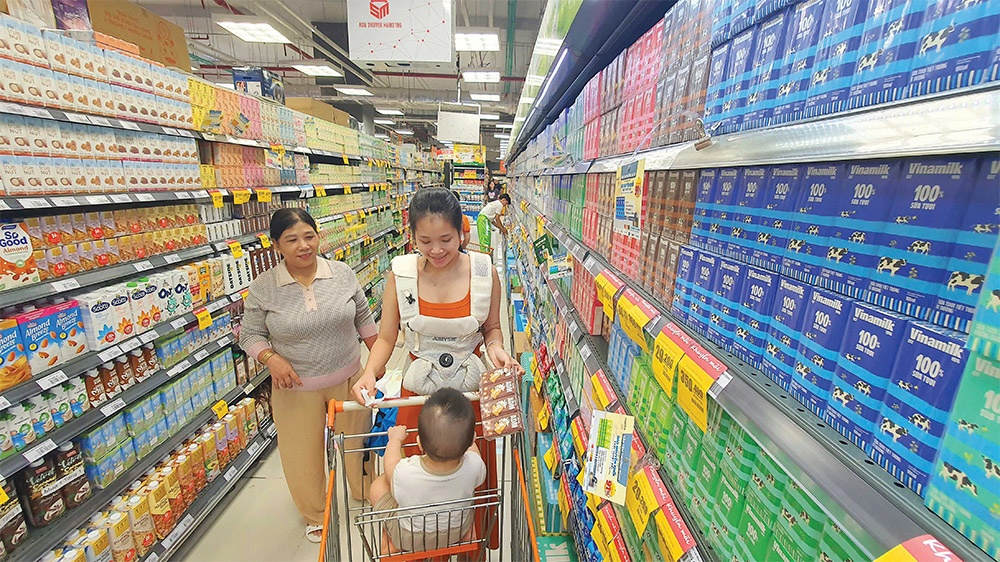
Vietnam’s Dairy Market Poised for Explosive Growth
Vietnam’s dairy industry is currently experiencing a dynamic period of expansion, propelled by a potent combination of rising consumer demand and a strategic shift toward premium products and technological innovation. At a recent conference on the sector’s future, Assoc. Prof. Dr. Tran Quang Trung, chairman of the Vietnam Dairy Association, affirmed that the industry is maintaining a trajectory of stable and robust growth. The nation’s average milk consumption is estimated at around 27 litres per person annually, with projections indicating a substantial growth rate of 7-8 percent each year. This robust consumer base, coupled with evolving tastes and a growing focus on health and wellness, is fueling ambitious financial forecasts. Industry revenues are anticipated to climb from $5.7 billion in 2024 to an impressive $13.37 billion by 2033, translating to a compound annual growth rate of approximately 9.5 percent. This upward trend signals a fertile environment for domestic producers to consolidate their market presence and capitalize on a population that is increasingly seeking out high-quality, nutritious dairy options as their purchasing power rises.
Addressing the Critical Raw Material Gap
Despite its significant growth potential, the Vietnamese dairy industry faces a critical paradox: a heavy reliance on imported raw materials. Domestic sources currently supply only about 40 percent of the industry’s total demand, a surprising imbalance for an agricultural nation. This dependency creates substantial pressure on costs and foreign currency reserves, while also exposing the sector to global supply chain risks. According to figures from the Ministry of Agriculture and Environment, Vietnam’s dairy imports exceeded $1 billion in 2024, with powdered milk being the primary component. This reliance on imports, particularly for key ingredients, poses a direct threat to the competitiveness of locally produced fresh milk, as experts note that cheap reconstituted powdered milk can easily flood the market. Furthermore, Vietnam’s per capita milk consumption, at 26-28 liters per year, remains considerably lower than that of regional and global counterparts like Thailand (35 litres), Singapore (45 litres), and Europe (100 litres), highlighting both a challenge and a massive opportunity for domestic market expansion.
Charting a Sustainable and High-Tech Path
To overcome its dependence on foreign raw materials and ensure long-term, sustainable development, the Vietnamese dairy industry must prioritize a strategic shift towards self-sufficiency. Dr. Nguyen Xuan Duong, chairman of the Vietnam Livestock Association, emphasizes that mastering domestic raw material sources is the prerequisite for future success. This involves developing a robust dairy farming sector that is deeply integrated into a value chain, with the application of high technology from breeding and care to processing. The proposed approach includes planning designated pasture areas, securing animal feed sources, and implementing a circular economy model with a closed-loop “from grass to glass” management system. This comprehensive strategy is designed to boost productivity and elevate product quality, thereby improving the competitiveness of domestic dairy products. Government targets for this transformation are ambitious, aiming to increase the dairy herd to 650,000-700,000 cows by 2030, with a fresh milk output of 2.6 million tonnes. The long-term vision for 2045 is even more aggressive, targeting 6.2 million tonnes of output, reaching 80-82 percent self-sufficiency in raw materials, and increasing per capita consumption to 70 liters per year.
Key Players Drive Market Innovation
In a market defined by rapid demand growth and supply chain constraints, domestic and international dairy enterprises are aggressively executing product strategies to secure and expand their market share. Vinamilk remains the undisputed giant, holding nearly half of Vietnam’s total dairy market. The company is actively pursuing new product lines, such as lactose-free milk, nut milk, and fermented yogurt, to cater to evolving consumer preferences and health concerns. Its proactive approach to securing raw materials has also been key to meeting growing domestic demand and driving its robust export performance, which recorded a record-breaking $75.4 million in net revenue in the second quarter, marking its eighth consecutive quarter of positive export growth. Meanwhile, TH true MILK has carved out a strong position in the packaged fresh milk segment, commanding 30-45 percent of the market by focusing on premium, clean, and organic products with a strong emphasis on international farming standards. The Dutch-owned FrieslandCampina, through its Dutch Lady brand, also maintains a significant presence, holding approximately 25 percent of the market share. These major players are setting the standard for innovation and quality, shaping a more dynamic and competitive dairy landscape in Vietnam.


