Strategic Initiatives To Restore Capital Market Integrity
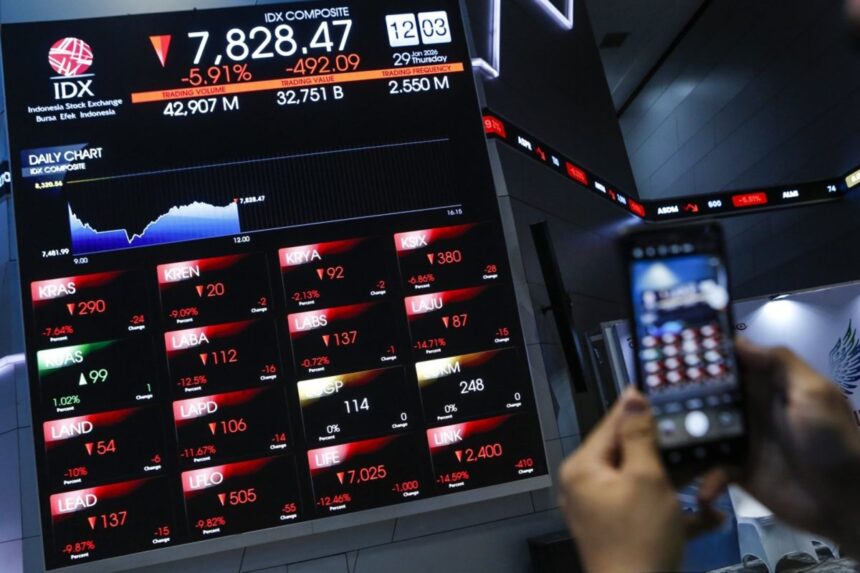
The national financial regulator is moving swiftly to address market concerns, as the OJK prepares to launch a specialized Capital Market Integrity Reform Task Force. This dedicated unit aims to accelerate critical reforms and rebuild investor trust in the domestic trading landscape by ensuring the rapid execution of eight primary policy measures previously outlined by authorities. Acting chairperson Friderica Widyasari Dewi confirmed that the task force will work in close coordination with the Coordinating Ministry of Economic Affairs to streamline decision making processes.
During the Financial Services Industry Annual Meeting 2026, it was emphasized that while the market has shown resilient growth, institutional strength and transparency are now the top priorities for the administration. The regulator believes that a robust legal framework is the only way to safeguard the interests of both retail and institutional participants in an increasingly complex global environment. By centralizing the oversight of these reforms, the government hopes to create a more predictable and secure investment climate that can withstand external economic shocks while promoting sustainable domestic capital formation.
This move marks a shift toward qualitative development rather than just quantitative expansion. The focus on integrity is expected to reduce the risk premium associated with local equities, making them more attractive to long term global funds. By establishing this task force, the administration is sending a clear signal that it is willing to take the necessary steps to align with international best practices. This proactive approach is essential for maintaining the nation’s competitive edge in the regional financial market as global competition for capital continues to intensify.
Collaborative Enforcement And Structural Governance Enhancements
The formation of this task force involves a high level of synergy between the OJK, the Indonesia Stock Exchange, and various self regulatory organizations such as KSEI and KPEI. These related terms represent the backbone of the national clearing and depository system, which must be modernized to meet international standards of transparency. One of the most significant changes includes doubling the minimum free float requirement to fifteen percent, a move designed to improve market liquidity and prevent price manipulation by concentrated shareholdings.
Furthermore, the task force will oversee the implementation of stricter ultimate beneficial ownership disclosures, lowering the threshold for reporting significant stakes from five percent down to just one percent. This granular level of detail is essential for identifying the true controllers of listed companies and preventing shadow transactions that could undermine market stability. The reform package also includes the demutualization of the stock exchange and the introduction of much harsher sanctions for regulatory violations.
By fostering a culture of accountability among industry participants, the regulator intends to eliminate the blurred window effect that can hide systemic risks even when the broader macroeconomic fundamentals remain strong. The integration of self regulatory organizations into the task force ensures that every layer of the market, from trading to settlement, is under constant review. This comprehensive strategy is designed to create a more efficient and liquid market, ultimately lowering the cost of capital for listed companies and providing a more reliable environment for retail investors.
Global Alignment And The Vision For Long Term Stability
Aligning the domestic market with global benchmarks is a core objective of the new task force, particularly in its ongoing discussions with international index providers like MSCI. Minister Airlangga Hartarto has warned that the capital market serves as the nation’s primary window of integrity, and any perception of weakness can have long term negative consequences for the sovereign credit rating. President Prabowo Subianto has explicitly instructed all relevant authorities to resolve these governance issues with urgency to maintain the confidence of global credit rating agencies.
The task force will act as a bridge between domestic policy adjustments and the expectations of the global financial community, ensuring that every reform is implemented on a strictly monitored schedule. This proactive stance is meant to demonstrate a clear commitment to market depth and integration, moving beyond simple quantitative growth toward a high quality developmental model. As the country aims to attract more diverse capital flows, the focus on transparent communication and integrated coordination will remain the cornerstone of the national economic strategy.
This evolution in financial oversight is expected to secure the country’s position as a leading investment destination in the Southeast Asian region for the next decade. By meeting the stringent criteria set by global index providers, the nation can ensure its inclusion in major emerging market funds, which provide a stable source of foreign currency. The government’s long term vision involves creating a financial ecosystem that is not only robust and transparent but also inclusive, allowing the benefits of economic growth to be shared by a wider segment of the population through well regulated investment vehicles.
Professional Financial Analysis Of Market Integrity Reforms And Sovereign Risk
From a professional financial analyst perspective, the establishment of the Capital Market Integrity Reform Task Force by the OJK represents a vital pivot toward institutional maturity. We interpret the decision to lower the shareholding disclosure threshold to one percent as a sophisticated move to combat stealth accumulations and pump and dump schemes that have historically plagued emerging markets. By increasing the free float requirement to fifteen percent, the regulator is effectively mandating higher liquidity, which reduces the impact of large, volatile trades on the benchmark index.
This structural tightening is likely to be viewed favorably by global institutional investors who prioritize price discovery and ease of exit. From an expert perspective, the coordination between the treasury and the central regulatory body signals a unified front in defending the national balance sheet against reputational risks that could lead to capital flight. The regional market impact of these reforms is particularly significant when considering the competition for foreign direct investment within the ASEAN block, where Indonesia must differentiate itself through superior governance standards.
We anticipate that these measures will lead to a compression of the equity risk premium over the medium term, as the integrity discount currently applied by some international funds begins to fade. Furthermore, the alignment with MSCI standards is a strategic necessity to ensure that the domestic market maintains its weighting in global emerging market indices. Ultimately, the success of the task force will be measured by its ability to transition the market from a growth at all costs model to one defined by high quality governance and long term stability.