




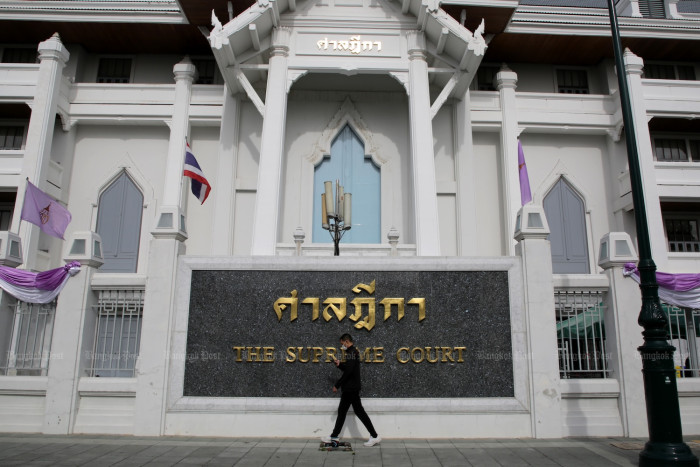
Fine Reduced for Philip Morris Thailand in Tax Evasion Case
The Supreme Court of Thailand delivered a significant ruling on Thursday, drastically reducing the fine imposed on the local unit of the tobacco multinational Philip Morris for evading tax on imported cigarettes, cutting the penalty from the original 130 million baht down to 20 million baht.
This long-running legal battle, which was first initiated with a formal filing in 2017, centered on serious accusations that Philip Morris Thailand had purposefully under-declared the prices for cigarettes that were imported from Indonesia during the years 2002 and 2003. These years were crucial to the case as the alleged under-declaration allowed the company to pay substantially less in import duties and excise taxes than was legally required, thereby defrauding the national revenue. A lower court initially handed down the substantial 130-million-baht financial penalty in 2020 against the local subsidiary of the company, which is the owner of globally recognized brands such as Marlboro and L&M.
The legal process continued when the Court of Appeal reviewed the decision in 2023, subsequently ordering that the fine amount be reduced and requiring the Customs Department to undertake the task of calculating a new, adjusted fine rate. Following that appellate ruling, Philip Morris had publicly stated its intention to continue the appeal process by taking the case to the Supreme Court, demonstrating the company’s firm disagreement with the findings of the lower courts despite the reduction. This persistent legal defense highlights the high stakes involved and the company’s commitment to challenging the extent of the financial liability imposed for the alleged tax avoidance.
Supreme Court Upholds Guilt While Adjusting Penalty
The Supreme Court, in its recent and final decision, ultimately found Philip Morris Thailand guilty of the core charge of tax avoidance, confirming the finding of illegal activity by the local unit that stretched back over two decades. However, the court exercised its judicial authority to significantly reduce the corresponding financial penalty to approximately 20 million baht, according to official statements released by a court representative following the verdict.
This massive reduction in the fine, from 130 million baht to 20 million baht, marks a partial victory for the company, as it drastically lessens the financial impact of the guilty verdict, yet it still confirms that the firm failed to fully comply with tax regulations during the period in question, solidifying the legal finding of under-declaration.
In a separate but related aspect of the case, the Supreme Court also reaffirmed the earlier decisions made by the lower courts to completely drop all criminal charges that had been filed against a former Philip Morris employee who had been implicated in the allegations of under-declaration. This aspect of the ruling provides final judicial closure for the individual involved.
Nhu Ngoc Diep, the head of the Thai operations for Philip Morris, issued a statement in the wake of the Supreme Court’s ruling. She explicitly stated that the company disagreed with specific aspects of the court’s final decision, maintaining the firm’s long-standing position that it had “consistently complied with local and international law” throughout the entire period, suggesting that their disagreement is with the interpretation of customs valuation rules rather than a full acceptance of guilt.
Moving Beyond a Period of Legal Scrutiny
The ruling marks a critical step toward the definitive closure of a lengthy and high-profile legal battle that has subjected the operations of Philip Morris in Thailand to intense public and legal scrutiny for nearly a decade since the case was formally filed.
The head of the local Philip Morris operations expressed a forward-looking sentiment in her statement, noting that the company “look[s] forward to putting this matter behind us,” signaling a desire to move past the legal controversy and focus on future business operations, particularly as the region’s regulatory environment continues to evolve.
This Thai case is not the first time the multinational corporation, which is responsible for the production and distribution of Philip Morris products globally, has faced legal action over allegations of import tax evasion in the region.
The company previously confronted legal action concerning claims that it had evaded hundreds of millions of dollars in import tax on cigarettes sourced from the Philippines between 2003 and 2006, a significant controversy that ran concurrently with the period scrutinized in the Thai case.
These recurring legal challenges underscore the complex and sometimes fraught relationship between large international tobacco companies and the tax and customs authorities in the Southeast Asian region, often revolving around the valuation of goods for customs purposes.
The Supreme Court’s final decision now sets a definitive financial resolution for the long-standing tax avoidance case in Thailand, allowing both the Thai government and Philip Morris to close the book on this particular episode and dedicate their resources elsewhere.


