Expanding Connectivity Through The National Pioneer Air Service
The Ministry of Transportation has reaffirmed that the subsidized pioneer air service serves as a vital lifeline for strengthening connectivity across the Indonesian archipelago. The officials highlighted how these flights bridge the gap for communities living in underdeveloped, frontier, and outermost regions. This initiative represents a tangible manifestation of the government presence in remote areas, ensuring that inter-regional mobility is no longer a luxury but a fundamental right for all citizens.
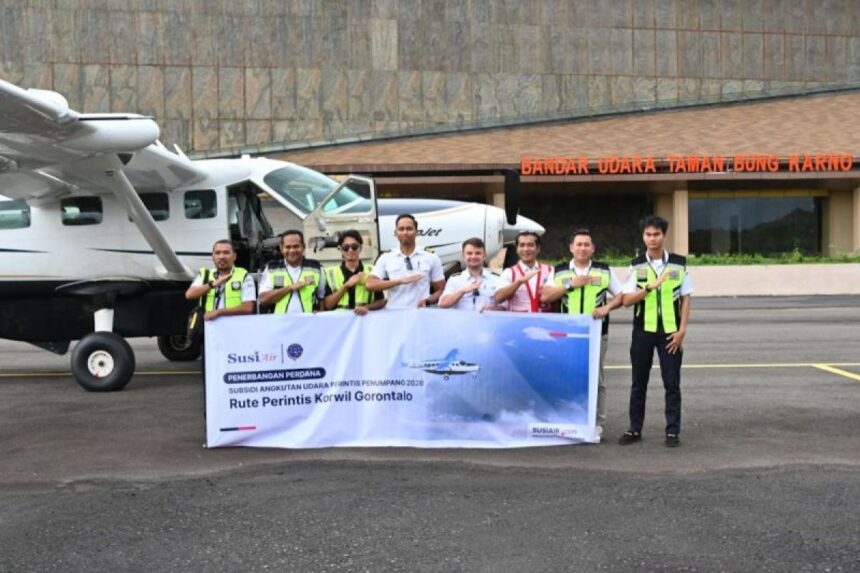
By targeting the 3TP areas, the program addresses the unique logistical challenges posed by Indonesia’s diverse geography, where traditional maritime or land transport may be insufficient or excessively time-consuming. The 2026 program for the Gorontalo regional coordinator area was officially launched in Manado, marking a significant step forward in the annual national aviation strategy. This specific choice of aircraft is ideal for the short-runway environments often found in border regions.
These specialized flights are currently operated by Susi Air, utilizing a twelve-seat Cessna Grand Caravan aircraft to maintain consistent and reliable scheduling regardless of the remote nature of the destination. As the program rolls out, it continues to foster a sense of national unity by linking isolated islands and inland territories directly to regional economic hubs. This ensures that the social and economic benefits of national development are distributed more equitably across the entire country.
Operational Logistics And Strategic Fuel Subsidies
The operational schedule for these subsidized flights is designed to maximize public utility, covering an extensive network of routes across North Sulawesi, Central Sulawesi, and Gorontalo from Monday through Saturday. On the start of each week, the pioneer air service facilitates return trips between Manado, Siau, and Naha, as well as the critical Manado to Miangas route, which serves one of the nation’s most distant border points. Mid-week operations expand to include Luwuk, Banggai Laut, and Pohuwato.
One of the most significant updates for the 2026 fiscal year is the increased frequency on the Manado to Melonguane route, which has been elevated to three flights per week following a comprehensive evaluation of rising public demand. This adjustment demonstrates the government’s responsiveness to local needs and its commitment to reducing travel times for essential services. To ensure the financial viability of these routes, the Ministry has also implemented a robust fuel transport subsidy for operators.
By placing hundreds of drums of aviation fuel at strategic locations like Naha and Melonguane, the government ensures that operational costs for the airline remain manageable and comparable to airports with established fuel depots. This prevents high ticket prices that could otherwise burden the local population while maintaining a safe and high-quality service. The Directorate General of Civil Aviation continues to monitor these logistical hubs to ensure that the supply chain remains uninterrupted throughout the year.
Economic Empowerment And Enhanced Aviation Safety Standards
The broader impact of these subsidized flight programs extends well beyond simple transportation, acting as a catalyst for economic activity and the delivery of public services in peripheral areas. By drastically shortening travel times that previously took days by sea, the flights allow for the rapid movement of medical supplies, educational materials, and fresh produce. This is essential for improving the quality of life and ensuring that emergency services reach those in the most isolated districts quickly.
The presence of a scheduled air link encourages local entrepreneurs to engage in wider trade, as they can now reach larger markets with greater efficiency and lower risk. This year fuel subsidy is particularly critical in this regard, as it stabilizes the supply chain for the aviation sector and ensures that the program can maintain its rigorous schedule without disruption. The Ministry’s focus on the 3TP regions helps to bridge the wealth gap by providing these areas with the infrastructure needed to compete.
The Directorate General of Civil Aviation has emphasized that while accessibility is the primary goal, there will be no compromise on safety, operational compliance, or service quality. Continuous evaluation and supervision are being carried out to monitor the performance of the regional coordinator areas, ensuring that the public receives the maximum benefit from the state investment. This oversight mechanism is designed to identify and address any bottlenecks, further solidifying the program’s reputation as a reliable pillar.
Strategic Regional Market Influence And Socio-Economic Integration
The structural impact of the 2026 flight program on the regional market signifies a major shift in how the government manages national equilibrium through targeted logistics. We observe that the integration of the pioneer air service with localized fuel subsidies creates a resilient economic buffer for the residents of North and Central Sulawesi. By standardizing fuel costs across remote airfields, the state is effectively neutralizing the logistical penalties that often stifle growth in border areas and discourage private investment.
This market intervention is vital because it prevents the emergence of price gouging in local commodity markets, which is frequently a side effect of high transport overheads. The increased connectivity also allows for a more efficient distribution of human capital, as specialized professionals such as doctors and engineers can now easily move between provincial capitals and rural districts. This creates a more balanced labor market and ensures that the benefits of national development are felt equally across the archipelago.
Furthermore, the regional market for small-scale aviation is being revitalized through these government contracts, providing a stable revenue stream for operators while maintaining high standards of technical excellence. This partnership between the public sector and private operators fosters a specialized ecosystem for bush-flying and remote operations that is unique to the Indonesian context. From a macroeconomic perspective, the reduction in travel barriers serves to strengthen the internal trade routes of the Celebes Sea region.
The continuous monitoring of safety and service quality ensures that the regional aviation market remains attractive for future private investment once the transition from subsidized to commercial status begins. In the final analysis, the 2026 program is not merely a social safety net but a strategic investment in the nation’s physical infrastructure that will underpin the next phase of regional industrialization. We expect that as these routes become more established, the resulting increase in local tourism and trade will provide the necessary fiscal base for the provincial governments to take an even more active role.