Public Investment Strategies And The Protection Of Citizen Rights
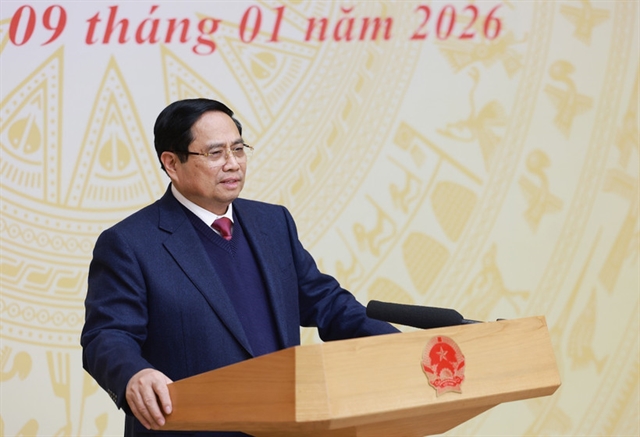
Prime Minister Pham Minh Chinh recently emphasized during a national conference that protecting the legitimate rights and interests of the people remains a non-negotiable priority throughout every stage of state funded infrastructure development. Within the first sixty words of his address, he made it clear that public works must serve the collective good while respecting individual protections.
As the government transitions into the 2026 fiscal cycle, this human centric approach to governance ensures that the rapid acceleration of capital disbursement does not come at the expense of social equity. Public investment has consistently been identified as a critical political task because it serves as the primary engine for stabilizing the macroeconomy.
By boosting aggregate demand, these state projects provide the necessary foundation for private and foreign direct investment to flourish, creating a powerful multiplier effect that stimulates production and business activities. The Prime Minister underscored that the success of these initiatives is a key metric for evaluating the performance of officials, reflecting the high stakes involved.
Navigating Land Clearance And Resettlement Challenges
The proactive nature of investment as a growth driver means that the cabinet must exercise close oversight to resolve specific bottlenecks that often delay critical project timelines. Throughout 2025, the government issued numerous resolutions and directives to push disbursement rates higher, with senior members of the cabinet making frequent site visits to inspect nationally important projects.
As of late December, the total amount disbursed exceeded seven hundred fifty-five trillion dong, which represents nearly eighty-four percent of the assigned plan. While this is a significant absolute increase compared to the previous year, many ministries and agencies still fall below the national average, necessitating an even more aggressive push.
The administration is focused on creating a development space that is both competitive and inclusive, ensuring that the transition to a high income economy is felt by all segments of society through better jobs. This holistic view recognizes that a bridge or a road is only successful if it enhances the surrounding community and respects the historical and legal protections afforded to the people.
Professional Analyst Report On Macroeconomic Impacts And Regional Growth
From a professional financial and analytical perspective, the massive infusion of public capital into the Vietnamese economy represents a strategic attempt to sustain growth in a volatile global environment. We observe that the 2026 budget of nearly one thousand trillion dong is a clear indicator of the state intent to use fiscal policy as a counter cyclical tool.
This level of spending is technically significant because it provides the necessary liquidity for the construction and industrial sectors to maintain their momentum. By focusing on strategic infrastructure, the government is lowering the long term logistics costs for exporters, thereby enhancing the national competitiveness of the country in the global supply chain.
The regional market impact of this public spending is profound, as it sets a benchmark for infrastructure density that neighboring countries must compete with to attract foreign direct investment. As the country moves toward its target of double-digit growth, the quality of these investments will be just as important as the quantity, focusing on high tech corridors.
Strategic Analysis Of Fiscal Multipliers And Regional Market Shifts
The acceleration of public investment in Vietnam is more than a domestic economic strategy; it is a calculated response to the shifting competitive dynamics within the ASEAN region. By committing nearly one thousand trillion dong to the 2026 fiscal cycle, the administration is effectively bidding for a larger share of the global manufacturing pivot away from traditional industrial hubs.
This aggressive fiscal stance serves as a signal to multinational corporations that the nation is willing to bear the upfront costs of building world-class logistics and energy networks. From an expert-level analytical viewpoint, this represents a transition from labor-intensive competitiveness to infrastructure-led dominance that will reshape regional trade flows for the next decade.
However, the regional impact goes beyond mere competition; it creates a new standard for developmental governance where infrastructure progress is explicitly tied to the protection of individual legal rights. This socially responsible infrastructure model is unique in the region and could serve as a template for other emerging economies facing similar land acquisition challenges.
Our analysis suggests that by prioritizing resettlement quality and compensation transparency, the government is reducing the political risk premium that investors often associate with large-scale projects. This approach fosters a more resilient investment ecosystem where project delays are minimized through consensus rather than through prolonged litigation or social unrest.
As the 2026 plan unfolds, we expect to see a significant uptick in the development of secondary cities as the new development space begins to bear fruit. The multiplier effect of this spending will likely be highest in the central and northern provinces where logistics bottlenecks have historically limited manufacturing output.
Furthermore, the emphasis on evaluating officials based on disbursement results introduces a level of accountability that will likely lead to higher efficiency in capital allocation. This performance-based culture is expected to drive a virtuous cycle of infrastructure completion, attracting higher-value industries such as semiconductor fabrication and green energy technology.