President Lee Embarks on First Southeast Asia Trip to Strengthen ASEAN Ties
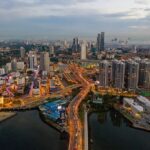
South Korean President Lee Jae Myung is scheduled to embark on a significant two-day visit to Malaysia to attend a major regional summit hosted by the Association of Southeast Asian Nations (ASEAN).
This trip marks the South Korean leader’s inaugural visit to Southeast Asia since he assumed office in June, highlighting the strategic priority his administration places on deepening relationships within the region.
According to official reports from the presidential office, as confirmed by National Security Adviser Wi Sung-lac, President Lee is set to depart on Sunday for Kuala Lumpur to participate in the high-level ASEAN Summit.
The central agenda for this visit revolves around discussing and outlining concrete ways to enhance South Korea’s established Comprehensive Strategic Partnership with the ten-member regional bloc.
This partnership is viewed as vital for South Korea’s economic prosperity and diplomatic influence in a rapidly evolving geopolitical landscape.
The series of multilateral and bilateral engagements scheduled during the trip are designed to project South Korea’s commitment to ASEAN’s centrality and its role as an active, reliable partner in regional security and economic development, seeking to elevate cooperation across political, security, and socio-cultural pillars.
Advancing Strategic Dialogue in Multilateral and Bilateral Forums
The diplomatic calendar for President Lee is packed with high-stakes engagements designed to advance South Korea’s strategic interests both within the broad regional framework and through targeted bilateral discussions.
On Monday, President Lee will deliver a key address at the main ASEAN Summit, where he will articulate his comprehensive vision for further strengthening cooperation with the entire regional bloc.
Following this, he will participate in the crucial ASEAN Plus Three summit, which brings together the leaders of South Korea, Japan, and China alongside the ten ASEAN member states.
This particular forum is essential for coordinating responses to shared regional challenges, including economic integration, supply chain resilience, and public health security, underscoring the indispensable role of the Northeast Asian powerhouses in the region’s overall stability and prosperity.
Beyond the multilateral track, President Lee has scheduled two significant bilateral meetings.
The first is with Cambodian Prime Minister Hun Manet, where the focus will be on the existing strategic partnership between the two nations, with particular attention paid to addressing pressing transnational issues, such as the growing threat of online scam crimes, reflecting a shared commitment to digital security and law enforcement cooperation.
Deepening Economic and Security Partnership with Malaysia
The second, equally vital, bilateral meeting will see President Lee convene with Malaysian Prime Minister Datuk Seri Anwar Ibrahim later on Monday.
This discussion is set to focus on practical, actionable ways to deepen the existing strategic partnership between South Korea and Malaysia.
The leaders are expected to explore concrete steps to bolster cooperation across key economic and security sectors that are mutually beneficial.
Specific areas earmarked for strengthening ties include trade and investment, where both countries see significant potential for increased flow and diversification.
Furthermore, cooperation in infrastructure development is a critical item on the agenda, with South Korean firms likely seeking opportunities to contribute their expertise to Malaysia’s ambitious development projects.
Finally, a significant element of the discussion will center on the defense industry, where South Korea’s advanced military technology and manufacturing capabilities offer opportunities to strengthen Malaysia’s defense posture.
National Security Adviser Wi Sung-lac emphasized that these discussions aim to transform the strategic partnership into a more robust and practical alliance.
This visit by President Lee clearly signals an intensified effort by South Korea to secure its foothold and influence within the dynamic Southeast Asian region.