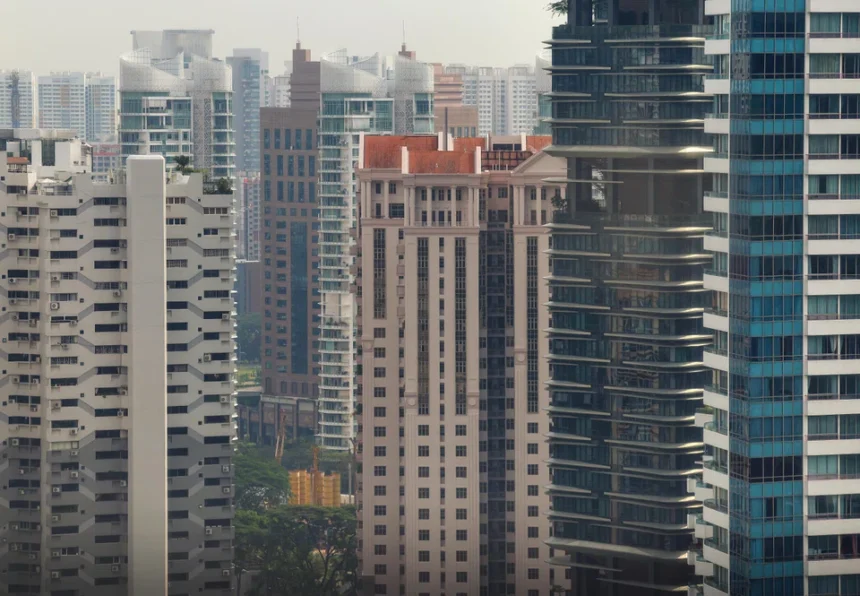
Significant Surge In Singapore Primary Market Demand For Private Home Units
Data released by the Urban Redevelopment Authority indicates that developers in Singapore sold 1,300 private home units in March, marking a substantial 78.3% increase compared to the previous year. This massive spike in activity was driven by a wave of new project launches following a notably slow seasonal period. To put the momentum into perspective, the volume of units moved in March was more than five times the 246 units sold in February of this year.
When including executive condominiums, the total sales volume reached 1,937 units, supported by a significant injection of 1,615 units into the market. This represents a healthy recovery from the mere 15 units launched just one month prior. The primary driver behind these figures was the near sell out success of several high profile condominium launches. For instance, the 455 unit River Modern in River Valley managed to move 90% of its available inventory over its opening weekend alone.
Similarly, projects in the Tampines area, such as Rivelle Tampines and Pinery Residences, cleared more than 90% of their units upon opening. This rebound effectively ended a four month lull characterized by year end holidays and the seasonal pullback typical of the Chinese New Year period. Despite this monthly surge, the broader quarterly performance shows that homebuyers picked up 2,012 new private home properties in the first quarter of 2026, which actually reflects a 40.4% decline year on year.
New Benchmarks For Executive Condominiums And High Value Transactions
The latest market data highlights a significant shift in pricing thresholds, particularly within the executive condominium segment where demand for a private home lifestyle is reaching record levels. In a historic turn for the industry, the volume of executive condominiums sold for at least 2 million dollars hit an all time high in March. Approximately 275 units were sold at or above this price point, far surpassing the previous record of 150 units set in March of last year.
This trend indicates that buyers are increasingly willing to pay a premium for larger or better located units within this specific asset class. Furthermore, the unit price data reveals that 411 executive condominiums were sold for a premium price of 1,900 dollars per square foot or more during the month. Notably, the Rivelle Tampines project accounted for almost all of these high value transactions, representing a major departure from historical trends where only 10 such units had ever been sold at this price point.
This pricing evolution suggests that the perceived value of executive condominiums is converging with that of traditional private apartments in sought after suburban locations. The suburban Outside Central Region led the market in terms of volume, accounting for 51.2% of all condo and private home sales in March. This was followed by the prime Core Central Region at 36.3% and the city fringe Rest of Central Region at 12.5%. The dominance of suburban sales underscores a persistent preference for residential options that offer a balance between space and accessibility.
Market Dynamics And Long Term Real Estate Investment Outlook
The current resurgence in sales figures suggests a robust underlying demand for a private home in Singapore, yet the overall quarterly decline points to a more complex structural transition within the property sector. We analyze that the 78.3% year on year increase in March sales is largely a result of pent up demand being released through a concentrated cluster of attractive project launches rather than a broad based market overheating.
This phenomenon of launch driven sales concentration is becoming a defining characteristic of the 2026 real estate landscape, where buyers are highly selective and wait for specific flagship developments before committing capital. The general fiscal stability provides a supportive backdrop for real estate financing, yet the 40.4% year on year drop in quarterly sales indicates that high interest rates are continuing to exert a cooling effect on broader transaction volumes.
We observe that the shift toward 2 million dollar executive condominiums represents a significant repricing of the suburban market, potentially pushing the entry barrier for middle income families higher than in previous cycles. This trend could lead to a more rigid market structure where the gap between public housing and the cheapest private options widens significantly. Furthermore, the concentration of 51.2% of sales in the Outside Central Region indicates that the decentralization strategy of urban planners is effectively moving the center of gravity for residential investment.
Strategic Analysis Of Residential Absorption And Wealth Migration Patterns
The recent data from the Urban Redevelopment Authority provides a clear view of how wealth is being redistributed across the metropolitan geography, particularly through the lens of residential absorption. We analyze that the surge in sales for units priced above 1,900 dollars per square foot in Tampines is a leading indicator of a significant wealth migration from the city center toward high quality suburban enclaves. This transition is not merely about affordability but reflects a strategic choice by buyers to prioritize larger living spaces and localized work play ecosystems.
From a professional analytical standpoint, the 78.3% increase in monthly sales against a quarterly decline suggests that the market is moving in high volatility bursts rather than a steady climb. This requires developers and investors to be extremely precise with their market entry timing. We observe that the Core Central Region still maintains a healthy 36.3% share of primary sales, which indicates that institutional and high net worth interest in prime real estate remains a fundamental pillar of the local economy despite the rising attractiveness of suburban hubs.
As we look toward the remainder of the 2026 fiscal year, the relationship between interest rate trajectories and residential demand will be the most critical variable to monitor. We analyze that if the current premium pricing for executive condominiums becomes the new standard, the secondary market for older private apartments may see a significant boost in liquidity as buyers search for relative value. Compared to other ASEAN markets, the Singapore real estate sector continues to function as a safe haven for capital, benefiting from its reputation for strict compliance and predictable urban planning.
We anticipate that the rest of the year will see a more measured launch calendar as developers seek to manage supply in the city fringe areas, which only accounted for 12.5% of sales this month. The successful decoupling of property growth from traditional seasonal pullbacks in March suggests that the market is increasingly driven by specific product quality and lifestyle offerings rather than broader macroeconomic sentiment. This structural shift toward a more product centric market is essential for maintaining a healthy and sustainable property ecosystem that can withstand global headwinds.