PSEi Futures Brighten as Stock Exchange Introduces Trading Game
The Philippine Stock Exchange (PSE) is planning to launch a stock trading game next year for college students, aiming to demystify the stock market and jumpstart investor interest in schools, thereby encouraging deeper participation in the local bourse, which could positively impact the PSEi.
This initiative is a proactive step toward cultivating the next generation of Filipino investors by employing the increasingly popular and effective method of gamification.
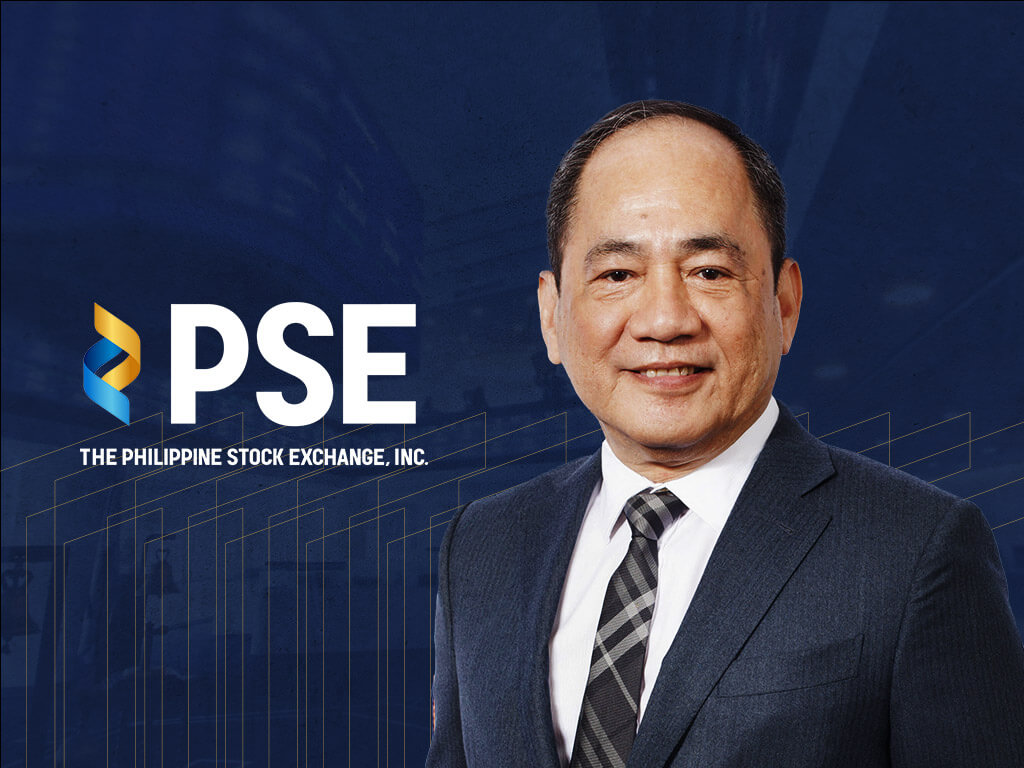
PSE president and CEO Ramon Monzon, speaking on the sidelines of the Philippine Tax Academy Convention, revealed that the training program will first be offered at two major universities: the De la Salle College of Saint Benilde and the Ateneo de Manila University, starting in the first quarter of 2026.
Both institutions are already familiar partners, as they currently offer the PSE’s comprehensive Certified Securities Specialist course, which is a rigorous 124-hour, 14-module education program.
This established curriculum covers essential financial and securities market theories, advanced valuation techniques and analysis, investment portfolio management strategies, and the “real-world” applications of financial principles.
By introducing the game, the PSE aims to bridge the gap between theoretical knowledge and practical experience.
Participants in the stock trading game will receive virtual currency to “invest” in stocks using real-time, actual market data, providing a risk-free, yet authentic, trading environment for students learning the complexities of the stock market and its relationship to the benchmark PSEi.
Gamification to Cultivate Investor Confidence and Skills
The structure of the stock trading game is carefully designed to be highly competitive and rewarding, fostering a culture of practical investment skills among young and future investors.
According to Monzon, participants will access the game through a dedicated website developed by PSE Academy, the official market education platform of the local bourse.
The competition will incentivize performance through rewards: the PSE plans to recognize and reward the student who achieves the highest portfolio returns at intervals of three, six, and twelve months, though the specifics of the prize were not immediately elaborated upon.
This competitive format is designed to keep students engaged and encourage them to actively follow market developments, learn technical analysis, and apply strategic thinking.
The game’s reach is also set for expansion beyond the student body. Monzon noted that the PSE is first testing the product internally on its own employees as a “stock investing competition.”
Critically, the plan is to eventually offer the game to Filipinos residing abroad, specifically targeting Overseas Filipino Workers (OFWs).
Monzon explained this ambitious goal, stating, “We want schools, OFWs (overseas Filipino workers) to have the real-life experience of trading.”
This move is significant as it aims to provide practical investment exposure to a substantial population that represents a major source of capital and remittances, potentially broadening the base of local investors and adding liquidity to the market, which can bolster the stability and growth prospects of the PSEi.
Political Volatility and the Need for Market Credibility
The PSE’s proactive educational outreach comes at a crucial, challenging time for the local stock market, which recently suffered heavy losses due to significant political instability.
The local bourse experienced a noticeable downturn stemming from corruption allegations involving high-ranking government officials, an issue that deeply eroded investor confidence.
The benchmark Philippine Stock Exchange Index (PSEi) had already tumbled by 6.74 percent, dropping to 6,108.86 on Friday from its starting point of 6,550.39 at the beginning of the year.
This decline was so pronounced that the index even dipped to a six-month low by the end of September, effectively erasing all recent gains that had been fueled by otherwise improving macroeconomic conditions.
This sharp reversal underscores the market’s extreme sensitivity to the political environment.
Monzon himself candidly told reporters that only “very positive results” emerging from the government’s official investigation into the anomalous flood control projects would be sufficient to truly revive the market sentiment.
He emphasized the fundamental truth of market psychology, stating, “The market’s No. 1 ally is confidence.”
Monzon concluded by stressing that a “very good, credible investigation [is] the only thing that can bring back confidence” to the Philippine Stock Exchange and ensure the long-term health of the index.