Strong Domestic Demand Drives Robust Q1 Growth Projections
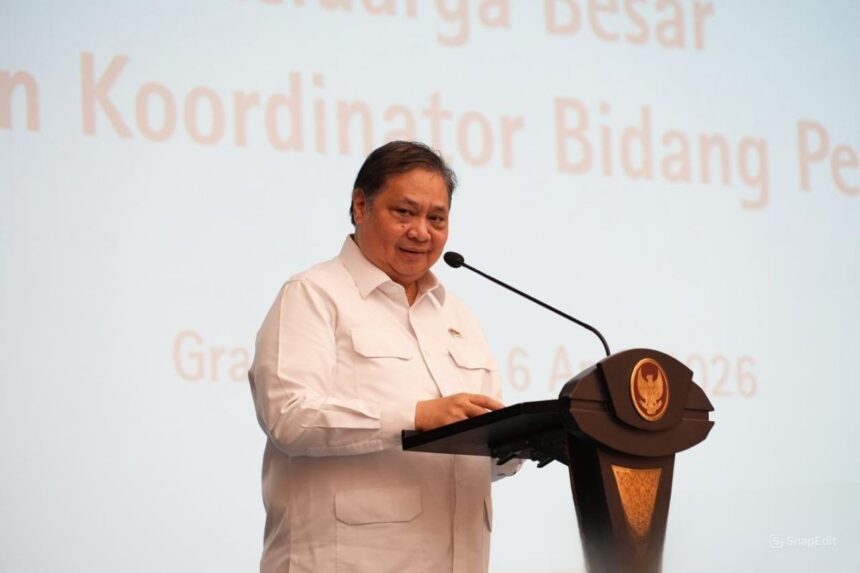
Indonesia’s economic landscape appears increasingly vibrant as early indicators suggest that Q1 growth in 2026 likely surpassed the 5.5% mark, underpinned by a surge in household consumption and strategic fiscal interventions. Coordinating Minister for Economic Affairs Airlangga Hartarto highlighted that while official statistics are still being finalized, the momentum generated during the first few months of the year reflects a resilient domestic market capable of weathering global volatility.
This impressive start to the year was significantly bolstered by the timely distribution of holiday allowances, known locally as THR, which provided a massive injection of liquidity into the hands of consumers. Furthermore, the government’s decision to accelerate public spending and implement stimulus measures totaling 809 trillion rupiah has created a multiplier effect across various sectors, from retail to local manufacturing.
By focusing on maintaining this positive momentum, the administration aims to ensure that the initial burst of activity transition smoothly into the subsequent quarters. The narrative surrounding the nation’s financial health is one of guarded optimism, as policy leaders prioritize the welfare of the middle class while simultaneously streamlining the bureaucratic processes that often hinder rapid capital deployment. This synchronized effort between fiscal stimulus and consumer support has placed the archipelago on a firm path toward meeting its ambitious annual targets.
Strategic Investment Mobilization And Fiscal Sustainability Goals
To sustain the trajectory established by the strong Q1 growth figures, the government is intensifying its focus on investment realization and long term structural reforms. Minister Airlangga noted that investment serves as the secondary critical engine of the economy, with the state targeting a record realization of over 2,041 trillion rupiah for the current fiscal year. To achieve this, the newly established Task Force for the Acceleration of Government Programs is working tirelessly to eliminate bureaucratic bottlenecks.
By prioritizing debottlenecking, the administration ensures that incoming capital is not just committed but actually deployed into productive assets that expand the nation’s economic capacity. Maintaining investor confidence is a central tenet of this strategy, as foreign and domestic capital inflows are essential for funding the large scale projects required for national development. The government is also planning a second wave of fiscal support in June, which will include the disbursement of 13th month salaries for civil servants.
This two pronged approach of stimulating consumption while aggressively pursuing investment aims to keep the full year expansion rate above the 5.4% threshold. Even as external risks such as geopolitical tensions and global market shifts weigh on emerging economies, the consistent focus on internal productivity and business climate stability provides a secure buffer. The proactive mobilization of these resources demonstrates a commitment to a pro growth agenda that balances immediate welfare needs with the foundational requirements for long term industrial competitiveness.
Macroeconomic Resilience And Regional Leadership
The reported Q1 growth level of 5.5% represents a significant victory for Indonesia’s macroeconomic policy framework, signaling a decoupling from the stagnant trends seen in other major economies. We analyze that the aggressive fiscal stance, supported by a massive 809 trillion rupiah stimulus package, has effectively utilized the nation’s healthy balance sheet to catalyze private sector activity.
This move is particularly important for the banking sector, as increased consumption and investment activity drive demand for credit, thereby improving the overall profitability and asset quality of domestic lenders. We observe that the emphasis on investment as a key lever for growth is not merely a quantitative target but a qualitative shift toward higher value added industries and infrastructure. Achieving a realization target of over 2,000 trillion rupiah would solidify Indonesia’s position as a premier destination for global capital.
Furthermore, the strategic use of social assistance and civil servant bonuses as fiscal stabilizers ensures that the domestic demand engine remains insulated from the inflationary pressures often associated with supply chain disruptions. We anticipate that as the government continues to refine its project execution through specialized task forces, the efficiency of capital will improve, leading to higher long term productivity gains. For international investors and rating agencies, this level of fiscal discipline combined with high growth performance reinforces the country’s sovereign credit profile.
Analytical Commentary On Structural Resilience And Capital Allocation
The projected Q1 growth of 5.5% serves as a critical proof of concept for Indonesia’s shift toward a consumption investment hybrid model that prioritizes internal stability over export dependency. We analyze that the integration of the Task Force for the Acceleration of Government Programs under Presidential Decree No. 4/2026 marks a pivotal transition from passive policy setting to active industrial management. By directly addressing the bureaucratic friction that often stalls large scale infrastructure projects, the government is effectively lowering the cost of doing business and increasing the velocity of incoming capital.
This debottlenecking strategy is essential for maintaining the target of 2,041.3 trillion rupiah in investment realization, as it transforms nominal commitments into actual operational capacity. We observe that this administrative agility, combined with the massive 809 trillion rupiah stimulus, provides a robust defense against the rising risk premiums typically associated with emerging market assets during periods of global geopolitical tension. The ability to maintain such high growth rates without triggering runaway inflation is a testament to the improved efficiency of the domestic supply chain and the effectiveness of targeted social spending.
From a regional market impact perspective, Indonesia’s robust performance acts as a gravitational anchor for the broader ASEAN economy, attracting diverted capital from more volatile markets. We anticipate that the continued emphasis on 13th month salaries and social assistance will create a sustained floor for consumer discretionary sectors throughout the second half of the year. This fiscal predictability is highly valued by institutional investors, as it provides a clear roadmap for corporate earnings growth in a region otherwise clouded by uncertainty.
Furthermore, the successful mobilization of over 2,000 trillion rupiah in investment would likely trigger a secondary wave of industrial clustering, particularly in the manufacturing and digital infrastructure sectors. This creates a virtuous cycle where increased productive capacity leads to higher employment and further bolsters the household consumption that drove the Q1 growth figures. Ultimately, the synergy between fiscal stimulus, administrative reform, and strategic capital allocation positions Indonesia not just as a resilient emerging market, but as a dominant regional engine of growth capable of setting the pace for the Southeast Asian economic community in 2026.