Expanding Market Momentum And The Rise Of Retail Investors
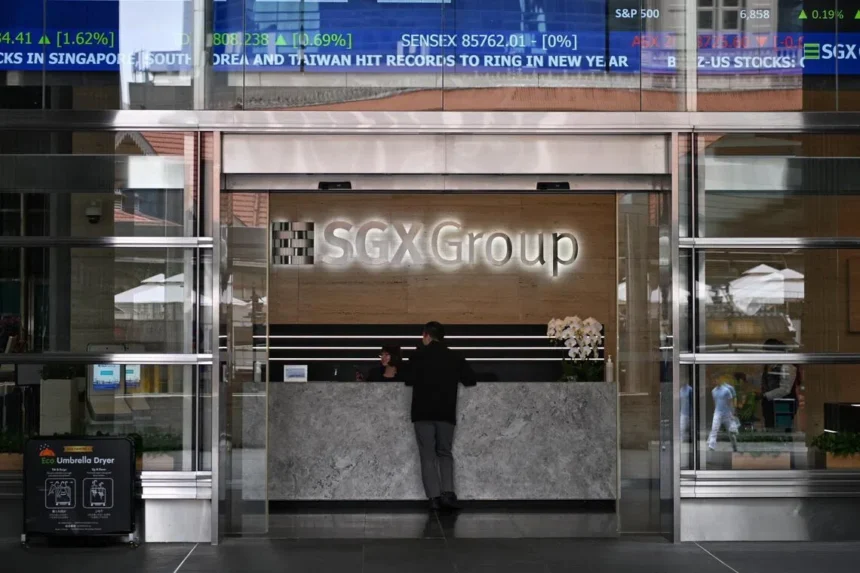
The Singapore stock market witnessed a remarkable resurgence in 2025, as retail investors displayed a significant appetite for local equities by booking 2.62 billion dollars in net inflows. This figure represents a five-year high for the city-state, marking the most substantial participation from individual market participants since the global shifts of 2020.
Market strategists at the SGX have noted that this surge brings total net inflows from the retail segment to 17 billion dollars over the past six years, signaling a sustained long-term commitment to the local exchange. The first half of the year was particularly active, with individual contributors injecting 2.2 billion dollars, followed by a more tempered 413 million dollars in the latter half.
A major driver for this activity was the high-profile banking sector, particularly DBS, which became a primary recipient of capital following global geopolitical shifts and new tariff packages announced on the international stage. During periods of volatility, such as the market fluctuations seen in April, these investors turned toward established financial institutions that offered a lucrative premium in dividend yields.
Strategic Sector Rotations And The Performance Of Specialty Reits
Beyond the banking sector, the landscape for retail investors in 2025 was defined by strategic rotations into real estate investment trusts and the burgeoning data center market. Mapletree Industrial Trust emerged as a standout performer within the Straits Times Index, recording a net retail inflow equivalent to 6.6 percent of its market capitalization.
This appetite for industrial and digital infrastructure was further evidenced by the successful debut of NTT DC Reit on the mainboard, which matched that 6.6 percent inflow figure within its own market segment. As the largest Reit listing in a decade, it attracted significant attention from traders who utilized range-bound trading strategies during the second half of the year to capitalize on specific price boundaries.
Interestingly, while many sectors flourished, some individual stocks faced headwinds due to internal corporate developments. For instance, the property giant CDL saw 350 million dollars in outflows as investors unwound their positions following a widely publicized boardroom battle for control. This highlights the sensitivity of the retail segment to corporate governance and stability within the local market.
Professional Market Analysis And Future Growth Initiatives
From a professional financial and analytical perspective, the performance of the Singapore stock market in 2025 can be viewed as a masterclass in regional resilience and strategic capital allocation. The Straits Times Index reached a historic record of 4,655.38 by the end of December, delivering a total return of 28.8 percent when reinvested dividends are taken into account.
This performance significantly outpaced most Asean peers, positioning Singapore as a premier destination for both domestic and international capital. We interpret the stellar trading activity in December—where securities market turnover climbed 29 percent year on year—as a clear signal of increasing liquidity and market depth. This volume is critical for maintaining a competitive bid-ask spread.
The introduction of the Equity Market Development Programme, which allocated 5 billion dollars to fund managers to inject liquidity, has clearly borne fruit by accelerating capital raising and encouraging new listings. Looking toward 2026, the focus remains on deepening market participation through high-quality research and strengthened communication between company management and the public.
Strategic Analysis Of Regional Market Integration And Investor Psychology
The structural outperformance of the Singaporean equity market throughout 2025 and into early 2026 suggests a fundamental shift in the regional risk-reward paradigm. We observe that the high concentration of retail capital in the banking and Reit sectors functions as a sophisticated domestic hedge against inflationary pressures and global trade uncertainty.
This market impact is particularly evident when analyzing the yield spread compression between Singapore government bonds and the Straits Times Index dividend yield. As local interest rates normalized, the flight to quality by retail participants created a floor for valuations, effectively insulating the bourse from the more aggressive drawdowns witnessed in other emerging markets. The psychological shift from speculative trading to income-focused accumulation reflects a maturing investor base that prioritizes balance sheet strength and sustainable payout ratios over volatile growth stories.
Furthermore, the emergence of the data center Reit as a dominant asset class provides a unique bridge between Singapore’s traditional real estate strength and its aspirations as a digital infrastructure hub. This regional market impact is not merely a localized phenomenon; it signals to international institutional investors that the Singapore Exchange is successfully diversifying its portfolio to capture the next wave of industrial evolution.
We analyze the 29 percent surge in December turnover as a precursor to increased foreign direct investment, as the enhanced liquidity profile makes the market more attractive for large-scale algorithmic and institutional entry. The government-led liquidity injections have successfully bridged the gap for mid-cap stocks, ensuring that the breadth of the market expands beyond the traditional big three banks. This multi-layered approach to market development is essential for maintaining Singapore’s status as a safe haven in a fragmented global economy.
From a macroeconomic perspective, the record-breaking performance of the Straits Times Index serves as a vital indicator of the city-state’s underlying fiscal health and its ability to navigate the complexities of international trade policies. The ability to outpace Asean peers while maintaining a low-volatility profile makes the Singaporean market a unique defensive-growth hybrid.
We anticipate that as the bourse continues to streamline listing requirements and enhance research accessibility, the secondary market will see a sustained increase in retail velocity. In the final analysis, the 2025 data confirms that the Singapore stock market has successfully transitioned into a high-quality, liquid ecosystem where the interests of retail participants and institutional giants are increasingly aligned. This institutionalization of retail behavior, characterized by disciplined entry into value-unlocking initiatives, will be the defining characteristic of the Singaporean financial landscape throughout the 2026 fiscal year and beyond.