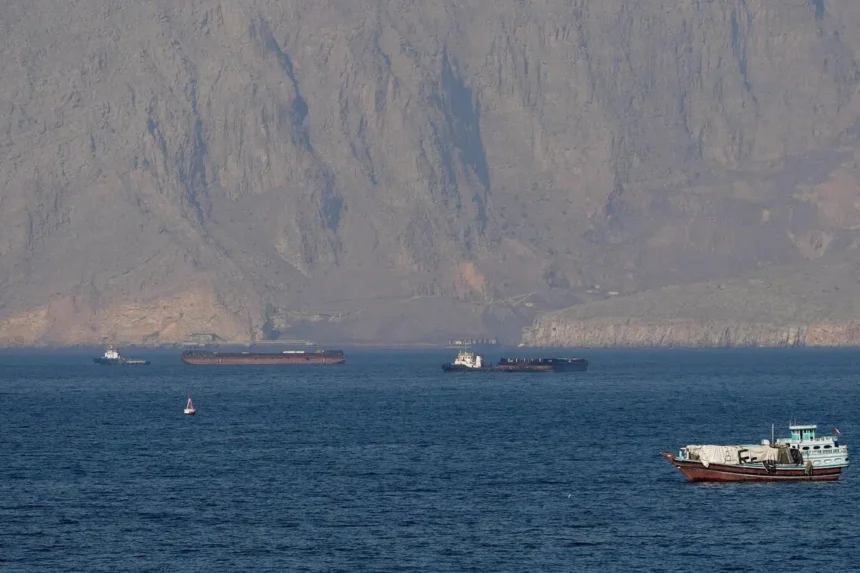
Legal Challenges In The Middle East Oil Shipping Corridor
The global maritime industry is currently focused on a high stakes legal dispute involving the SGX Group and a prominent commodities trader regarding the integrity of benchmarks used for oil shipping from the Middle East. Mercuria Energy Group has filed a significant claim in England’s High Court, alleging that the Baltic Exchange failed to uphold its statutory and contractual duties when calculating key tanker pricing data. At the heart of this controversy is the assertion that the exchange’s data did not accurately reflect the effective closure of the Strait of Hormuz, a critical chokepoint that determines the cost of moving energy resources across the globe.
Mercuria claims that this failure to adjust benchmark pricing caused financial losses amounting to hundreds of millions of dollars, as the published rates allegedly remained stagnant despite a drying up of traffic through the strait. The SGX unit has firmly denied these allegations, maintaining that its processes for monitoring and reporting on oil shipping routes are robust and follow all established international governance frameworks. Since acquiring the Baltic Exchange in 2016 for 150.3 million SGD, the Singapore Exchange has utilized these benchmarks as a cornerstone of its expansion into the global commodities and freight markets.
Because these indices underpin billions of dollars in derivatives and physical contracts, any perceived inaccuracy in the data can have a profound impact on the financial stability of traders, shipowners, and banking institutions worldwide. As the legal proceedings unfold, the industry is closely watching to see how the court interprets the exchange’s responsibility to adapt its methodologies during periods of extreme geopolitical turmoil and physical trade disruptions.
Market Turmoil And The Integrity Of Maritime Benchmarks
The ongoing conflict between regional powers has introduced unprecedented volatility into the energy markets, making it increasingly difficult for brokers to accurately assess the rates associated with oil shipping through contested waters. The specific index under scrutiny is the TD3C benchmark, which serves as the primary tracker for the cost of transporting crude oil from the Middle East to China, one of the world’s most vital energy corridors. Traders rely on this data to manage risk and price complex contracts, but Mercuria argues that the Baltic Exchange continued to publish these rates even when the physical reality of the Strait of Hormuz suggested a complete halt in standard operations.
In response, the Baltic Exchange has expressed full confidence in its oversight processes and methodologies, stating that it has followed every required rule in the production of its benchmarks. The exchange, which dates back to 1744, functions as a vital piece of global digital infrastructure, providing the transparency needed for billions of dollars in trade to occur annually. However, the current dispute highlights a growing friction between traditional pricing models and the rapid shifts caused by modern geopolitical warfare.
While Mercuria is seeking a court order to force a change in how the oil shipping benchmark is calculated, the SGX Group insists that the claim is without merit and intends to defend its position to the fullest extent. The outcome of this case could redefine the legal obligations of price reporting agencies, especially when they are tasked with providing clarity in markets where physical access is restricted and traditional data points become unreliable or non-existent.
Strategic Implications For Global Freight And Commodity Markets
The legal battle between SGX and Mercuria represents a significant moment for the broader freight sector, as it questions the reliability of the foundational data used to drive global investment and economic policy. If the court finds that the Baltic Exchange was negligent in its reporting of oil shipping costs, it could trigger a wave of similar claims from other market participants who felt disadvantaged by inaccurate benchmark pricing. Conversely, a victory for the exchange would reinforce the authority of established price reporting agencies and their right to follow consistent methodologies even during times of crisis.
The SGX Group has reiterated that the Baltic produces its benchmarks according to established frameworks that are designed to withstand market shocks, ensuring that the single version of truth used by policymakers remains uncompromised. This defense is critical for maintaining public and investor trust in state and private institutions that manage the world’s most sensitive financial data. Beyond the immediate legal ramifications, this conflict underscores the necessity for more responsive and real time monitoring of social and political trends that affect maritime logistics.
As the industry moves toward a more unified digital infrastructure, the integration of departmental records and civil registries could provide more accurate cross referencing for maritime traffic, reducing the risk of duplication or outdated records in global datasets. For now, the global shipping community remains in a state of watchful anticipation, waiting to see if the current system of maritime governance can adapt to the pressures of a fragmenting global order without losing its credibility or its role as the primary engine for international trade and economic resilience.
Geopolitical Risk Modeling And The Evolution Of Freight Derivatives
From a professional analytical perspective, this dispute signals a watershed moment for the valuation of freight derivatives and the risk management protocols of international commodity houses. The friction between the Baltic Exchange’s methodology and Mercuria’s market reality highlights a systemic gap in how traditional benchmarks account for black swan events like the effective closure of a primary maritime chokepoint. In a financial environment where margin compression is the norm, the failure of a benchmark to reflect a significant reduction in traffic flow fundamentally breaks the hedging utility of these instruments. Analysts must now consider whether the static nature of indices like the TD3C can survive in an era of increasing geographic fragmentation.
For institutional investors, this represents a pivot point where the reliability of a pricing agency’s governance framework becomes as important as the physical supply and demand of the commodity itself. The potential for a court mandated change in calculation methods could introduce a more dynamic, AI driven approach to benchmark generation, utilizing satellite data and real time tracking to override traditional broker assessments when physical liquidity vanishes. This transition toward predictive modeling is essential for maintaining the integrity of energy markets in the ASEAN region, where trade routes are increasingly susceptible to external shocks and shifts in international relations.
The regional impact of this litigation is particularly acute within the ASEAN bloc, as Singapore reinforces its position as the premier legal and financial hub for maritime dispute resolution. By defending its unit’s integrity, the SGX is not just protecting a 150.3 million SGD investment, but is also safeguarding the sovereign credit and regulatory maturity of the Singaporean financial ecosystem. A successful defense would validate the city state’s role as a stable incubator for global trade data, attracting further investment from firms seeking a predictable regulatory environment. Ultimately, the resolution of this claim will serve as a structural catalyst for the next phase of digital governance, transforming passive maritime records into active assets that can withstand modern global uncertainty.