Operational Restructuring Timelines For Suspended Firms
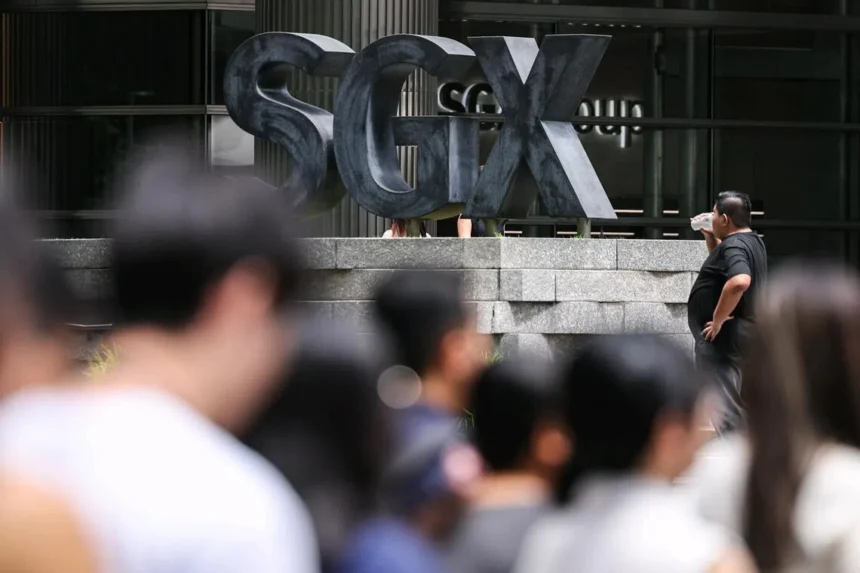
Actively suspended firms must successfully resolve their primary operational anxieties or complete comprehensive balance sheet corrections within a strict three-year window under updated capital market regulatory directives. This standardized regulatory horizon is carefully calibrated based on historical liquidation data, which indicates that entities displaying a high probability of structural recovery can achieve substantive operational milestones within thirty-six months. Such milestones typically encompass finalizing binding settlement arrangements with major institutional creditors, executing comprehensive debt-to-equity swaps, and reorganizing core subsidiary assets to effectively unlock intrinsic transactional value for minority retail shareholders. This strategic time constraint completely reshapes how distressed companies approach emergency governance, forcing internal boards to act with maximum urgency rather than dragging out disputes over multiple fiscal years.
By formalizing this definitive operational window, bourse regulators intend to compel underperforming or distressed enterprises to accelerate their internal corporate restructuring workflows rather than languishing in prolonged operational ambiguity. Entities that fail to demonstrate rapid administrative progress or concrete market rehabilitation strategies upon surpassing this three-year baseline will face immediate, non-negotiable removal from the official trading board to preserve market integrity. This structural shift effectively penalizes passive management teams, protects downstream retail portfolios from systemic opacity, and reestablishes equity float velocity across the wider market. Ultimately, the framework establishes a predictive pathway where market participants can clearly calculate corporate survival timelines, thereby stabilizing baseline operational forecasts for institutional fund managers looking at distressed assets.
Capital Market Liquidity Mandates
The fundamental principle governing public equity markets centers on the continuous facilitation of transparent price discovery mechanisms, robust liquidity pools, and uninterrupted transactional velocity for international asset management funds. Senior regulatory executives emphasize that keeping suspended firms in a state of indefinite transactional paralysis directly undermines this foundational market architecture, thereby distorting baseline regional investment indices. Although national bourse authorities have successfully compressed the aggregate volume of long-term commercial trading halts over recent fiscal stretches, market administrators remain highly committed to shortening this specific list even further to cultivate a healthier capital environment.
To accomplish this strategic objective, the regulatory branch has significantly narrowed the legal parameters under which an independent commercial issuer may qualify for a prolonged trading suspension. Under the newly deployed administrative framework, standard market trading halts will generally be restricted to circumstances where unambiguous forensic evidence indicates that an enterprise can no longer maintain its status as a viable going concern. Consequently, historical suspended firms that were penalized for secondary compliance deviations may now formally submit trading resumption applications, provided their corporate boards can legally verify long-term balance sheet viability. This ensures that only fundamentally broken business models face severe market penalties while temporary compliance laggards maintain an active path to public capital access, thereby avoiding unnecessary asset freezes that penalize passive market investors.
Statistical Reorganizations
Recent statistical reporting from the national exchange highlights the complex operational state of distressed public enterprises, with the aggregate volume of long-term trading halts consolidating at thirty-nine unique corporate issuers. Within this specific baseline segment, sixteen entities are actively exploring specialized trading resumption tracks, ten are undergoing formal judicial liquidation or corporate winding-up procedures, and eight have officially received binding delisting notifications from exchange authorities. These struggling operations are typically laboring to satisfy rigorous continuing listing obligations, while a minor subset of five entities remains under intense court-supervised restructuring schemes or formal arrangements to manage volatile liabilities.
Prominent regional developers and resource conglomerates currently navigate these intricate judicial management processes, highlighting the intense macroeconomic headwinds affecting capital-intensive sectors across emerging markets. While isolated logistical transport and energy entities successfully orchestrated full market comebacks during the latter half of the fiscal stretch, parallel real estate development syndicates were added to the list due to systemic free-float deficiencies or unexpected judicial intervention. Ultimately, the long-term structural resilience of the local market architecture will depend on the capacity of these suspended firms to transition from administrative isolation back into fully transparent public trading environments. This ensures that frozen assets either recover clinical functionality or leave the boards entirely, allowing fresh institutional capital to deploy into higher-yielding, fully compliant commercial enterprises.
Regional Wholesale Value Chain Interventions
From a rigorous corporate governance perspective, the strict regulatory enforcement of a three-year restructuring cap creates a profound shift in risk pricing models for special situations investors across Southeast Asia. By transforming open-ended suspensions into time-bound liquidity events, the exchange effectively mitigates the structural deadweight loss associated with trapped retail and institutional capital, forcing private equity syndicates and distressed debt funds to demand higher risk premiums. This compressed timeline accelerates a healthier secondary market for corporate control, as corporate boards realize that defensive delaying tactics will result in a rapid, non-negotiable delisting. Consequently, global distressed asset managers are shifting their focus toward early-stage balance sheet restructuring, resulting in a dramatic compression of corporate credit spreads for companies that exhibit strong underlying cash flows but temporary liquidity shortages.
Furthermore, this systematic removal of terminal zombie listings significantly enhances the baseline capital efficiency rankings of the domestic bourse relative to peer exchanges within the ASEAN corridor. Global institutional asset allocation models heavily weight price discovery efficiency and exit liquidity when determining country weighting metrics across emerging-market equity indices. As chronically suspended firms are systematically purged or rehabilitated, the overall quality of the listing pool increases, attracting higher concentrations of passive exchange-traded fund inflows that previously bypassed opaque equity markets. This institutional capital re-entry generates a powerful rising-tide effect, improving structural valuations for mid-cap operators and providing local corporations with cheaper access to primary equity financing. Over the multi-year macro cycle, this structural governance transformation will establish a highly disciplined corporate culture, reinforcing the competitive moat as a low-risk capital accumulation center for cross-border enterprise financing.