The Shipping Industry as the Lifeline of Indonesia’s Economy
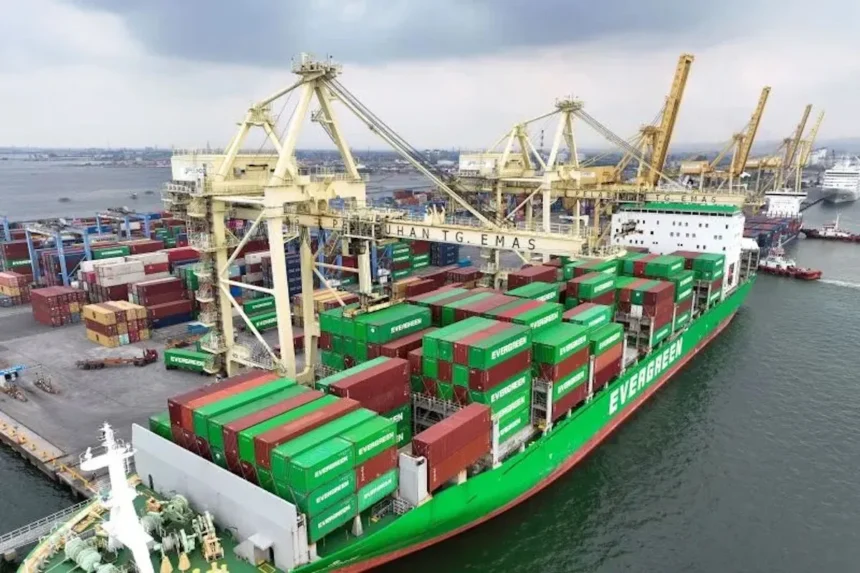
The Indonesian Chamber of Commerce and Industry (Kadin) has strongly highlighted the indispensable role of the shipping industry as the veritable lifeline of the national economy and a crucial driver of interregional connectivity throughout the archipelago.
Carmelita Hartoto, Kadin’s Deputy Chairperson for Infrastructure and Regional Development, asserted that it is no exaggeration to view the transportation sector, especially shipping, as one of the main arteries channeling the economic pulse of Indonesia.
She further detailed that the national shipping sector consistently proves its strategic significance by actively strengthening the vital connectivity between the thousands of islands, absorbing a massive number of workers, and ensuring the continuous and smooth flow of logistics across the entire country.
This layered contribution, spanning infrastructure, employment, and trade, generates a substantial multiplier effect that significantly supports national economic growth.
The latest data from Statistics Indonesia (BPS) confirms this importance: Indonesia’s economy expanded by a solid 5.04 percent in the third quarter of 2025, and within that growth, the transportation sector was a major pillar, contributing a notable 6.10 percent to the overall national GDP.
During that same period, the sector as a whole grew by an impressive 8.62 percent, with the shipping segment specifically recording the highest growth rate among all sub-sectors at a remarkable 10.19 percent, solidifying its position as a top performer and economic accelerator.
Employment Contribution and The Need for Infrastructure Investment
Beyond its direct impact on Gross Domestic Product and economic growth rates, the transportation sector’s immense role in the national workforce must be acknowledged.
Hartoto noted that as of August 2025, the transportation sector employed approximately 6.3 million people, which represents a significant 4.28 percent of the total national workforce.
This substantial employment figure clearly underscores the sector’s critical function in supporting public welfare and contributing to social stability.
The smooth operation and continued expansion of the shipping industry and its related infrastructure are therefore directly tied to the livelihoods of millions of Indonesians.
Furthermore, Hartoto emphasized that the strategic development of infrastructure remains a critical factor for sustained economic success, citing the proven ripple effects it generates on both regional and national economies.
She provided the Trans-Sumatra toll road project as a compelling example, which has demonstrably contributed to increasing regional economic activity, spurring substantial job creation, and boosting the performance and competitiveness of the surrounding medium and small industries.
Such projects are essential for unlocking latent economic potential in various regions and connecting them more efficiently to the main economic hubs, ensuring the benefits of the booming shipping and transportation sectors are felt uniformly across the vast archipelago.
Maintaining a focus on improving the entire logistics ecosystem is key to leveraging the strength of maritime trade and domestic supply chains.
Leveraging Public-Private Partnerships to Bridge the Funding Gap
Acknowledging the inherent challenges in financing large-scale infrastructure projects, particularly the limited nature of the state budget, Hartoto strongly encouraged a wider adoption of Public-Private Partnerships (PPP) as a crucial mechanism.
These partnerships are essential to successfully advance infrastructure development through collaborative, investment-based financing models.
The PPP approach is designed to attract private capital and expertise to projects that serve the public interest, thereby easing the financial burden on the government while ensuring that critical infrastructure, which is vital for the shipping industry and trade, continues to be built and modernized.
This model helps to address the considerable funding gap that exists for necessary capital expenditures.
Despite the clear benefits, Hartoto noted that persistent bureaucratic challenges continue to hinder the full potential of PPP models in Indonesia.
Overcoming these hurdles, streamlining approval processes, and creating a more attractive and predictable regulatory environment are necessary steps to maximize private investment in transportation and logistics.
A successful PPP framework will be key to financing the ports, roads, and other facilities required to support the accelerated growth of the shipping and logistics sectors, ultimately securing Indonesia’s economic competitiveness and maintaining the efficient flow of goods driven by the vital shipping industry.