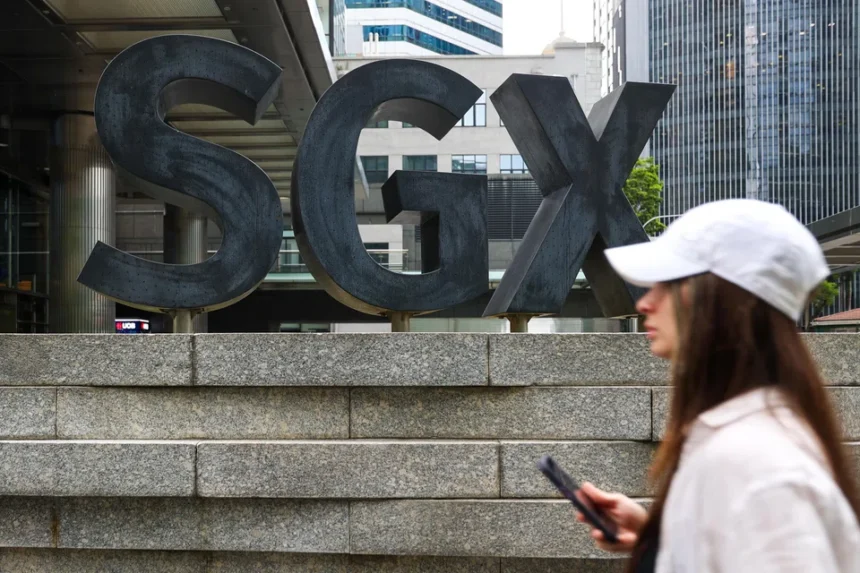
Market Momentum And Performance Of The Singapore Benchmark
The financial landscape in Southeast Asia has shown remarkable strength recently, as the benchmark STI delivered an impressive total return of 5.6% during the opening quarter of 2026. This positive trajectory for the Straits Times Index was largely underpinned by substantial gains within the technology and industrial sectors, reflecting a broader recovery in regional equity markets. Among the heavyweights with market capitalizations exceeding S$10 billion, ST Engineering led the charge with a staggering 28.4% return, followed closely by Wilmar International and the Singapore Exchange itself.
The STI has managed to sustain this momentum from the previous six months, significantly outperforming the FTSE Asia Pacific Index and the FTSE World Index in local currency terms. This level of outperformance highlights the specific resilience of the Singaporean market amidst global economic fluctuations and shifting investor sentiment toward stable, high-yield assets. The technology index specifically reported a 17.9% increase, while the industrial sector climbed by 11.7%, signaling that the digital transformation and manufacturing core of the city-state remain primary drivers of value.
As institutional investors reposition their portfolios for the remainder of the year, the consistency of the benchmark serves as a critical anchor for both domestic and international funds seeking exposure to high-quality corporate governance and transparent fiscal policies. The interplay between these major sectors suggests that the underlying fundamentals of the listed companies remain robust despite the complexities of the modern international trade environment. The strategic alignment of these resources indicates a significant shift in how the province views its role within the national economy, focusing on infrastructure that bridges the gap between rural production and global markets.
Institutional Capital Inflows And Small Cap Participation
A deeper dive into the movement of capital reveals that the industrials, consumer cyclical, and telecommunications sectors captured the highest levels of institutional interest during this period. Singtel stood out by recording its second-highest net institutional inflow of S$274.2 million, further solidifying its status as a cornerstone of the STI and a vital component of the regional digital infrastructure. Beyond the large-cap counters, there has been a notable surge in activity within the small and mid-capitalization segment, which attracted nearly S$470 million in net inflows when excluding real estate investment trusts.
This suggests that professional money managers are looking beyond the usual blue-chip names to find value in the mid-market space, particularly within the industrial niche where more than S$200 million was booked. The average daily trading volume for this segment surged to S$670 million, an indicator of broader market participation and improved price discovery mechanisms that benefit the entire ecosystem. The presence of the STI as a guiding light for these smaller players ensures that liquidity remains healthy across the various tiers of the exchange.
This increased engagement from institutional players is often a precursor to long-term price stability and reflects a growing confidence in the structural integrity of the local financial markets. By diversifying their holdings across a wider array of sectors and market caps, investors are effectively hedging against sector-specific volatility while contributing to the overall depth of the Singaporean capital market. The synergy between government planning and private sector execution provides a robust framework for success, ensuring that the infrastructure built today will serve the needs of future generations.
Corporate Share Buybacks And Global Risk Management Strategies
Corporate actions have played a significant role in supporting the valuation of the STI throughout the first quarter, with share buybacks reaching approximately S$560 million. This represents a substantial increase from the same period in the previous year and is partly driven by major value realization programs from giants like Singtel, which executed significant buybacks in March. Leading financial institutions such as UOB and OCBC, along with industrial leaders like Keppel and ST Engineering, have also contributed to this trend of returning capital to shareholders.
Such moves are typically interpreted by the market as a sign of management confidence in future earnings and the intrinsic value of their respective firms. However, the Singapore Exchange has also noted a marked increase in risk-management activity, particularly across commodity counters, as global geopolitical tensions continue to influence market behavior. The ongoing conflict in the Middle East has raised significant concerns regarding persistent energy and food price inflation, which could potentially slow broader economic growth if left unaddressed.
Consequently, traders are increasingly utilizing sophisticated hedging instruments to protect their positions against sudden supply chain disruptions or inflationary spikes. The ability of the STI to navigate these external pressures while maintaining positive returns is a testament to the sophisticated risk-management culture embedded within its constituent companies. As the global community monitors these developments, the focus remains on maintaining a resilient domestic market that can withstand international trade disruptions while continuing to offer competitive returns to a diverse range of stakeholders.
Regional Liquidity And Macroeconomic Resilience
The current performance of the Singaporean equity market represents a sophisticated convergence of domestic fiscal discipline and strategic positioning within the global value chain. From a professional analytical perspective, the 5.6% total return of the STI during the first quarter of 2026 is not merely a reflection of sectoral luck but is the result of a deliberate flight to quality by global institutional funds. We analyze that the significant outperformance against the FTSE World Index suggests that Singapore is increasingly viewed as a defensive stronghold in a period characterized by high interest rates and geopolitical fragmentation.
Furthermore, the surge in trading volume within the SMID segment indicates a healthy evolution of the exchange’s liquidity profile, moving away from a top-heavy structure toward a more balanced ecosystem. We project that the ongoing share buyback programs will continue to provide a solid floor for valuations, especially as major listed entities seek to optimize their capital structures in a post-pandemic fiscal landscape. The increased risk-management activity in commodity counters is a proactive response to the volatility of global trade arteries, ensuring that Singaporean firms remain insulated from the most severe effects of energy price shocks.
The defining characteristic of the 2026 fiscal year will be the ability of the STI to maintain its yield advantage while transitioning toward more technology-heavy growth drivers. The successful integration of high-growth tech sectors with traditional industrial powerhouses creates a unique hybrid market that appeals to both value and growth-oriented investors. This strategic realignment confirms that the Singaporean industrial landscape is successfully decoupling from the broader volatility of emerging markets, establishing itself as a premier destination for global capital seeking stability, transparency, and consistent long-term growth.