Temasek Restructures to Navigate Global Uncertainty
Singapore’s state-owned investment company, Temasek, has announced a major restructuring that will see the creation of three new, wholly-owned entities to manage its diverse portfolio. This strategic reorganization is a direct response to the escalating global uncertainty and the significant macroeconomic shifts currently reshaping the world. Effective from April 1, 2026, the company will establish Temasek Global Investments to oversee its direct international investments, Temasek Singapore to manage its Singapore-based portfolio companies, and Temasek Partnership Solutions for its partnerships, funds, and asset management companies. Temasek chief executive and executive director Dilhan Pillay explained that while the organization’s structure has remained relatively stable over the past two decades, the current environment necessitates a fundamental realignment. He emphasized that the world has changed for all stakeholders, from governments to corporations and even individuals. The firm’s top priority is to adapt and become more agile and nimble to effectively navigate the changes that lie ahead, building a resilient and forward-looking portfolio that is prepared for future challenges. This proactive measure reflects the firm’s long-standing philosophy of not wasting a crisis, but rather using periods of global change as an opportunity to evolve.
A New Portfolio Strategy for Long-Term Growth
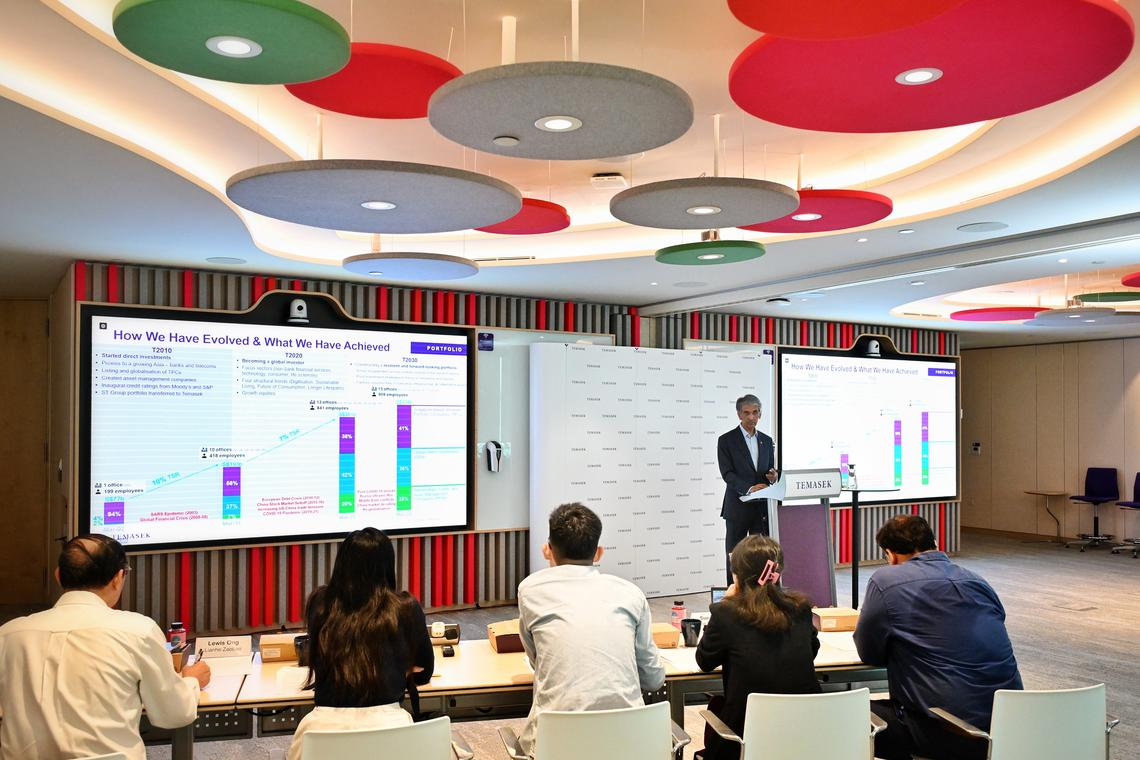
The restructuring reflects a significant evolution in Temasek’s investment strategy over the past 50 years. In 2002, nearly all of the company’s portfolio—a staggering 94 percent—was concentrated in its Singapore-based portfolio companies. However, in its drive to become a truly global investor, Temasek intentionally diversified its holdings by stepping up investments in America and Europe. By March 2025, the portfolio had been rebalanced, with Singapore-based companies making up 41 percent, global direct investments accounting for 36 percent, and partnerships and funds at 23 percent. This new restructuring is designed to further refine this strategy with a targeted allocation. Temasek now aims to maintain its global direct investments and Singapore-based companies at approximately 40 percent each, with the remaining 20 percent dedicated to partnerships and funds. This allocation, however, is flexible and can be rebalanced based on market volatility and new opportunities. Additionally, the company aims for a strategic split of its portfolio between a “resilient component” of about 60 percent—comprised of stable companies that deliver consistent returns—and a “dynamic component” of 40 percent, which will focus on high-growth areas like innovation and emerging technologies with strong long-term potential.
Why Now? Adapting to a Changing World Order
In response to questions about the timing of the reorganization, Dilhan Pillay asserted that there is no “good time” for such a change, only the “right time.” He pointed out that the global landscape today is fundamentally different even from a year ago when Temasek celebrated its 50th anniversary. The traditional “rules-based order” that global investors and companies have relied on for decades is now in flux. Pillay specifically cited the “America first” policy in the United States, which has prompted other nations to reconsider and realign their own operating frameworks. He explained that if the company were to simply maintain its existing structure, it would be ill-equipped to handle the profound shifts occurring in international relations and economic policies. By creating these distinct portfolio segments, Temasek can better anchor its strategy for 2030 and beyond, as each segment requires unique strategies and capabilities to succeed. This forward-looking approach is a clear recognition that adapting to an increasingly complex and unpredictable world is not merely an option but a necessity for long-term survival and success.