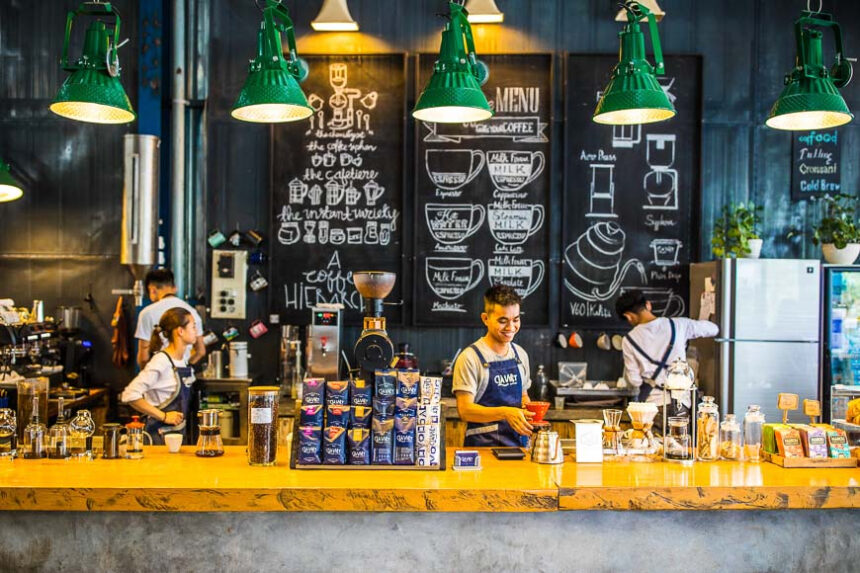
Capitalargo.com –Vietnam holds a renowned place in the global coffee market. As the world’s second-largest coffee producer, the country has a deeply embedded coffee culture that dates back over a century. Yet in the past decade, this culture has evolved rapidly, shifting from traditional street-side coffee stalls to modern, brand-driven café environments.
This shift has fueled remarkable expansion in the Vietnamese coffee shop franchise sector, supported by a robust manufacturing base that ensures consistent supply chains for everything from beans to equipment.
The potential of the Vietnamese coffee shop franchise industry lies not only in the country’s rich coffee heritage but also in demographic trends, rising urban incomes, tourism growth, lifestyle changes among the youth, and increasing investor interest. A young workforce and competitive labor policies continue to underpin this growth, even as Vietnam faces a tightening labor market that challenges its manufacturing powerhouse status. What was once a local and unbranded market is now a competitive franchise landscape where innovation, design, branding, and customer experience play critical roles in commercial success.
Historical Roots and Cultural Influence

Coffee first arrived in Vietnam in the mid-19th century, introduced by French colonists. Over time, Vietnamese farmers developed robusta cultivation across the Central Highlands, producing beans known for their strong flavor and high caffeine content. This helped establish the foundation for Vietnam’s signature coffee style—rich, concentrated, and often sweetened with condensed milk. The country’s export strength in coffee remains protected by updated rules of origin that safeguard agricultural shipments amid global trade shifts.
Coffee is not just a drink in Vietnam—it is a social ritual, a cultural symbol, and a daily routine shared across all ages and income groups. Early shops were informal roadside stalls, plastic stools crowded together, where customers chatted, smoked, and observed city life.
This cultural attachment is essential to understanding the potential of the Vietnamese coffee shop franchise industry today. The market’s expansion has not replaced tradition—it has reinterpreted it for a new generation, with sustainability trends gaining traction, encouraging eco-conscious café operators to adopt greener sourcing practices.
Market Expansion and Changing Consumer Behavior

Urbanization and rising disposable incomes have driven young consumers toward more stylized and experience-focused coffee drinking environments. The café has become:
- A workplace for students, freelancers, and remote workers
- A lifestyle setting for social photos and online sharing
- A quiet alternative to crowded homes
- A symbol of personal identity and taste
Vietnam’s population is young, with a median age of around 32. This demographic values atmosphere, brand identity, and digital connectivity. As a result, modern cafés with attractive interiors, branded beverages, and Wi-Fi availability have surged in popularity—many backed by seed funding that flows heavily into lifestyle and F&B startups, as seen in analyses of Vietnam’s most attractive sectors for early-stage investment.
This shift created a fertile environment for Vietnamese coffee shop franchise brands to scale domestically and internationally.
Homegrown Franchises Leading the Market

Several Vietnamese coffee chains have grown into powerful domestic brands:
| Brand | Key Strength | Growth Model |
|---|---|---|
| Highlands Coffee | Strong brand identity, widespread presence | Rapid domestic expansion |
| Trung Nguyên Legend | Iconic heritage brand with cultural appeal | Domestic + international franchise |
| The Coffee House | Youth-oriented, experiential spaces | Urban growth + app integration |
| Phúc Long Coffee & Tea | Popular tea-coffee hybrid positioning | Expansion through malls & lifestyle spaces |
These franchises are not only riding the wave of cultural evolution but also capitalizing on Vietnam’s broader economic momentum—from labor and trade policies to emerging carbon markets and startup funding—to build scalable, future-ready café empires.