First Quarter Financial Performance And Macroeconomic Projections
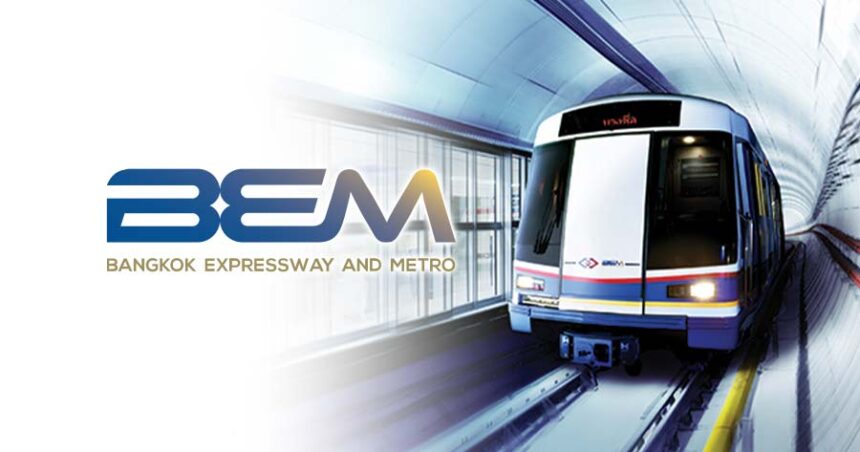
The urban transit and infrastructure landscape across major Southeast Asian metropolitan corridors is showing great resilience as high-density transportation operators optimize their core networks. Leading mass transit and expressway concessionaire Bangkok Expressway and Metro Public Company Limited, widely tracked under the stock ticker BEM, has delivered solid financial performance for the first quarter of 2026. The infrastructure giant posted a steady net profit of 875 million Thai baht, matching consensus market estimates while delivering a 0.5% year-on-year expansion and a 4.4% quarter-on-quarter growth profile.
Following an intensive analyst conference, senior management indicated that the corporation expects a relatively flat revenue and earnings trajectory for the rest of the 2026 fiscal year, which directly aligns with institutional market research predicting an annual net profit floor of 3,859 million Thai baht. While the company’s dedicated commercial property and retail development segment experienced a temporary 15.5% contraction in revenue during the initial months of the year, corporate leadership maintains a highly constructive view regarding an operational recovery in upcoming periods.
Furthermore, potential upcoming administrative adjustments to the Blue Line rapid transit rail fares scheduled for July are projected to be marginal, and the broader impact of rising electricity prices remains tightly managed through proactive energy hedging strategies. This structural readiness creates a resilient framework that factors in local operational realities, allowing the administrative infrastructure to dynamically track industry demand shifts and avoid long-term inefficiencies in commercial utility allocation.
Transit Ridership Fluctuations And Geopolitical Resiliency Frameworks
Successfully managing massive metropolitan transportation networks requires an advanced understanding of shifting commuter behavior and international macroeconomic dependencies. High-frequency transit data gathered during the initial weeks of May revealed a minor 1% to 2% year-on-year softening in both daily toll road vehicle traffic volumes and mass transit rail ridership across the BEM network. Financial research teams attribute this brief deceleration to the indirect ripple effects of prolonged geopolitical friction across the Middle East, which has temporarily slowed regional consumer spending patterns and disrupted international tourism flows into the domestic market.
However, equity research analysts categorize this localized softness as a strictly transitory phase, emphasizing that the underlying structural demand for high-capacity mass transit systems remains exceptionally strong due to the city’s established role as a primary commercial and financial capital. As cross-border territorial trade friction begins to stabilize over the coming quarters, commuter traffic patterns are expected to quickly return to their long-term upward trajectories.
To ensure long-term corporate agility, the operator continues to rely on advanced algorithmic scheduling models that adjust train frequency based on real-time transit field data, thereby protecting baseline operating margins from international market shocks. This systematic real-time technical tracking optimizes cross-border logistics, ensuring that emerging macro challenges do not result in prolonged liquidity logjams for trading entities across neighboring production hubs.
Mega Project Concessions And Long Term Valuation Dynamics
The long-term enterprise valuation of modern infrastructure groups is heavily dependent on their ability to consistently secure large-scale civil engineering projects and maintain balanced partnership terms. To accelerate its structural expansion, BEM is actively preparing to receive the formal contractual award for the highly anticipated Double Deck expressway infrastructure expansion project, with final regulatory sign-offs and project financing lines expected to be fully finalized by August or September of 2026.
Concurrently, the extensive mechanical and electrical engineering systems package for the upcoming Southern Purple Line expansion route is on track to be formally executed by the close of the current fiscal year or the opening months of 2027. Beyond these immediate developments, corporate development teams are systematically evaluating lucrative new intercity motorway development opportunities, including the proposed M5, M9, and Srinakarin-Suvarnabhumi highway networks.
While exploratory public discussions regarding a standardized flat-rate fare policy for the underground rapid transit grid have not yet officially commenced, the firm remains committed to its core financial principles, stating that it will only participate in structural concession revisions that completely preserve its long-term corporate asset value. This strategic structural combination positions traditional banking networks to effectively defend their market share against alternative payment corridors while unlocking high-velocity trade lanes that encourage multi-layered economic cooperation across key international ports.
Urban Transit Infrastructure Economics And Capital Market Arbitrage
The stable operational cash flows generated by a massive metropolitan transit operator serve as a critical structural indicator for the broader health of regional fixed-capital investments. Historically, heavy civil infrastructure operators across the ASEAN region faced significant capital structure challenges due to massive front-loaded construction debts and long repayment timelines, which made them highly vulnerable to sudden shifts in interest rate policies. By integrating high-volume toll road networks with high-density urban rail networks, a premier concessionaire like BEM effectively creates an internal financial hedge, using the immediate daily cash collections from vehicle expressways to efficiently cover the high maintenance costs of underground mass transit operations without needing to draw on expensive short-term corporate bank lines. This balanced asset portfolio is highly attractive to international institutional funds seeking defensive equity allocations in emerging markets, as the predictable nature of commuter transit usage provides a reliable revenue floor that remains largely unaffected by standard economic downturns.
Furthermore, the imminent launch of major capital expansion projects like the Double Deck highway grid provides a major economic boost for the domestic construction and materials supply sectors. As billions of baht are systematically deployed into the local industrial supply chain, adjacent industries like cement manufacturing, structural steel fabrication, and engineering consulting will experience sustained revenue growth, supporting broader macroeconomic expansion. For investment managers, equity research teams, and portfolio strategists, the critical financial metrics to monitor over the upcoming fiscal periods will be the speed of contract execution for the new transit lines and the steady growth of non-fare commercial revenues from station advertising and digital connectivity networks. These core financial indicators will ultimately dictate the velocity of regional service sector development and establish the structural floor for the long-term profitability of the domestic transit infrastructure sector within a highly competitive global marketplace. This unified financial foundation ensures that the transit grid can seamlessly expand its territorial coverage, successfully absorbing future population growth while delivering steady, predictable financial returns for global investment groups.