


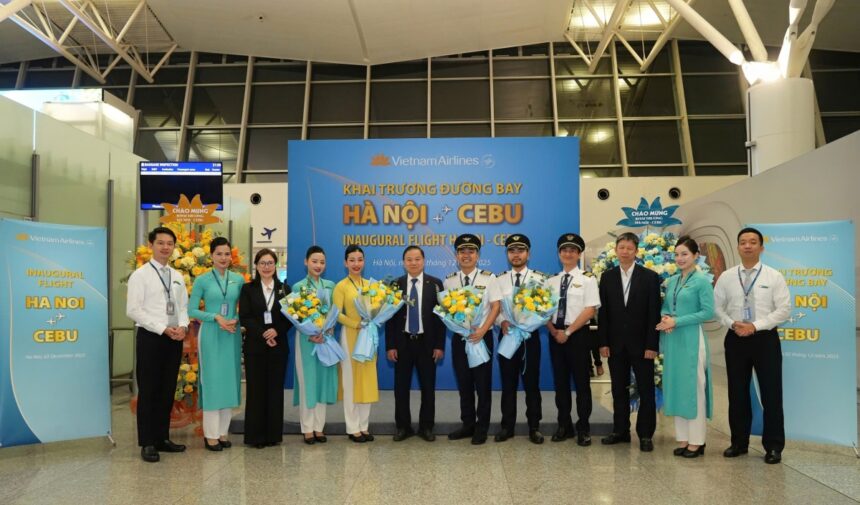
Strategic Launch Of Direct Connectivity Between Hanoi And Cebu
The regional aviation landscape witnessed a major transformation on December 31, 2025, as Vietnam Airlines officially inaugurated its highly anticipated direct service between Hanoi and Cebu. This historic route represents the first-ever direct connection between the Vietnamese capital and the premier island destination in the Philippines, reflecting a bold move in the airline’s international expansion strategy. Flight VN643, operated by the modern and fuel-efficient Airbus A321, carried approximately 100 passengers during its maiden journey, departing Noi Bai International Airport late in the evening and touching down at Mactan-Cebu International Airport the following morning.
To celebrate this milestone, the national carrier hosted vibrant welcome ceremonies at both terminals, offering traditional gifts and warm hospitality to the pioneering travelers who marked this new chapter in regional flight. This three-hour journey significantly reduces the travel time that previously required lengthy layovers in hub cities, making the transit between these two economic and cultural centers more seamless than ever before. For vacationers and corporate travelers alike, the new link serves as a vital bridge, opening up a world of possibilities for weekend escapes and professional collaborations.
By establishing this nonstop corridor, the carrier is not only facilitating tourism but also reinforcing its reputation as a leading provider of high-quality, reliable air travel within Southeast Asia. This expansion is particularly timely as the demand for regional travel continues to outpace long-haul growth, allowing the airline to capture a larger share of the emerging middle-class market. The strategic focus on Cebu, often referred to as the gateway to the Central Visayas, ensures that the airline remains at the forefront of the regional tourism recovery.
Economic Multipliers And Cultural Synergy Via Air Connectivity
The introduction of this service is poised to generate substantial economic ripples, as the Vietnam Airlines network now offers a direct gateway for millions of potential tourists and business stakeholders to explore new markets. Cebu is world-renowned for its white-sand beaches, vibrant diving spots, and rich colonial history, making it a magnetic draw for Vietnamese leisure seekers looking for premium island experiences. Simultaneously, the route provides Filipino travelers with effortless access to Hanoi’s historic charm, from its famous French colonial architecture to its role as a departure point for iconic UNESCO sites like Ha Long Bay.
This bilateral flow of passengers is expected to bolster the hospitality sectors in both nations, creating jobs in the tourism value chain and supporting local enterprises ranging from boutique hotels to traditional craft markets. Beyond leisure, the increased frequency of flights—operating three times weekly—provides the necessary logistical backbone for small and medium enterprises to engage in cross-border trade and logistics. The availability of direct belly cargo capacity on the Airbus A321 allows for the rapid exchange of perishable goods and electronics, further integrating the supply chains of these two dynamic ASEAN neighbors.
As air transport is a proven driver of economic resilience, this connection is a strategic asset for both governments as they seek to achieve the goals of the ASEAN Connectivity 2025 Master Plan, which emphasizes seamless people-to-people and institutional linkages. By fostering closer ties between the two countries, the service encourages cultural exchange and mutual understanding, which are essential for the long-term stability and prosperity of the region. The commitment to providing high-quality services further ensures that the travel experience is both pleasant and productive for all passengers involved.
Future Outlook For Regional Aviation And Market Integration
Looking toward the early months of 2026, the success of the Hanoi-Cebu corridor serves as a blueprint for the future expansion of the Vietnam Airlines international footprint. Executive Vice President Dang Anh Tuan has noted that Southeast Asia remains a high-potential market characterized by a growing middle class and a rising appetite for international exploration. This expansion is part of a broader tactical roadmap that has recently seen the carrier launch services to major European hubs while simultaneously strengthening its presence within the regional trade bloc.
By maintaining a disciplined focus on high-growth routes, the airline is positioning itself to capture a significant share of the regional traffic, which is projected to grow annually by over eight percent through the end of the decade. The stability provided by these new connections allows the carrier to optimize its fleet utilization and enhance its competitive edge against low-cost competitors. Furthermore, the focus on 4-star service standards and loyalty incentives ensures a high level of passenger retention and brand loyalty in an increasingly crowded marketplace.
As the global aviation industry continues its recovery, the strategic alignment of route development with regional economic trends will be the deciding factor in achieving long-term profitability. This new link between Vietnam and the Philippines is more than just a flight; it is a long-term investment in the shared prosperity of the region, ensuring that cultural and trade exchanges continue to flourish in an increasingly interconnected world. The airline’s dedication to safety and quality remains the cornerstone of its operations, providing travelers with the confidence to explore new horizons across the Southeast Asian landscape.
Analyzing Regional Market Dynamics And Strategic Connectivity Resilience
From a professional financial and analytical perspective, the inauguration of the Hanoi to Cebu route represents a critical pivot toward intra-ASEAN market depth, effectively capitalizing on the secondary city growth phenomenon. We observe that as primary hubs like Manila and Ho Chi Minh City face increasing slot constraints, the move to connect secondary powerhouses like Cebu and Hanoi reflects a sophisticated understanding of regional logistics. This direct link bypasses traditional bottlenecks, offering a specialized corridor for the electrical and electronics manufacturing clusters that define both regions. From an investment standpoint, the increased connectivity lowers the shadow costs of travel for technical consultants and regional managers, facilitating faster decision-making cycles in the supply chain.
The macroeconomic impact is further magnified by the divergence in the tourism product offerings of the two nations. While Vietnam offers a heritage-rich, land-based experience, Cebu provides a marine-centric tropical alternative, creating a perfectly balanced circular itinerary for international long-haul travelers who often treat Hanoi as a primary entry point into Southeast Asia. This synergy is expected to drive up the average revenue per passenger for Vietnam Airlines, as the carrier can now offer comprehensive multi-destination packages that were previously logistically prohibitive. Furthermore, the use of the A321 aircraft on this route is a prudent move in capacity management, ensuring high load factors while maintaining the flexibility to scale frequency as demand matures in early 2026.
Beyond immediate fiscal gains, this route strengthens the institutional resilience of the regional aviation sector by diversifying revenue streams away from traditional corridors. As geopolitical shifts influence trade routes, the establishment of robust, direct links between rapidly industrializing ASEAN members provides a necessary hedge against external shocks. The analytical data suggests that point-to-point routes of this nature act as catalysts for retail and service sector expansion in the landing cities, often resulting in a localized multiplier effect that stimulates employment in the auxiliary transport and food service industries. In summary, the strategic placement of this air bridge is a masterclass in market timing, positioning the national carrier to lead the next phase of regional economic integration through high-utility connectivity.