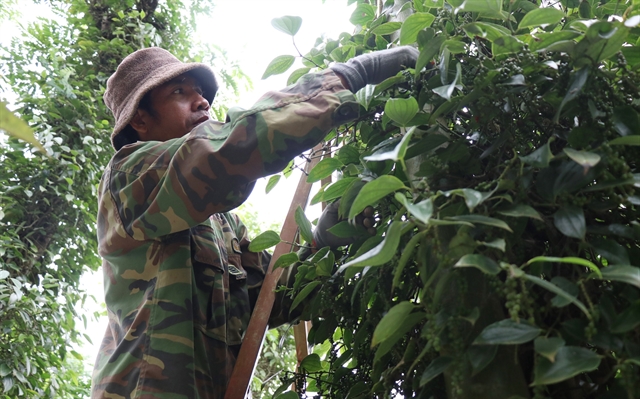
Robust Performance Of The Vietnam Pepper Export Sector
The agricultural landscape of Vietnam has witnessed a significant surge in momentum as the national pepper exports posted robust gains throughout the month of March. Data from the Vietnam Pepper and Spice Association indicates that the industry is experiencing a solid rebound early this year, with sharp increases in both shipment volume and total value. Despite the looming presence of supply constraints and ongoing global logistics disruptions, the country managed to export over 30,000 tonnes of various spice products during this period.
The export revenue for the month reached an impressive 199.3 million dollars, a figure that highlights the premium quality and high market demand for Vietnamese agricultural goods. While black pepper shipments constituted the majority of the volume, the white pepper segment also contributed significantly to the overall fiscal success of the industry. When compared to the previous month, total shipments surged by more than 119 percent, signaling a massive acceleration in trade activity.
This growth is particularly noteworthy given that prices have remained elevated, with black varieties averaging 6,520 dollars per tonne and white varieties reaching 8,735 dollars per tonne. Such firm pricing suggests that global buyers are willing to pay a premium for consistent supply despite the diverging trends across different product segments. The ability of Vietnamese exporters to capitalize on these high prices while significantly increasing their volume demonstrates a high level of operational efficiency and market adaptability within the local spice trade.
Shifting Market Dynamics And Global Trade Partnerships
The United States and China have successfully maintained their historical positions as the primary destinations for the Vietnamese pepper trade, importing 8,059 tonnes and 3,663 tonnes respectively. The growth in the North American market was particularly explosive, with shipments jumping by 121 percent in a single month, while the Chinese market saw an even more dramatic increase of over 134 percent. These figures underscore the vital role that international partnerships play in sustaining the economic health of the domestic agricultural sector.
Beyond these major players, other regions such as Egypt, the Netherlands, Canada, and the Philippines have also recorded exceptional growth rates, often posting triple-digit percentage increases in their import volumes. This diversification of the export base is a strategic advantage for Vietnam, as it reduces reliance on any single market and allows the industry to tap into various consumer niches across the globe. However, to meet this rising international demand, Vietnamese businesses have had to boost their own imports for processing and re-export purposes.
This is largely due to a tightening domestic supply that has forced companies to look toward neighboring Cambodia, which remains the largest external supplier for the local processing industry. The balance between domestic production and imported raw materials is becoming increasingly delicate as the sector moves toward a more complex hub-and-spoke model of global trade. By acting as both a major producer and a central processing hub for Southeast Asian spices, Vietnam is consolidating its influence over the regional supply chain, even as it navigates the challenges of localized shortages.
Supply Imbalances And Heightened Logistical Challenges
Despite the strong export results achieved in the first quarter of 2026, industry experts are sounding the alarm regarding growing supply and demand imbalances that could threaten future growth. The national pepper harvest for this year is projected to reach between 170,000 and 180,000 tonnes, which represents a significant decline of up to 20 percent compared to the previous crop cycle. This reduction in output is primarily attributed to unfavorable weather patterns and the presence of aging plantations that are no longer producing at optimal levels.
Furthermore, many farmers are shifting their focus toward other higher-value crops, leading to a shrinkage in available land for traditional spice cultivation. This tightening of supply has pushed domestic prices to record highs, with a kilo of the product now fetching between 140,000 and 150,000 dong in local markets. On the global stage, output is expected to remain below historical peaks while demand continues to show signs of persistent strength. Beyond these production issues, exporters are currently grappling with severe logistics pressures.
These geopolitical conflicts have driven shipping costs up by three to four times their usual rates, primarily due to the closure of vital maritime routes and the suspension of commercial container traffic in sensitive zones. Given that the Middle East accounts for roughly 15 percent of the national export turnover for this sector, these disruptions are particularly damaging. Some local firms have even taken the drastic step of temporarily halting new orders to minimize their exposure to rising freight costs and unpredictable delivery delays in the 2026 trade environment.
Strategic Analysis Of Agrarian Commodity Markets And Regional Leverage
The current trajectory of the Vietnamese pepper market illustrates a fundamental transition from a volume-led export model to one defined by price inelasticity and structural scarcity. We analyze that the convergence of declining domestic yields and surging global freight costs is creating a high-entry barrier for small-scale exporters while favoring large-scale conglomerates with robust hedging capabilities. This trend suggests that the 2026 fiscal year will be characterized by record-high farm-gate prices, which, while beneficial for immediate producer income, poses a significant risk to the long-term sustainability of Vietnam’s processing facilities.
The reliance on Cambodian raw materials for re-export underscores a broader regional trend where Vietnam is evolving into the dominant spice-processing hub of the ASEAN bloc. We project that this shift will necessitate deeper integration of cross-border supply chains to ensure that domestic processing capacity does not become stranded by local crop failures. Institutional investors should view the current triple-digit growth in non-traditional markets like Egypt and the Philippines as a signal of a deepening global food security strategy, where diverse sourcing is prioritized over low-cost logistics.
Furthermore, the extreme volatility in the Middle Eastern shipping corridors is forcing a radical reassessment of the traditional sea-freight dominance in the spice trade. We observe that firms successfully navigating this period of 2026 are those diversifying their transit modes and exploring land-based or multi-modal routes to circumvent maritime bottlenecks. The synergy between agricultural output and logistical resilience is now the primary determinant of sectoral profitability. We anticipate that if the current supply deficit persists, Vietnam will further consolidate its pricing power on the global stage, effectively dictating the terms of trade for the international spice market for the remainder of the decade.