


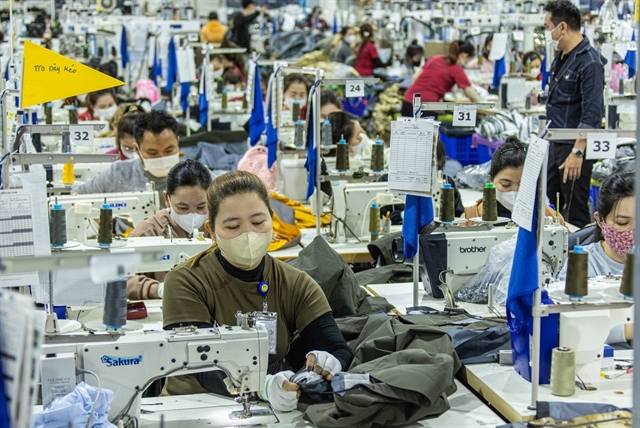
Value Driven Transitions In The Vietnamese Textile Industry
The global landscape for manufacturing is undergoing a profound change, and within this context, the Vietnamese textile sector is moving away from a traditional focus on sheer output toward a model centered on high value and sustainability. By the first quarter of 2026, industry leaders have made it clear that surviving in a cooling global market requires a reorientation around quality, brand positioning, and the adoption of greener production standards. Trương Văn Cẩm, the vice chairman of the Việt Nam Textile and Apparel Association, has noted that while global trade growth remains sluggish between 2% and 5%, the local industry must still target an ambitious export goal of nearly $50 billion.
This transition is not merely about making more products but about ensuring that every garment produced carries more domestic value and meets the rigorous environmental expectations of modern international consumers. As competition from other developing economies intensifies, the need to differentiate through superior service and specialized craftsmanship has become a matter of survival rather than choice. The strategic shift involves moving beyond the fast fashion label to become a reliable partner for sustainable fashion, leveraging advanced technology to maintain a competitive edge.
This evolution is essential for supporting a national economic growth target of approximately 10%, necessitating a trade surplus that exceeds $24 billion within the next year. By focusing on the intrinsic quality of materials and the precision of automated assembly, the industry aims to solidify its reputation as a premier global hub for sophisticated apparel manufacturing. Leveraging new generation free trade agreements will be the primary catalyst for this shift, allowing local firms to bypass traditional trade barriers while accessing high value consumer markets in the West.
Overcoming Regulatory Hurdles and Enhancing Local Supply Chains
A critical component of this industrial transformation involves restructuring the tax and administrative frameworks that currently govern the procurement of raw materials. Lê Tiến Trường, chairman of the Việt Nam National Textile and Garment Group, has pointed out that existing policies often inadvertently penalize companies that choose to source their inputs from domestic textile suppliers. Currently, importing materials is frequently more convenient because it bypasses the immediate requirement for value added tax prepayments and involves simpler administrative procedures compared to local purchasing.
To rectify this imbalance, there is a growing call for the development of mechanisms that incentivize the use of locally produced yarn, fabric, and accessories, which would significantly increase the localization rate to over 60%. Reducing the reliance on imported materials not only strengthens the domestic economy but also improves the traceability and speed of the supply chain, which are vital factors for international buyers. Historically, tax incentives such as turnover tax reductions provided significant support for production, and similar modern interventions are now required to foster a more integrated internal ecosystem.
By aligning tax policies with the goals of export manufacturing, the government can encourage a circular economy where waste is minimized and resources are reused effectively. This strategy also includes diversifying market reach and strengthening B2B networking through platforms like national trade fairs, which showcase the versatility of Vietnamese products to both domestic and international partners. Strengthening the links between various stages of production ensures that more of the profit margin remains within the country, benefiting supporting industries and contributing to a more resilient national infrastructure for the coming decade.
Productivity And Labor Economics
From a professional financial analyst perspective, the pivot of the Vietnamese garment sector toward automation and high income labor models is a necessary response to shifting demographic and economic realities. We observe that the 2026 fiscal environment no longer supports a growth strategy based purely on expanding the low cost workforce; instead, the focus has shifted toward increasing labor productivity by at least 10% through the integration of artificial intelligence and robotics. This technological leap is essential for maintaining the industry status as the world’s second largest exporter.
The proposal to allow corporate income tax deductions for companies that significantly raise worker wages is a sophisticated fiscal tool designed to enhance social stability while driving technical innovation. We analyze that the estimated $23 billion in value currently retained within the country through wages and corporate profits represents a high domestic value added ratio that must be protected against rising global tariffs and protectionist trade policies. Proactive adaptation to green standards is no longer just a regulatory requirement but a prerequisite for accessing high value markets in Europe and North America.
As the industry moves toward a $64.5 billion export target by 2030, the ability of firms to manage risks associated with volatile raw material prices and shifting consumer preferences will be the primary determinant of long term solvency. Investors should closely monitor the adoption rates of digitalized inventory management and circular manufacturing processes, as these are the leading indicators of future profitability in a carbon constrained global economy. Ultimately, the transition from volume to value is a structural necessity that will define the next decade of industrial growth in Southeast Asia.
Strategic Macroeconomic Impact And Regional Competitive Dynamics
The systemic reengineering of the Vietnamese manufacturing base provides a unique case study in how a dominant export sector can pivot to maintain regional leadership amid fluctuating global demand. Beyond the immediate fiscal targets, the focus on greening and digitalization creates a massive multiplier effect across the broader B.I.F.E. landscape. We analyze that for every 1% increase in the localization of textile inputs, there is a corresponding decrease in foreign exchange risk and a significant improvement in the national trade balance. This move toward self sufficiency is a strategic hedge against the supply chain disruptions that have characterized the early part of the decade.
Regionally, Vietnam is positioning itself as the high tech alternative to lower cost but less technologically advanced neighbors. By investing in traceability and rule of origin compliance, local firms are making themselves indispensable to global brands that are under increasing pressure from ESG focused investors. The successful integration of free trade agreements provides a legal and economic framework that rewards this transparency, allowing Vietnamese brands to command a premium on the global stage. Furthermore, the expansion of the domestic market to an estimated $9 billion offers a vital secondary engine for growth, reducing the total sensitivity to external shocks.
As worker incomes rise, the resulting increase in domestic purchasing power creates a virtuous cycle that supports the very fashion brands the industry is working to build. This internal market depth is a critical factor for financial analysts evaluating the long term resilience of the sector. We anticipate that the next phase of growth will be characterized by the emergence of original brand manufacturers who move away from simple contract sewing to full scale design and retail operations. For institutional investors, the primary opportunity lies in the intersection of green energy transitions and industrial automation, where the most significant efficiency gains are expected to materialize over the next five years.