Structural Market Disruptions And Strategic Regional Trade Reallocation Models
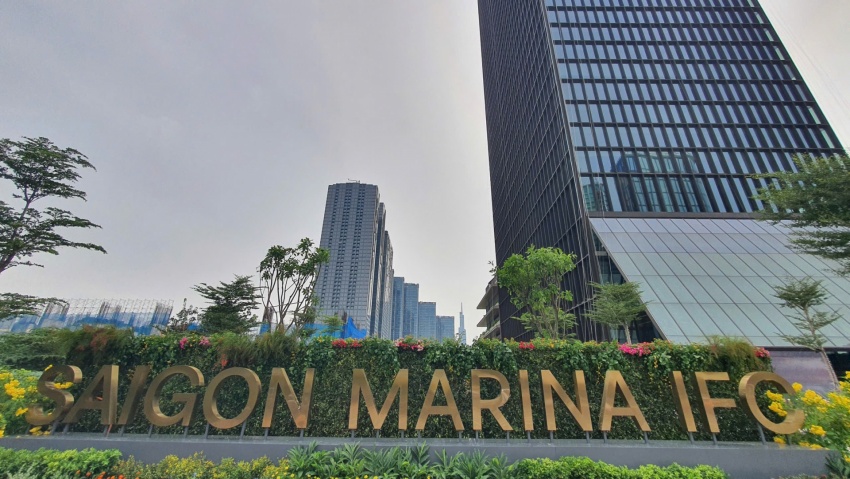
By constructing a dedicated maritime financial ecosystem within the newly established national international financial center, Vietnam’s regional coordinators expect to capture roughly 30% of global logistics transactions that are currently processed through established foreign corporate gateways. This strategic administrative pivot aims to redirect approximately 300 billion US dollars in annual transactional volume, creating a highly sophisticated maritime financial infrastructure to directly challenge traditional multi-channel trading hubs like Singapore and Hong Kong.
During recent high-level policy discussions held in Ho Chi Minh City, executive leadership highlighted that the sheer volume of physical cargo moving through the metropolitan seaport systems already exceeds 1 trillion US dollars every single year. Despite managing these massive transshipment port clusters, regional operators have historically failed to monetize the underlying transactional values, with nearly 90% of trade-related capital management still flowing through secondary international banking networks. To rectify this severe capital leakage, the central administration is deploying advanced maritime financial frameworks to systematically integrate physical port logistics with cross-border commercial liquidity, effectively transforming a traditional transit zone into a dominant wealth-generation engine for the entire trading bloc.
Capital Capture Mechanisms And Institutional Liquidity Framework Optimization
To properly capitalize on the massive physical goods movement shifting across the South China Sea, the treasury must optimize its specialized maritime financial compliance protocols to attract cautious institutional asset managers. The current structural reality means that while local terminals handle millions of shipping containers, the lucrative insurance arrangements, trade letters of credit, and complex vessel leasing contracts are consistently routed through foreign banking jurisdictions. By establishing a robust maritime financial regulatory architecture that guarantees absolute contract sanctity, the domestic market can provide global shipping consortia with an attractive, low-risk alternative for their multi-billion dollar operational cash management.
This institutional positioning lowers the country’s sovereign risk premium while providing local industrial entities with direct access to highly specialized international liquidity pools required to fund advanced deepwater berth expansion projects. Furthermore, this deliberate regulatory upgrade protects regional consumer purchasing fields by ensuring that high-value transaction fees remain within the domestic economy rather than leaking into external tax havens. For regional infrastructure planners and macro analysts, the primary indicators of success will be the actual transaction velocity within the new economic zone and the specific efficiency of capital deployment across adjacent multimodal logistics pathways.
Macroeconomic Synergies And Sovereign Wealth Management Architecture Integration
The successful implementation of a specialized maritime financial hub creates distinct growth opportunities across the broader regional equity markets and national fixed-income portfolios. Fixed-income fund managers view this systematic regulatory insulation as an essential risk-mitigation layer that directly cushions the credit stability of major public utility operators, port authorities, and independent shipping lines. By shielding international vessel financing arrangements from sudden domestic revenue repatriation mandates, the regional treasury prevents an unnecessary expansion of the country’s capital-account risk premium, thereby sustaining strong institutional demand for long-dated national development bonds.
Moreover, this calculated separation allows the state to pursue aggressive conservation strategies on raw materials and physical commodities without jeopardizing the external liquidity cushions provided by sophisticated trade service contracts. This dual-track strategy optimizes the national balance of payments, as steady transaction receipts continue to stabilize local currency values against global macroeconomic headwinds and shifting public policy priorities. Over the coming fiscal periods, equity research teams anticipate that this selective regulatory freedom will stimulate higher capital expenditures within deep-sea exploration and logistics automation sectors, transforming structural consistency into a powerful tool for sustainable wealth generation.
Geopolitical Fee Arbitrage And Indochina Banking Capitalization Dynamics
The creation of this dedicated trade service center represents a fundamental disruption to the traditional dollar clearing monopolies held by established offshore corporate hubs. Fixed-income quantitative analysts observe that by anchoring cargo clearing processing fees locally, the domestic banking sector can dramatically scale its tier-one capitalization metrics through low-cost deposit accumulation derived from maritime financial trade letters. This systemic structural transition lowers regional corporate borrowing costs across adjacent transport infrastructures, offering domestic port operators an aggressive financing edge that could compress the historic valuation spreads typically enjoyed by established global shipping conglomerates.
Furthermore, this systematic diversion of 300 billion US dollars in annual logistics liquidity will force a major rebalancing of trade service margins across the greater Indochina economic corridor. Equity portfolio managers expect that as local clearing operations achieve critical volume velocity, trade insurance premiums and maritime leasing underwriting activities will shift away from external jurisdictions toward domestic specialized brokerage houses. This local market capitalization migration will likely stimulate significant venture capital inflows into domestic financial technology platforms, altering regional capital allocation patterns and elevating the long-term sovereign credit profile of the expanding trade gateway.