Strategic Debt Negotiations Led By Minister Purbaya
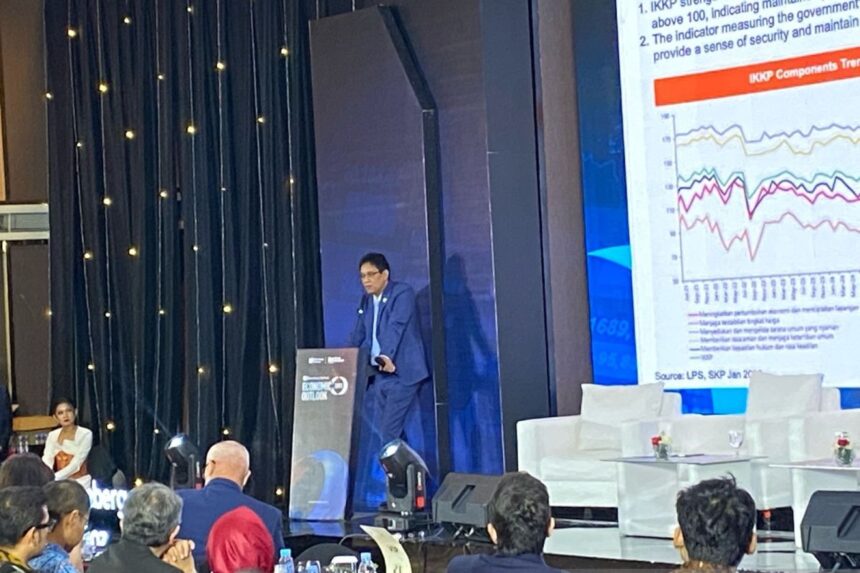
The current fiscal landscape in Indonesia is witnessing a significant development as Finance Minister Purbaya Yudhi Sadewa addresses the ongoing complexities surrounding the Jakarta-Bandung high-speed railway debt. During a recent media briefing at the Economic Outlook 2026 event in Jakarta, the minister clarified that while he remains central to the nation’s financial management, he has yet to be formally summoned for the latest round of high-level discussions regarding the settlement of obligations to China.
The project, famously known as Whoosh, carries a substantial financial weight of approximately seven billion US dollars, primarily owed to the China Development Bank. Despite the mounting pressure to finalize a repayment scheme, the minister emphasized that a definitive plan to allocate specific portions of the state budget is still under careful consideration. This measured approach reflects the administration’s broader commitment to maintaining fiscal discipline while ensuring the long-term viability of massive strategic infrastructure.
As the government transitions through its 2026 fiscal cycle, the role of the state treasurer in balancing these multi-billion dollar liabilities with domestic development priorities remains a point of intense public interest. The anticipation of a presidential summons suggests that the final decision-making process is entering a more localized and technical phase within the palace walls. By ensuring that all financial recalculations are thorough, the ministry aims to protect the sovereign credit rating while fulfilling bilateral commitments made under the strategic partnership with Chinese lenders.
Collaborative Restructuring And Institutional Synergy
Managing the financial health of PT Kereta Cepat Indonesia-China requires an unprecedented level of cooperation between various state agencies and international partners to ensure economic stability. Minister of State Secretariat Prasetyo Hadi recently indicated that the government is exploring every feasible option to settle the railway debt, including the possibility of direct budget injections to stabilize the consortium.
Central to these technical negotiations is Rosan Roeslani, the chief executive of Indonesia’s sovereign wealth fund Danantara, who has been tasked by the president to lead the dialogue with Chinese counterparts. This institutional shift highlights a move toward a more business-to-business oriented resolution, where Purbaya and other top economic ministers recalculate the intricate details of loan extensions and interest rate adjustments.
The goal is to move beyond mere survival toward a restructured financial framework that allows the railway to operate as a self-sustaining asset. While some officials have suggested extending the loan period as a primary tactic, others note that such complex maneuvers require significant time to align with both domestic laws and international lending standards.
The focus is not just on the immediate repayment of principal but on fostering an enduring partnership that can support future expansions of the high-speed network across the island of Java. The involvement of the Coordinating Ministry for Infrastructure and Regional Development further underscores the need for cross-institutional synergy to manage the operational and financial hurdles that accompany such a monumental national project.
Long-Term Economic Sovereignty And Regional Impact
The resolution of the Whoosh debt is more than a simple accounting exercise; it is a defining moment for Indonesia’s regional standing and its ability to manage high-stakes international investments. As Coordinating Minister Agus Harimurti Yudhoyono pointed out, the objective is to ensure that this strategic project not only endures but continues to improve the nation’s overall connectivity and competitiveness.
The potential establishment of a national committee signifies a push for greater transparency and cross-institutional synergy, which is essential when dealing with foreign creditors of this magnitude. Analysts observe that a successful settlement, supported by the strategic oversight of Purbaya and the investment expertise of Danantara, would send a strong signal of reliability to the global market.
This is particularly relevant as Indonesia seeks to attract further foreign direct investment for other large-scale infrastructure projects in the coming years. By demonstrating a credible and well-coordinated repayment strategy, the country reinforces its reputation for honoring its sovereign and commercial commitments.
Ultimately, the way these liabilities are handled will set a precedent for future bilateral cooperation in Southeast Asia’s rapidly evolving transport sector. The emphasis remains on protecting the national interest while leveraging the economic benefits that a modern, high-speed rail system provides to the millions of citizens traveling between the capital and West Java every year. Through professional management and strategic restructuring, the government intends to turn a heavy debt burden into a sustainable pillar of national growth.
Financial Commentary And Regional Synthesis
The strategic pivot toward utilizing the state budget to service the Whoosh debt represents a fundamental shift in Indonesia’s approach to sovereign risk management and infrastructure financing. From a professional financial analyst’s perspective, this decision internalizes the project’s commercial risks, effectively shifting the burden from a specialized consortium to the national balance sheet. This maneuver is likely intended to suppress the rising interest costs that have plagued the project’s cash flow, but it also signals a departure from the original business-to-business funding model.
By involving Danantara in the technical negotiations, the government is attempting to apply a private-equity lens to what is essentially a public debt crisis, seeking to leverage the fund’s professional governance to extract better terms from the China Development Bank. We observe that this restructuring is a critical litmus test for Indonesia’s creditworthiness in the eyes of international rating agencies, as they monitor the state’s ability to absorb multi-billion dollar liabilities without compromising its fiscal deficit targets.
The regional implications are equally significant, as this case provides a blueprint for other Southeast Asian nations navigating Belt and Road Initiative obligations. A successful renegotiation would demonstrate Indonesia’s growing diplomatic and financial leverage within the ASEAN-China corridor, potentially lowering the risk premium for future regional infrastructure projects.
Furthermore, the integration of these liabilities into a centralized national committee suggests a move toward a more disciplined, sovereign-led infrastructure framework that prioritizes long-term debt sustainability over short-term political wins. Our report indicates that if Purbaya and the economic team can successfully extend the loan maturity while securing budget-neutral offsets, it will solidify Indonesia’s position as a sophisticated manager of complex global financial instruments.
Ultimately, the market will respond positively if this restructuring leads to a more predictable and transparent fiscal path, thereby reducing the “infrastructure drag” on the national economy. This evolution in debt management ensures that the high-speed rail remains a strategic asset rather than a fiscal liability, fostering a more resilient macroeconomic environment capable of attracting diverse global capital.