The Legal Obligation Of Accepting Cash Payments Under Bank Indonesia
The recent viral incident involving a bakery outlet has prompted a stern official clarification from Bank Indonesia regarding the mandatory acceptance of the national currency for all domestic transactions. Within the first sixty words of this report, it is emphasized that Bank Indonesia identifies the rupiah as the only legal tender that must not be refused by any merchant.
The central bank issued this response after a social media video showed an elderly customer being denied a purchase because she lacked a digital payment application. This specific event highlighted a growing friction between rapid digitalization and the fundamental rights of consumers who still rely on physical banknotes for their daily needs.
According to the current regulations, while the government encourages the adoption of the national QR-based payment system, it does not grant businesses the authority to unilaterally ban cash. The deputy governor explained that the domestic payment ecosystem is designed to provide dual options consisting of both cash and non-cash methods to ensure inclusivity.
Understanding QRIS As A Payment Channel Versus Legal Tender
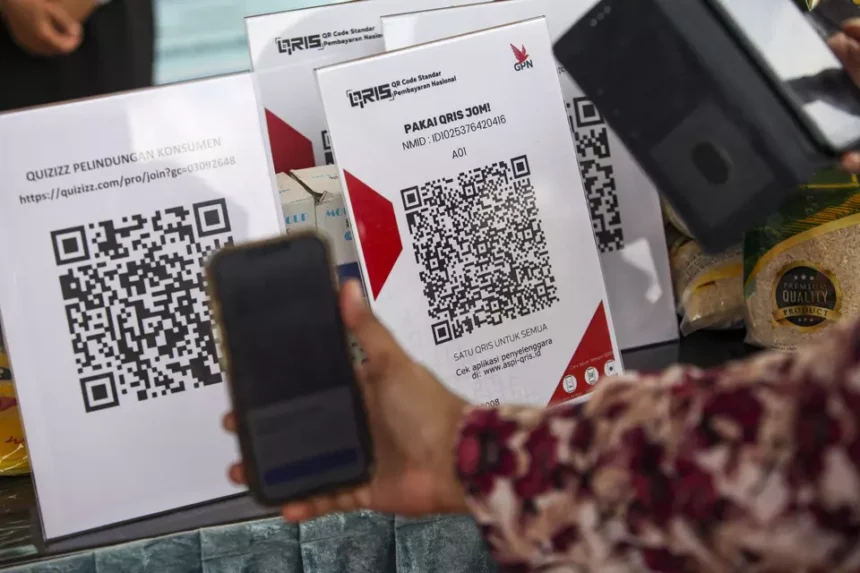
Deputy Governor Filianingsih Hendarta clarified that the national QRIS system functions strictly as a payment channel and does not represent a separate currency from the official rupiah. This distinction is vital for both merchants and consumers to understand, as the source of funds in a digital wallet is still technically the national currency issued by Bank Indonesia.
During the internal evaluation of the bakery incident, it became clear that some staff members may have misunderstood the push for digitalization as a mandate for cashless exclusivity. The central bank stresses that the choice of payment method should always be adjusted to the mutual convenience of both the merchant and the customer.
While digital adoption is gaining momentum across the archipelago, it is not a replacement for the physical obligation to accept cash when offered by a buyer. The mandatory use of the national currency is a cornerstone of Indonesian financial law, intended to maintain the sovereignty of the state within its borders.
Legal Protections And Statutory Prohibitions On Refusing Currency
The head of communications at the central bank recently cited Article 33 of the Law on Currency to remind the public that refusing the rupiah is a prohibited act. This legislation clearly stipulates that every person or entity is forbidden from rejecting the national currency when it is offered to settle an obligation or complete a purchase.
The only legal exception provided by Bank Indonesia allows a merchant to refuse banknotes if there is a reasonable and justifiable doubt regarding their authenticity. Beyond this specific scenario, the refusal to accept physical money in favor of an exclusively digital system is seen as a violation of the statutory rights of the consumer.
This legal framework is essential for maintaining trust in the national economy and ensuring that the currency remains the ultimate medium of exchange. The bakery chain involved in the controversy has since issued a formal apology and promised to conduct better internal training for its frontline employees.
Analytical Commentary On Digital Inclusion And Retail Regulatory Compliance
From a professional financial and regulatory perspective, the recent friction at the retail level reflects a broader challenge in Indonesia’s rapid transition toward a cashless society. The central bank’s intervention serves as a necessary correction to prevent digital elitism where merchants prioritize operational efficiency at the expense of statutory compliance.
For market analysts, this situation underscores the importance of maintaining a hybrid payment infrastructure that can accommodate the diverse demographic profile of the consumer base. We observe that the legal mandate to accept the rupiah is not merely a formality but a strategic requirement to ensure the stability and sovereignty of the local economy.
Businesses that ignore the physical currency risk alienating a significant portion of the silver economy and rural participants who are high-volume cash users. Furthermore, the internal evaluation by retail chains must go beyond simple apologies to include technical upgrades that allow for seamless dual-payment processing.
Regional Market Impact And Financial Ecosystem Equilibrium Analysis
The regional market impact of this enforcement action by the central bank signals a critical pivot in the national strategy for financial technology integration across Southeast Asia. As Bank Indonesia reinforces the mandatory nature of physical rupiah acceptance, we anticipate a stabilization in the retail sector’s operational risk profile regarding consumer litigation.
For the financial services industry, this regulatory stance mandates a recalibration of digital growth targets to include more robust offline support and cash handling facilities. This development acts as a safeguard against potential systemic fragility in the event of digital infrastructure failures or localized telecommunications outages during peak trade periods.
We observe that maintaining the cash-to-digital equilibrium is essential for preventing a sharp rise in the informal economy, as marginalized segments would otherwise be forced out of formal retail.
Investors should view this as a maturing of the regulatory environment, where the focus shifts from pure digital expansion to high-quality, inclusive economic participation. This balanced oversight prevents the concentration of market power within payment gateway providers and ensures that the central bank retains absolute control over the monetary base.