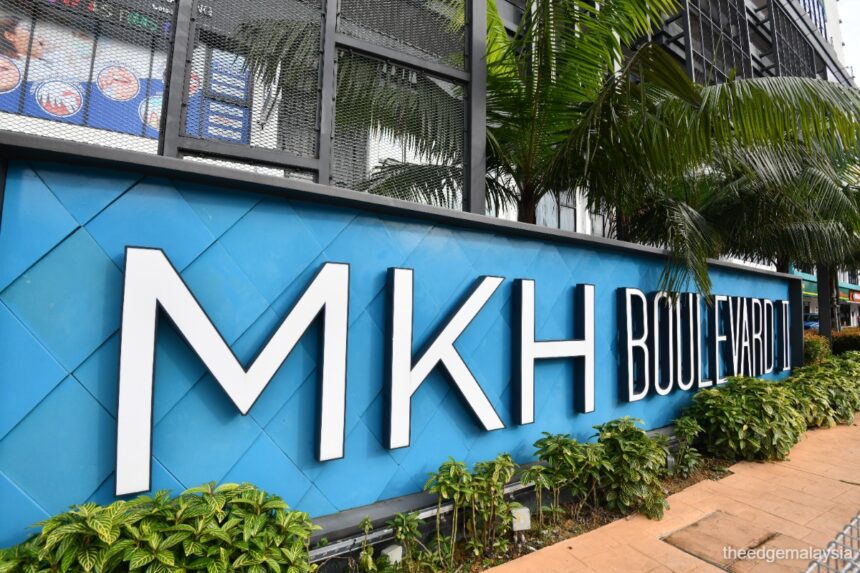
Strategic Corporate Mergers And Industrial Asset Accumulation Frameworks
The expansion of multi-sector conglomerate holdings within emerging regional marketplaces often involves the tactical acquisition of undervalued public enterprises to maximize long-term shareholder equity. According to recent capital market developments, investment holding giant Batu Kawan is moving toward a substantial corporate restructuring exercise aimed at taking over a prominent property development firm and its specialized agricultural operations. While the precise mechanical structure of this impending transactional framework remains undisclosed, investment banking circles indicate that the primary entity may execute a mandatory general offer for all outstanding public shares at a notable premium.
This strategic combination allows the acquiring organization to efficiently consolidate its position across both high-value residential real estate markets and regional commodity production zones without incurring massive immediate operational friction. The target entity possesses a highly diversified portfolio of commercial landbanks and established consumer infrastructure holdings, rendering the transaction exceptionally accretive for long-term portfolio management strategy. Institutional equity research analysts note that by executing this comprehensive consolidation, the overarching corporate group can leverage significant administrative synergies, streamline cross-border management logistics, and establish a highly resilient transactional base capable of withstanding shifting macroeconomic market cycles.
Real Estate Valuation Matrix And Substantial Landbank Consolidations
Successfully executing a large-scale corporate integration requires an in-depth quantitative assessment of tangible balance sheet strengths and underlying property valuations. The primary development enterprise slated for acquisition under the expanding umbrella of Batu Kawan maintains significant infrastructural dominance through strategic holdings encompassing hundreds of acres of prime land across key urban growth corridors. These major asset concentrations provide a highly robust valuation floor, given that the net asset value per share heavily outpaces recent public equity trading prices, highlighting a clear value dislocation that corporate strategists can quickly exploit.
Historically, companies operating with deep discounts to their intrinsic net asset value become highly attractive targets for larger corporate holding vehicles seeking immediate scale. Beyond the inherent value of these premium property locations, the target organization maintains an exceptionally strong liquidity profile, characterized by substantial cash balances that comfortably outpace outstanding short-term liabilities and long-term commercial loans. This favorable net cash positioning effectively reduces the overall funding risks associated with the transaction, providing the parent organization with immediate capital agility to fund future infrastructure upgrades or expand local commercial operations. Consequently, the combination of secure real estate holdings and strong liquid resources creates a powerful multiplier effect, accelerating private capital formation and establishing a predictable trajectory for enterprise valuation appreciation within the regional financial architecture.
Agricultural Expansion Dynamics And Cross Border Commodity Synergies
The broader macroeconomic implications of this major corporate transaction extend far beyond domestic real estate boundaries, driving deep integration into the highly lucrative Southeast Asian agricultural sector. Through this calculated corporate acquisition, the central management of Batu Kawan gains definitive structural control over an expanding palm oil subsidiary that manages tens of thousands of hectares of high-yielding plantation estates in East Kalimantan. This strategic geographical positioning allows the parent organization to directly capitalize on rising global crude palm oil prices, which have already delivered substantial net profit growth for the subsidiary over the preceding three fiscal cycles.
Integrating these mature agricultural operations into a larger institutional framework optimizes supply chain efficiency, enabling localized production fields to mitigate cross-border logistics risks and hedge against international trade disruptions. For global portfolio managers and sovereign wealth funds tracking regional commodity flows, this expanded production footprint enhances the group’s overall earnings stability by balancing cyclical property revenues with consistent, non-commodity agricultural export income. As regional trade lanes become increasingly integrated, the combined entities are uniquely positioned to defend their collective market share, turning raw acreage into a highly efficient engine for sustainable corporate wealth generation.
Capital Structure Analytics And Long Term Regional Market Impact
Evaluating the total leverage dynamics and asset distribution models of large-scale holding companies is essential for determining their long-term equity elasticity. Prior to entering this transformative corporate agreement, the market capitalization of Batu Kawan reflected its dominant position as a multi-billion dollar industrial anchor within the competitive ASEAN marketplace, showing steady positive momentum since the start of the current fiscal year. While the acquiring group operates within a net debt framework characterized by significant long-term borrowings and short-term operational credit lines, its massive cash reserves provide a substantial liquidity buffer to absorb upcoming transactional expenses.
The temporary suspension of public trading across all related corporate equities underscores the immense material impact of this consolidation, which materialized alongside a sharp upward trajectory in minority share pricing. Moving forward, financial analysts will closely monitor the finalized integration timeline, tracking how effectively the unified corporate structure deploys its combined liquid reserves to reduce overall group leverage. By transforming its corporate infrastructure into a streamlined, multi-tiered commercial network, the sovereign enterprise successfully minimizes regional investment risks and builds a durable foundation for non-commodity industrial expansion within an increasingly competitive international marketplace.
Regional Asset Optimization And Cross Border Equity Realignment Dynamics
From an institutional research standpoint, this structural consolidation triggers a significant reallocation of capital across the broader Malaysian and Indonesian equity landscapes, reshaping benchmark valuation models for mixed-conglomerate plays. By absorbing a debt-light property vehicle and a high-yielding upstream plantation operation simultaneously, the acquiring corporate group establishes a powerful precedent for cross-border asset optimization within the ASEAN economic zone. This transaction effectively builds a highly defensive structural hedge, allowing the parent entity to counter cyclical localized property market downturns through the continuous cash generation velocity of its expanded East Kalimantan agricultural footprint.
For regional portfolio managers and fixed-income strategists, the combination of extensive cash reserves and deeply discounted real estate assets lowers the systemic volatility profile of the unified entity, justifying a higher forward earnings multiple compared to single-sector operators. The increased asset concentration accelerates non-commodity commercial integration between the two neighboring economies, providing a robust template for sovereign corporate entities to scale their operations globally while minimizing exposure to local currency fluctuations. Over the medium term, this consolidation is anticipated to stimulate secondary market liquidity across adjacent small-cap developer listings as corporate boards come under pressure to unlock hidden balance sheet value to defend against hostile acquisition frameworks.