Global Tech Alliances And AI Ecosystem Development Interventions
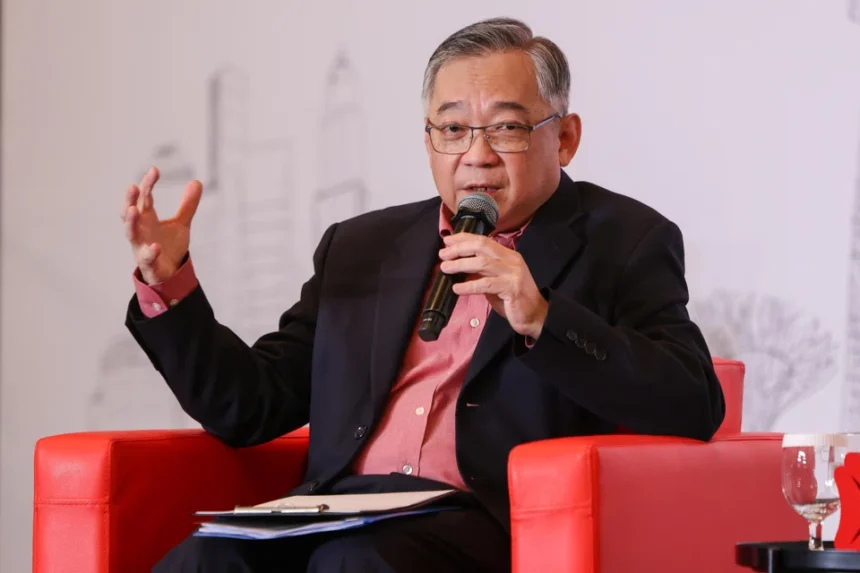
The strategic development of cutting-edge computing frameworks within competitive international markets relies heavily on open cross-border coordination rather than protectionist economic policies. During a high-profile technology summit, Deputy Prime Minister Gan Kim Yong stated that Singapore remains eager to collaborate with any forward-thinking nation to accelerate international machine learning capabilities. The administrative leadership believes that achieving true artificial intelligence leadership is never a zero-sum game, as healthy global competition naturally drives domestic technological refinement and broadens the scope of regional market capabilities.
Given the geographic constraints and small domestic population base of the city-state, local technology firms cannot realistically house all the human capital necessary to maintain an independent digital infrastructure, making deep international integration a absolute necessity. To bridge these human resource gaps, specialized training programs are being designed to link regional technical communities, thereby enabling local companies to tap into global talent pools without facing severe operational friction. Through these active international partnerships, the sovereign state intends to establish a resilient network of shared intellectual property, allowing neighboring economies within the ASEAN zone to leverage each other’s specialized engineering strengths and move up the global technology value chain together.
Systemic Technical Resilience And Institutional Business Continuity Models
Implementing advanced automation systems across high-value financial sectors requires a comprehensive approach to data safety, operational security, and institutional risk management. During a detailed executive dialogue, industry leaders raised critical questions regarding back-up procedures for manual data processing in the event of major automated network disruptions or unexpected cloud architecture failures. In response to these operational concerns, Gan Kim Yong emphasized that systemic continuity planning is a fundamental necessity for every modern commercial enterprise, representing an extension of traditional corporate risk practices rather than a unique technological challenge.
Top-tier financial organizations must maintain functional alternative pathways for critical customer journeys, ensuring that core transaction processing systems can continue to operate seamlessly even during unexpected digital connectivity disruptions. However, building an exceptionally robust backup architecture requires balancing absolute operational security with strict cost efficiency to prevent unnecessary capital allocations from stalling everyday business development. As corporate technology budgets continue to shift toward deep learning deployment, maintaining this operational balance becomes a core metric for evaluating the structural durability of regional financial institutions and logistics networks.
Workforce Transition Stratagems And Modern Capital Hub Transformations
The rapid integration of autonomous workflows within traditional corporate operations naturally creates a sense of transitional anxiety among local workers, which can be channeled into proactive professional upskilling. Government agencies are currently collaborating with various institutes of higher learning and corporate employers to create targeted internship structures, advanced traineeship pathways, and specialized technical certifications for the modern workforce. Gan Kim Yong noted that this career agility will be the defining factor for future employment readiness, as standard job descriptions quickly evolve to require deep data familiarity and advanced software management skills.
Simultaneously, the city-state is undergoing a major paradigm shift to transition from a traditional capital conservation hub into a high-velocity testing environment for revolutionary digital solutions and advanced research. By establishing a highly flexible regulatory playground where international corporations can safely test-bed experimental technologies, the regional economy successfully enhances its institutional trust premium while minimizing long-term investment risks. This evolving value proposition ensures that international venture capital continues to flow into local research and development fields, providing sustainable long-term asset appreciation for regional market participants.
Financial Hub Benchmarking And Responsible Large Scale Computing Governance
The launching of comprehensive international benchmarks serves as a vital structural mechanism for measuring the real-world economic impact of enterprise computing integration. Recent international banking studies placed Singapore among the top three global financial centers for automated innovation, highlighting its exceptional regulatory coherence, advanced digital identity infrastructure, and high levels of institutional credibility. In analyzing these performance metrics, Gan Kim Yong explained that this high global ranking serves as a powerful call to action, reminding market participants that future financial leadership will be judged by how responsibly a market deploys software solutions.
Beyond maintaining deep traditional capital markets and excellent physical utilities, modern financial centres must demonstrate an absolute capacity to preserve consumer trust, guarantee digital asset security, and cultivate a highly skilled technical workforce. The next logical phase of economic growth involves translating localized technology experiments into full enterprise-wide adoption, ensuring that automated efficiency improvements translate directly into high-paying job opportunities for the domestic population. By focusing heavily on these core financial metrics, the administration builds a secure foundation for long-term equity growth, turning responsible technological governance into a premier asset class within an increasingly interconnected global market ecosystem.
Macroeconomic Synergies And Regional Trade Flow Optimization Dynamics
The top-tier global ranking of Singapore in the financial hub index acts as a primary catalyst for regional cross-border investment flows, particularly accelerating digital infrastructure development across neighboring ASEAN production centers. By combining strict governance frameworks with advanced data integration, the city-state effectively establishes an institutional standard that lowers the sovereign risk premium for technology-driven trade infrastructure projects throughout Southeast Asia. For international asset managers and venture capital funds, this creates a secure operational anchor, driving deep capital formation into localized cloud architecture, fiber networks, and automated logistics networks within expanding industrial corridors.
Furthermore, the implementation of regional trade agreements, such as the Digital Economy Framework Agreement, will maximize regional macroeconomic synergies by creating a highly synchronized legal data landscape across multiple jurisdictions. This cross-border integration allows local manufacturing fields and supply chains to optimize their inventory management models, reducing transit times and eliminating administrative friction points at key trading terminals. As multinational corporations increasingly look to diversify their global technology supply lines, this unified regional approach turns a shared regulatory matrix into a powerful tool for attracting non-commodity foreign direct investment.
Over the medium term, equity research groups expect this regional computing integration to provide strong upward momentum for tech-related real estate and communications equity portfolios across the primary regional bourses. For fixed-income portfolio strategists, tracking the velocity of cross-border data transfer volumes and the expansion of national digital identity frameworks will be critical for evaluating long-term corporate credit elasticity. This structural modernization ensures that private sector capital formation remains completely isolated from external currency shocks, creating a highly resilient transactional base that supports sustainable, long-term wealth generation.