Pioneering Sustainable Aviation Fuel And Capital Growth Trajectories
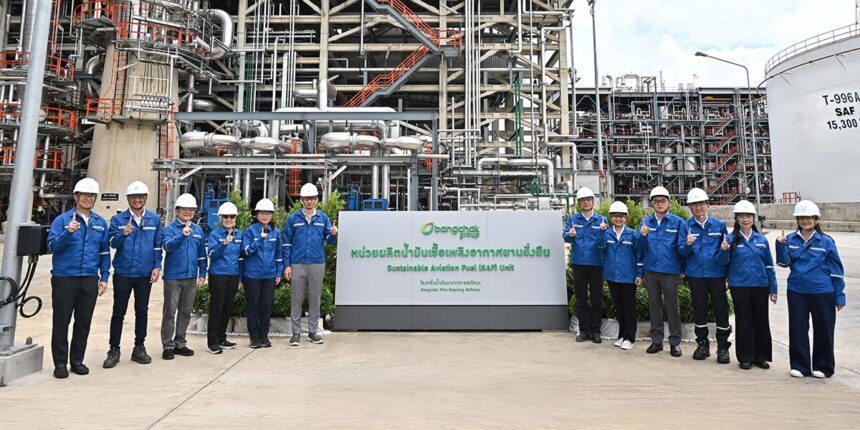
The regional energy sector analysts are closely tracking the operational milestones at Bangchak Corporation Public Company Limited, widely identified by its prominent market ticker BCP, following the formal completion of its highly sophisticated sustainable aviation fuel production unit. By integrating this advanced processing facility into its core refining network, BCP has successfully launched full-scale commercial operations, transforming speculative green technology into a highly productive, revenue-generating capital asset.
This newly commissioned industrial installation has been meticulously engineered to meet rigid international quality and safety benchmarks, establishing a strong operational foundation capable of supporting the rapidly evolving requirements of the global aerospace industry. Executive leadership emphasizes that this multi-billion baht infrastructure asset is not merely an isolated engineering project, but rather a vital pillar of the broader corporate roadmap designed to achieve total carbon neutrality across its entire industrial portfolio.
As global transportation networks face increasing pressure to decouple their operational activities from traditional fossil fuels, this localized processing hub positions the domestic economy as an early mover in the high-growth international clean energy market. This structural readiness creates a resilient framework that factors in local operational realities, allowing the administrative infrastructure to dynamically track industry demand shifts and avoid long-term inefficiencies in commercial utility allocation.
Constructing Scalable Supply Networks And Raw Material Management Ecosystems
Developing a financially viable framework for alternative propulsion systems requires a deep commitment to building robust, vertically integrated supply networks that can guarantee raw material supply consistency. Beyond the initial capital expenditure allocated for the physical construction of the processing plant, the management team at BCP has methodically established a comprehensive logistics ecosystem centered entirely on the sourcing, collection, and distribution of high-grade used cooking oil.
This specialized network coordinates the collection of municipal and industrial waste oils, optimizing downstream material processing to feed both the sustainable aviation fuel production lines and advanced hydrotreated vegetable oil manufacturing sectors. This dual-product strategy maximizes total refinery utilization rates, allowing the corporate entity to convert agricultural and commercial waste streams into premium, low-emission renewable diesel varieties that command substantial pricing premiums in international markets.
This complex logistical integration serves as a powerful testament to the long-term utility of the asset, demonstrating that a well-hedged infrastructure operator can successfully mitigate localized feedstock supply volatility. Even though many developing economies have not yet codified definitive regulatory mandates concerning the compulsory blending of sustainable alternative fuels, this proactive deployment guarantees long-term energy resilience while laying down the baseline infrastructure necessary to absorb future regional demand shocks.
Entering Global Energy Supply Chains And Export Milestone Valuations
The economic valuation profile of modern refining corporations is increasingly tied to their capacity to integrate domestic manufacturing output directly with highly liquid international trading hubs. In a landmark development for regional commodity markets, BCP is executing its inaugural commercial export shipment of sustainable aviation fuel to global buyers on May 19, 2026, establishing a major historical benchmark for the domestic energy sector.
This critical export milestone demonstrates that the local manufacturing infrastructure possesses the necessary technical capabilities, stringent product quality compliance, and rigorous international certification credentials required to enter the elite tiers of the global aerospace distribution chain. For international investment syndicates and equity analysts, this successful commercial dispatch elevates the enterprise’s status from a regional renewable energy pioneer to an influential frontrunner in the next-generation global energy matrix.
This operational success directly reinforces the company’s long-term commitment to its proprietary green innovation corporate vision, proving that aggressive investments in sustainable infrastructure can yield predictable, recurring commercial returns. As international aviation networks continue to expand their decarbonization mandates, the continuous optimization of these specialized refining fields will provide a secure, sustainable revenue stream that cushions the broader corporate balance sheet from traditional fossil fuel price fluctuations.
Regional Low-Carbon Energy Capitalization And Green Asset Arbitrage
From an analytical finance perspective, the successful commercial operationalization of a specialized sustainable aviation fuel processing hub marks an important structural inflection point for the valuation models applied to emerging market energy processors. Traditionally, downstream operators across Southeast Asia have suffered from persistent equity valuation discounts due to their direct exposure to highly volatile global crude import pricing structures and cyclical refinery margin contractions.
By strategically pivoting capital expenditure toward captive, locally sourced alternative fuel manufacturing, a prominent regional player like BCP transforms its industrial real estate assets into a unique, high-margin green infrastructure platform that is highly attractive to international sustainability oriented capital. This specialized asset configuration creates an exceptional liquidity runway, enabling the enterprise to issue low-cost green bonds and secure competitive project financing that remains entirely unavailable to traditional fossil fuel processors.
Furthermore, the physical introduction of localized alternative fuel supply chains acts as a major economic catalyst for the wider regional transportation and industrial distribution networks. As certified low-carbon energy options become integrated into existing logistics infrastructure, adjacent sectors including commercial aviation, international freight forwarding, and maritime transport will gain immediate access to verified carbon-offsetting components.
This infrastructural advantage allows domestic export-driven manufacturers to successfully navigate the increasingly strict supply chain compliance standards imposed by advanced European and North American markets, thereby maintaining the competitive edge of the regional industrial base. For institutional portfolio managers, the critical financial metrics to monitor over the upcoming fiscal periods will be the capacity utilization velocity of the newly commissioned units and the relative pricing premium maintained by sustainable blends over conventional jet fuel, as these indicators will establish the structural floor for the long-term non-commodity export growth of the domestic energy economy.