Robust Financial Performance And Capital Market Projections
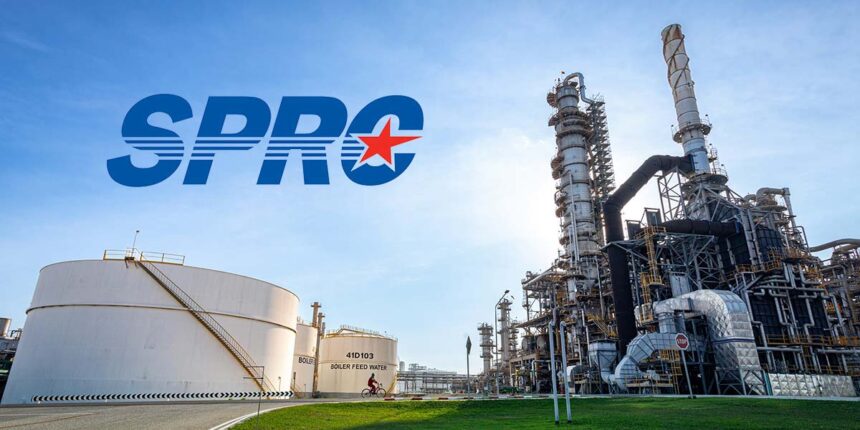
Leading regional equity researcher Kiatnakin Phatra Securities recently highlighted Star Petroleum Refining Public Company Limited, widely recognized by its market ticker SPRC, for its exceptional net profit after tax of 7.4 billion Thai baht during the first fiscal quarter of 2026. This massive financial surge marks an astronomical leap from the 1.1 billion Thai baht recorded in the preceding quarter, matching institutional financial projections and reinforcing investor confidence across regional capital markets.
The remarkable earnings momentum was primarily catalyzed by an expansive accounting stock gain evaluated at 22.3 dollars per barrel alongside significantly elevated gross refining margins that averaged 12.8 dollars per barrel over the three month period. Even when extracting the one off inventory evaluation adjustments that contributed 7 billion Thai baht to the bottom line, the core operational profitability of the entity demonstrated remarkable resilience amid fluctuating market conditions. Financial analysts note that the core quarterly earnings already account for 56% of the broader market consensus full year expectation of 3.1 billion Thai baht and a substantial 41% of advanced house forecasts for the entire fiscal year.
This impressive baseline positioning strongly implies that the corporation is well on track for extensive institutional earnings upgrades as the business carries its strong momentum into the upcoming operational quarters. This targeted alignment allows the domestic market to absorb global supply fluctuations without suffering severe systemic shocks, paving the way for stable, predictable industry performance in a highly competitive regional landscape.
Operational Constraints And Supply Chain Volatility Dynamics
Successfully managing localized refining facilities requires immense technical agility, particularly when shifting geopolitical dynamics alter downstream international product crack spreads. During the early part of the fiscal cycle, the SPRC refinery complex experienced a significant boost from surging regional product spreads, which were deeply influenced by brewing international trade conflicts that pushed standard market gross refining margins up from 9.3 dollars to 12.8 dollars per barrel. However, the energy enterprise was unable to completely monetize these short term pricing surges due to a pre planned engineering maintenance shutdown of its fluid catalytic cracking unit, which restricted operations from early February through the initial weeks of March.
This vital structural maintenance led to a temporary contraction in total processing volumes, with the main SPRC production facilities processing approximately ten million barrels of crude oil, representing a normalized 62.5% operational utilization rate compared to the 93% capacity utilization maintained in late 2025. Consequently, total cash operating expenses rose temporarily to forty-eight million dollars as a direct result of these intensive engineering overhauls, though management expects future recurring expenditures to normalize back down to the traditional thirty to thirty-four million dollar run rate.
By absorbing these necessary maintenance outlays early in the annual cycle, the industrial corporation has effectively minimized future downtime risks and fully optimized its specialized machinery to capture higher margin processing spreads throughout the remainder of the year. By building out this granular technological infrastructure, the treasury can successfully insulate the fiscal regime from massive subsidy leakages while simultaneously protecting fragile consumer demand fields across the domestic marketplace.
Downstream Retail Expansion And Valuation Arbitrage Outlook
The long term enterprise value of alternative energy platforms often depends on their ability to integrate midstream refining infrastructure with highly profitable downstream distribution channels. In the retail sector, the specialized oil distribution divisions owned by SPRC experienced a remarkable earnings surge, with earnings before interest, taxes, depreciation, and amortization skyrocketing to 52.8 million dollars from a modest 7.2 million dollars in the previous quarter. This significant operational growth was partially bolstered by inventory revaluations, but even when normalizing the figures to eleven million dollars, the underlying data reveals a structurally sound retail framework characterized by strengthening commercial margins and highly disciplined cost controls.
Given this strong performance across both wholesale processing and retail networks, market researchers maintain a definitive buy recommendation on the stock with an official target price of nine Thai baht, noting that the equity currently offers a highly lucrative dividend yield and an exceptionally attractive valuation multiple compared to its regional peers. Looking ahead into the secondary quarter of 2026, core profitability is projected to experience a highly visible expansion as the refinery operates free from any major maintenance constraints, which automatically implies an immediate 30% sequential volume growth.
This substantial increase in production throughput, paired with the structural stickiness of international refining margins, provides an excellent foundation for superior cash generation and reliable shareholder returns. This proactive stance is essential for preserving consumer purchasing power and ensuring that local small and medium enterprises remain competitive in the regional marketplace.
Regional Refining Competitiveness And Structural Margin Evolution
The sharp operational recovery of this major downstream asset provides critical insights into the shifting structural dynamics of the mainland Southeast Asian energy matrix. The stark variance between baseline refining profitability and raw inventory valuation adjustments highlights the persistent volatility confronting regional merchant refiners who do not possess extensive upstream production hedges. When global crude supply baselines are disrupted by international friction, regional processing hubs become highly sensitive to immediate localized product deficits, which rapidly inflates the regional market gross refining margins.
For institutional equity investors, the ability of a major infrastructure asset to secure more than forty percent of its annual house earnings target within a single quarter underscores the immense cyclical value available during periods of raw material price appreciation. This structural profitability is particularly critical for regional capital markets, as it demonstrates that well-capitalized downstream infrastructure platforms can maintain robust cash flow metrics even when navigating temporary declines in capacity utilization due to mandatory asset maintenance.
The significant expansion observed within the downstream retail distribution channels indicates that domestic commercial fuel demand remains remarkably resilient, enabling commercial actors to efficiently pass through incremental processing costs without depressing systemic consumption velocities. As downstream operators continue to integrate their refining frameworks with captive retail networks, the structural predictability of their operating cash flows will likely attract substantial long-term institutional capital inflows, forcing a reallocation of capital away from purely unhedged merchant refiners.
Over the medium term, financial analysts anticipate that this superior cash generation will spark an aggressive phase of local market consolidation, as capitalized refining hubs deploy their financial reserves to absorb distressed independent retail distributors and optimize their collective logistical footprints. For macroeconomic strategists, the critical data points to monitor over the next operational cycle will be the speed at which refining throughput approaches full capacity and the relative stability of regional crack spreads. This supply elasticity will directly dictate the baseline inflationary trajectory for industrial inputs across the broader transport and manufacturing sectors, establishing the structural floor for regional corporate earnings growth.