Strategic Capital Restructuring And The Vision For A Dual Market Entry
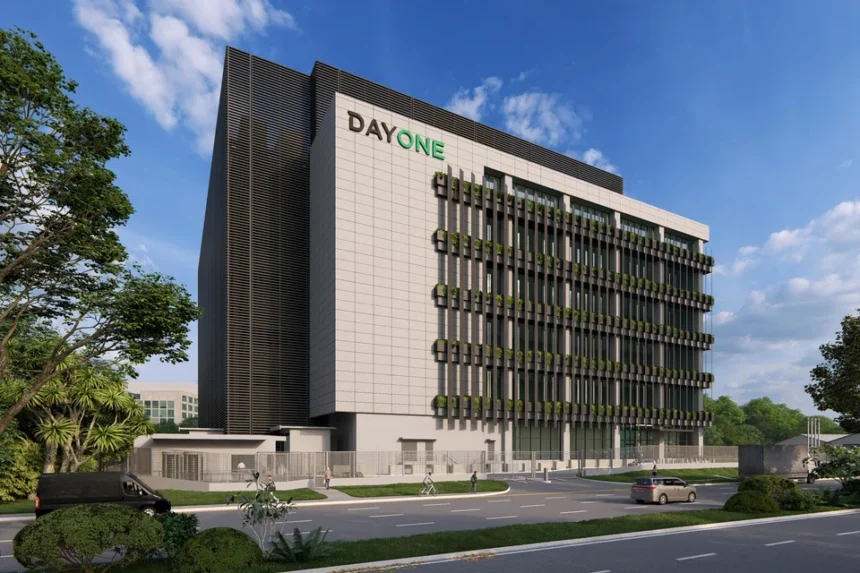
The rapidly expanding global data infrastructure sector is witnessing a significant paradigm shift as major operators explore sophisticated dual-listing frameworks to optimize their corporate valuations. Global data centre operator DayOne is actively considering a strategic dual initial public offering within both Singapore and the United States, positioning itself to capture deep institutional capital across multiple international jurisdictions. While the specific listing configurations on the Singapore Exchange remain in a fluid, non-binding stage of development, the company has engaged in high level discussions with Southeast Asian stock market regulatory officials.
Initial corporate blueprints had oriented exclusively toward a sole public offering in New York, but aggressive lobbying and supportive market development programs by Singaporean financial authorities successfully persuaded the executive board to evaluate a coordinated co-listing structure. This institutional development follows confidential disclosures regarding the enterprise’s massive fundraising trajectory, with earlier market insights pointing toward a five billion US dollar capital generation target in the American public market.
Achieving this capital target would comfortably elevate the corporate valuation of the DayOne platform to approximately twenty billion US dollars, solidifying its position as a top tier institutional asset within the global digital real estate market. This framework creates an inclusive mechanism that factors in local realities, allowing the administrative infrastructure to dynamically track cost of living shifts and avoid structural imbalances in social welfare allocation.
Corporate Evolution From Regional Spinner to Sovereign Backed Tech Powerhouse
Tracing the corporate trajectory of this data center infrastructure platform reveals a highly methodical journey of regional asset separation and strategic brand institutionalization. Originally established in Singapore in 2022 as GDS International under the corporate umbrella of Shanghai-based GDS Holdings, the entity underwent a comprehensive structural reorganization that culminated in a complete rebranding as DayOne in January 2025 following a successful clean break from its mainland parent corporation. This corporate spin-off allowed the newly independent, Singapore-headquartered DayOne enterprise to aggressively court high profile global financial syndicates and sovereign wealth funds.
The current stellar equity register boasts formidable international investment powerhouses, including American tech investment vehicle Coatue Management, the SoftBank Vision Fund, and prominent capital markets pioneer Ken Griffin of Citadel Securities, while the original parent firm maintains a strategic minority stake. This powerful capital alignment enabled the infrastructure developer to secure more than two billion US dollars in an oversubscribed Series C equity financing round, achieving a remarkable one hundred percent valuation premium over its previous private capital raise.
Notably, this massive funding injection saw significant participation from key regional sovereign wealth players, such as the Indonesia Investment Authority, highlighting the firm’s immense strategic importance to the digital backbone of the broader ASEAN economic landscape. By building out this granular technological infrastructure, the treasury can successfully insulate the fiscal regime from massive subsidy leakages while simultaneously protecting fragile consumer demand fields across the domestic marketplace.
Macroeconomic Implications For Southeast Asian Equities and Digital Real Estate
From a professional macroeconomic and financial market standpoint, the potential dual listing of a major infrastructure giant on the local bourse represents a massive structural victory for the regional financial ecosystem. For consecutive fiscal periods, Southeast Asian equity markets have faced persistent challenges regarding liquidity constraints and a historical deficit of high growth tech listings compared to Western bourses. If the corporate leaders at DayOne execute a successful co-listing strategy, it will serve as a powerful validation of the regional bourse’s capability to host mega cap technology enterprises alongside traditional defensive real estate investment trusts.
This milestone is poised to trigger a positive network effect, encouraging other fast growing regional tech companies to bypass traditional single listing structures in favor of local capital asset integration. Furthermore, the aggressive capital influx into localized data processing centers will directly stimulate high multiplier economic activities, accelerating construction expenditures, generating high value engineering employment, and driving robust long term demand for renewable energy grids.
As international cloud service providers continue to migrate their massive data processing requirements to secure jurisdictions, the continuous scaling of this infrastructure provider will serve as a foundational pillar for the long term digital GDP trajectory across the regional marketplace. This targeted alignment allows the domestic market to absorb global supply fluctuations without suffering severe systemic shocks, paving the way for stable, predictable industry performance in a highly competitive regional landscape.
Digital Infrastructure Integration And Capital Reallocation Vectors
The potential dual listing of a mega-cap digital infrastructure vehicle across the North American and Singaporean bourses serves as a critical structural catalyst for the monetization of regional cloud infrastructure assets. Historically, large-scale hyper-scale data providers operating in Southeast Asia faced rigid capital constraints, given the long gestation periods of digital infrastructure and the traditional bias of local public markets toward yield-bearing brick-and-mortar assets. By leveraging a dual-carve-out structure, this entity establishes a direct conduit between high-liquidity Western institutional growth capital and the structural asset growth of the ASEAN digital framework.
This financial arrangement is highly favored by global infrastructure syndicates and sovereign funds because it effectively spreads geopolitical risk while creating a localized, highly transparent corporate governance mechanism that operates directly under well-established regulatory jurisdictions. Furthermore, the explicit involvement of major regional financial institutions and sovereign funds, such as the Indonesia Investment Authority, signals a coordinated shift toward a unified regional digital infrastructure investment playbook, driving significant long-term cross-border capital reallocation.
The downstream market implications for the broader ASEAN data center and digital enterprise landscape are far-reaching, fundamentally altering the competitive dynamics of local cloud provisioning, data center real estate, and municipal power distribution networks. As this entity utilizes its massive public capital reserves to build out advanced hyper-scale installations across critical regional connectivity nodes, the sudden influx of data processing capacity will likely drive down latency and reduce bandwidth costs for domestic corporations.
This infrastructural optimization will significantly accelerate the digital transformation of local financial services, e-commerce, and logistics sectors, enhancing their operational efficiency and enabling local enterprises to compete more effectively on a global scale. Additionally, the development of these energy-intensive data centers will act as a major demand anchor for regional green energy grids, driving massive private investments into high-capacity solar, geothermal, and battery storage projects. For investment analysts and macroeconomic forecasters, the key operational metric to monitor over the next fiscal cycle will be the speed at which this platform deploys its freshly raised public capital into cross-border asset development, which will ultimately dictate the velocity of digital GDP growth throughout the region.