Pioneering Urban Infrastructure And Next Generation Vehicle Refueling
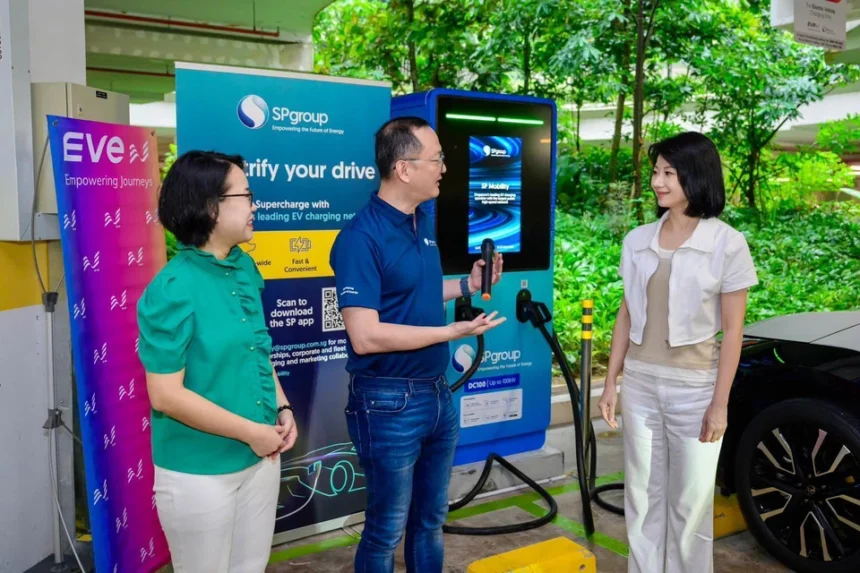
The acceleration of the regional electric vehicle transition relies heavily on the widespread deployment of reliable fast-charging infrastructure within public residential developments. In a landmark collaboration designed to alter the urban transportation landscape, national power enterprise SP Group joined forces with EV-Electric Charging to unveil Singapore’s inaugural high capacity residential electric vehicle recharging hub. Situated strategically within the Housing and Development Board car parks at Plantation Crescent in Tengah, this newly deployed facility boasts an impressive configuration of fourteen specialized recharging points.
To cater to diverse driver requirements, the installation integrates eight direct current fast-charging bays delivering up to 100 kilowatts of electrical power alongside six standard alternating current points operating at 7.4 kilowatts. While single high speed chargers have historically appeared in scattered residential zones, this dedicated site marks the first time a centralized high power cluster has been fully integrated directly within a public housing vehicle park. This infrastructure development is an essential part of the broader national strategy aimed at significantly reducing carbon emissions from the transportation sector.
By placing these advanced power systems directly in high density residential centers, utility providers are successfully eliminating range anxiety and laying down the core foundation for widespread alternative energy adoption across the domestic market. This framework creates an inclusive mechanism that factors in local realities, allowing the administrative infrastructure to dynamically track urban demand shifts and avoid structural imbalances in social utility allocation.
Strategic Institutional Alliances And National Expansion Timelines
Building out a highly accessible and sophisticated municipal refueling network requires intense coordination between government regulators, state owned utility firms, and prominent private enterprise partners. At the official unveiling ceremony of the Tengah residential facility, Senior Minister of State for Transport Sun Xueling articulated a bold vision to replicate this fast-charging hub model across every single housing township throughout the republic by the conclusion of 2027. This ambitious timeline is supported by a series of major commercial contracts executed by EV-Electric Charging, the dedicated unit of the Land Transport Authority tasked with managing the national infrastructure rollout.
Recent procurement agreements signed with leading energy mobility players, including SP Mobility, Shell Singapore, and ComfortDelGro Engie, ensure a steady pipeline of advanced technological deployment over the coming fiscal periods. According to executive leadership at the state charging network provider, establishing these centralized facilities provides high density housing residents with unprecedented flexibility, greater convenience, and significantly shorter refueling intervals.
By leveraging the operational expertise of established global energy corporations, the regulatory authorities are ensuring that the rapidly expanding public network remains technologically future proof and capable of meeting increasing load demands as consumer vehicle preferences continue to evolve toward alternative propulsion systems. By building out this granular technological infrastructure, the treasury can successfully insulate the fiscal regime from massive energy leakages while simultaneously protecting fragile consumer demand fields across the domestic marketplace.
Technological Benchmarks And Future High Power Capabilities
The evolution of municipal refueling technology is moving toward increasingly higher energy transfer rates to bridge the operational gap between traditional combustion engines and alternative energy platforms. Historical data from late 2025 reveals that while standard alternating current chargers were successfully deployed across approximately 85% of public housing parking facilities, their typical 7.4 kilowatt output required upward of seven consecutive hours to achieve a full battery replenishment cycle. Conversely, direct current fast-charging systems operate at substantially elevated power thresholds starting at 50 kilowatts and scaling much higher, which dramatically reduces user wait times.
The recent introduction of 100 kilowatt systems in residential neighborhoods represents a major leap forward, yet industrial engineering firms are already testing even higher power boundaries across the island. For instance, a premier mobility provider recently launched an ultra rapid 400 kilowatt charging mechanism at a local polytechnic campus, a groundbreaking technology that can successfully add three hundred kilometers of operational driving range in just ten minutes of connectivity.
As these high power innovations filter down from educational and commercial testing grounds into standard residential neighborhoods, the total throughput capacity of public housing infrastructure will expand exponentially, transforming the domestic economy into a premier global case study for electrified mass transit systems. This proactive stance is essential for preserving consumer purchasing power and ensuring that local small and medium enterprises remain competitive in the regional marketplace.
Valuation Paradigms And Capital Asset Integration
The transition of dense public housing assets into high utility fast-charging fields represents a structural transformation of municipal real estate that directly alters regional capital allocation and utility valuation models. In highly urbanized Southeast Asian economies, the traditional segregation of energy distribution networks from residential real estate assets historically led to significant underutilization of municipal grid capacity during off peak hours. By converting standard public vehicle parks into high throughput energy distribution nodes, institutional asset managers are creating a highly predictable, recurring cash flow model that enhances the long term yield profile of public infrastructure investments.
The successful deployment of 100 kilowatt infrastructure within residential spaces shifts the capital expenditure burden from speculative long distance transmission projects to highly optimized, localized distribution upgrades. This microgrid optimization is favored by regional infrastructure funds and green bond issuers, as it provides clear, quantifiable metrics regarding carbon displacement per unit of capital deployed, thereby increasing the domestic financial sector’s capacity to absorb international sustainability oriented capital inflows. Furthermore, this systematic deployment serves as an important market signal regarding the future valuation trajectories of the automotive retail and domestic retail industries.
As high output electricity becomes ubiquitous within residential zones, the secondary market valuation for internal combustion vehicles will likely experience accelerated depreciation, forcing traditional multi brand automotive dealerships to restructure their asset portfolios ahead of regulatory deadlines. In the consumer sector, the reduction of vehicle refueling intervals to under an hour will alter local commercial activity hubs, shifting consumer discretionary spending away from traditional highway service stations and toward township retail centers situated immediately adjacent to these urban refueling hubs. For equity analysts and macroeconomic forecasters, the key metric to monitor over the medium term will be the grid utilization efficiency rate across these housing installations. This metric will indicate whether the state’s aggressive capital expenditure into residential power grids can successfully catalyze a private sector transition to electric commercial fleets, thereby driving long term non commodity productivity growth across the broader ASEAN market.