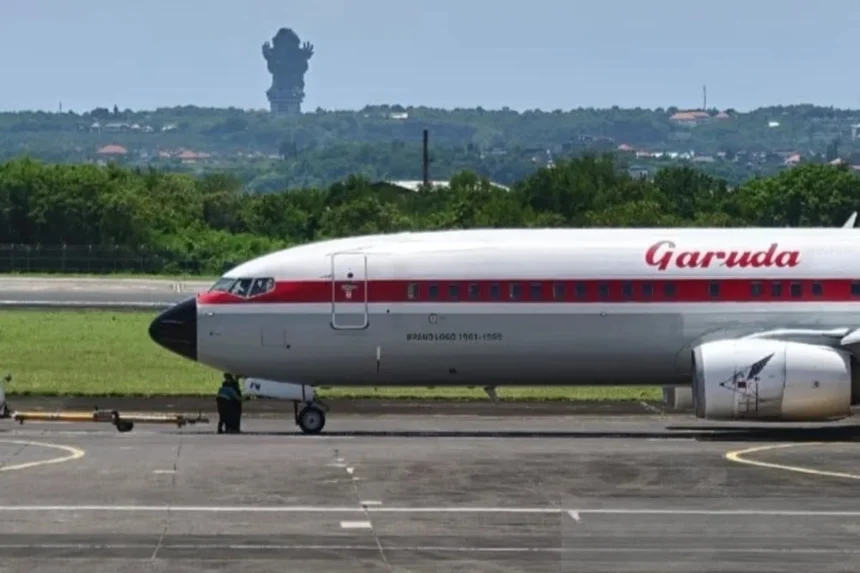
Strategic Hub Expansion For Garuda Indonesia In Eastern Regions
The recent decision by Garuda Indonesia to establish Bali as a primary international hub for Eastern Indonesia signifies a major shift in regional aviation strategy. By integrating Denpasar’s I Gusti Ngurah Rai International Airport with routes stretching into the heart of Papua, the state-owned carrier is actively working to strengthen the national economy through enhanced tourism and business connectivity. Official spokesperson Dewa Bagus Rendra Maha Putera emphasized that maximizing the role of Bali as a gateway is essential for fostering growth in underdeveloped regions.
One of the most significant steps in this initiative is the launch of a specialized flight path connecting Jakarta, Denpasar, Timika, and Jayapura. This strategic corridor is designed to provide seamless transitions for travelers moving between the bustling capital and the resource-rich provinces of the east. Operated four times a week, the service utilizes a Boeing 737-800NG aircraft, which offers a balanced configuration of 12 business class seats and 150 economy class seats to cater to diverse traveler profiles.
The scheduling is meticulously planned, with flight GA-652 departing Soekarno-Hatta International Airport in the late evening to ensure early morning arrivals in Papua. This timing is particularly beneficial for corporate travelers and logistics providers who require a full working day upon arrival. By positioning Garuda Indonesia at the center of this network, the airline is not only expanding its operational footprint but also acting as a critical bridge for cultural and economic exchange. The commitment to maintaining these routes reflects a broader vision of national integration.
Operational Efficiency And Multimodal Connectivity Logistics
To ensure the success of this expanded network, Garuda Indonesia has implemented a rigorous operational schedule that optimizes aircraft rotation and passenger convenience. The outbound flight GA-652 departs Jakarta at 9:25 PM Western Indonesian Time, touching down in Denpasar shortly after midnight before continuing its journey to Mozes Kilangin Airport in Timika. Arriving at 5:45 AM Eastern Indonesian Time, the aircraft then proceeds to its final destination at Sentani Airport in Jayapura by 7:55 AM.
This complex sequence of takeoffs and landings requires precision in ground handling and air traffic coordination to maintain the airline’s reputation for reliability. Conversely, the return leg operated by GA-653 ensures that passengers from Papua have a direct and efficient path back to the gateway of Bali and the administrative center of Jakarta. These return flights operate on Mondays, Wednesdays, Fridays, and Sundays, departing Jayapura in the morning and reaching the capital by mid-afternoon.
The presence of this route is expected to provide a much smoother journey for international tourists who wish to explore the unique landscapes of Papua after enjoying the amenities of Bali. Business people also stand to gain significantly from reduced travel times and more frequent options for moving between major economic zones. The leadership at Garuda Indonesia continues to evaluate these performance metrics to ensure that the network remains adaptive to the evolving needs of the modern consumer. Such logistical expertise is vital for maintaining the competitive edge of the national carrier.
Sovereign Economic Resilience Through Aviation Integration
Beyond simple transportation, the expansion of Garuda Indonesia into the eastern archipelago is a calculated maneuver to bolster sovereign economic resilience. As Bali serves as the main gateway for international tourism, channeling a portion of that traffic toward Papua creates a powerful fiscal multiplier effect for local businesses and hospitality sectors. The airline’s role in this ecosystem is to ensure that the logistical backbone is strong enough to support an increase in tourist arrivals and the transport of essential goods.
Minister Putera highlighted that the contribution to the regional economy is a primary objective, as improved access often leads to higher investment values and the development of local human resources. By making Papua more accessible, the state-owned carrier is helping to diversify the tourism portfolio of Indonesia, moving beyond the traditional hotspots to include the extraordinary natural beauty of the eastern provinces. This strategy also serves as a defense against global economic volatility by creating a more robust and interconnected domestic market.
The focus on high-value industries like tourism and mining in Timika ensures that the flight routes remain profitable while serving a higher national purpose. As the airline evaluates its network, it remains committed to fostering an environment where regional industries can thrive through better connectivity. The ongoing dialogue between aviation stakeholders and provincial governments is focused on creating a resilient framework that can withstand international trade disruptions. Ultimately, the success of the national carrier in linking these disparate regions will be a defining characteristic of Indonesia’s economic recovery.
Regional Aviation Dynamics And Market Impact
The decision by the national carrier to centralize eastern operations through Bali represents a sophisticated shift in the regional aviation landscape. From a professional analytical perspective, this move is a classic example of hub-and-spoke optimization designed to capture high-yield international traffic and distribute it across underserved regional markets. We analyze that the integration of Papua into the Bali international network significantly lowers the operational risks for foreign investors who previously viewed the eastern regions as logistically prohibitive. By providing a reliable schedule through a trusted state entity, the airline is effectively subsidizing the initial growth phase of the eastern tourism and logistics sectors.
Furthermore, the utilization of the Boeing 737-800NG on the Jakarta-Denpasar-Timika-Jayapura corridor indicates a focus on fuel efficiency and right-sizing capacity to match emerging demand. We project that this route will act as a primary catalyst for a surge in secondary hospitality investments in Jayapura and Timika, as the ease of access improves the projected occupancy rates for hotel chains. The timing of these flights is also noteworthy; by utilizing overnight slots, the airline maximizes aircraft utilization rates, which is a key metric for institutional investors evaluating the carrier’s fiscal health. This operational strategy enhances the overall liquidity of regional trade by ensuring that goods and personnel can move with minimal friction.
For market analysts, the primary indicator of success in the 2026 aviation sector will be the load factor of these trans-archipelago routes. A sustained high occupancy rate would signal a permanent shift in domestic travel patterns and a successful decentralization of the tourism economy. This strategic realignment confirms an expert-level understanding of how infrastructure can be leveraged to create competitive advantages in the regional market. As these routes mature, they will likely facilitate a more liquid market for regional trade and provide a stable foundation for the next phase of Indonesia’s industrial transformation. By bridging the gap between the western administrative centers and eastern resource hubs, the airline is essentially creating a unified economic corridor that enhances the nation’s total factor productivity and long-term fiscal stability.