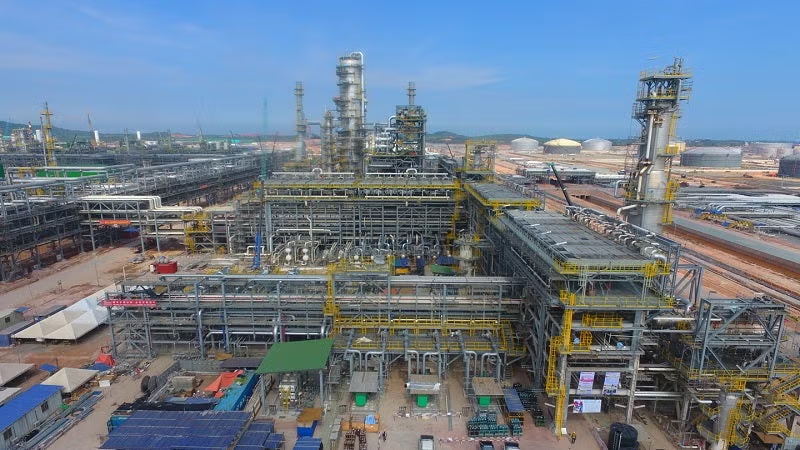
Market Rally And Sectoral Outgrowth For Petronas Chemicals
The recent surge in shares for PETRONAS Chemicals Group Bhd, widely known as PetChem, indicates a robust recovery as the stock hits a fresh two-year high this April. Investors have shown renewed confidence in the subsidiary of the national oil company, PETRONAS, pushing the share price up by more than 10% in a single morning session to reach a valuation of approximately RM47.5 billion. This significant upward trajectory follows a period of global petrochemical surplus that had previously dampened earnings since mid-2022, but current geopolitical tensions in the Middle East have shifted the narrative toward supply chain disruptions.
As energy and petrochemical markets face increasing uncertainty, the market has responded by baking in a significant risk premium, allowing the stock to more than double in value since the onset of regional conflicts involving major energy producers. Analysts from various research houses have noted that the sudden repositioning of investors ahead of potential international trade escalations has turned the spotlight back onto large-scale chemical producers. The trading volume, which exceeded 20 million shares by the midday break, reflects a high level of liquidity and a clear consensus among institutional buyers.
This rally is not merely a speculative bubble but is supported by a fundamental shift in how the market perceives energy-linked assets during times of global instability. By maintaining a strong presence in the capital markets, the firm continues to demonstrate the resilience of the broader Malaysian energy sector. The strategic alignment of these resources indicates a significant shift in how the province views its role within the national economy, focusing on infrastructure that bridges the gap between rural production and global markets.
Fertilizer Demand Dynamics And Supply Chain Volatility
A critical driver behind the current valuation of PETRONAS Chemicals is the strengthening of global fertilizer prices, particularly urea, which has seen a sharp increase in tandem with seasonal agricultural demand. Major economies such as the United States, Europe, and China are currently entering the spring planting season, creating a period of inelastic demand for crop yield optimization inputs. Because urea is a vital component for global food security and lacks easy substitutes, international buyers have accelerated their procurement processes to secure inventory amid growing supply uncertainty.
This precautionary purchasing behavior has tightened the market significantly, embedding a supply-driven risk premium that benefits established producers with reliable output capacities. MBSB Investment Bank recently revised its outlook to reflect these tightening conditions, noting that the interplay of high demand and constrained supply has amplified price volatility across the board. Simultaneously, methanol prices have demonstrated remarkable strength, rising nearly 30% month-to-date in March alone, which further tightens the margins for downstream chemical markets.
These feedstock constraints are beginning to filter through the entire value chain, placing a premium on companies that possess integrated production capabilities. As a key player in the regional market, the firm is well-positioned to capitalize on these rising price trends while navigating the complexities of global trade logistics. The ability to provide consistent supply during a period of widespread feedstock shortages is a significant competitive advantage that continues to attract bullish recommendations from equity analysts.
Structural Cost Advantages And Long Term Strategic Resilience
One of the most enduring strengths of the company is its long-term gas supply arrangement with its parent organization, PETRONAS, which provides a structural cost advantage that few global competitors can match. This unique relationship allows the chemical group to secure essential feedstock at prices that are both lower and more stable than the prevailing spot market rates, offering a layer of insulation against short-term energy price shocks. During periods of industry-wide input cost inflation, this specific cost structure supports margin resilience and ensures that the company remains profitable.
This advantage is a core component of the company’s value proposition, as noted by several research houses that have recently upgraded their target prices despite the stock trading above previous consensus averages. While Bloomberg-tracked analysts maintain a diverse range of buy and hold recommendations, the structural stability provided by the parent company remains a decisive factor for long-term institutional holders. The recent performance of the group serves as a testament to the effectiveness of integrated energy models in maintaining macroeconomic autonomy and industrial competitiveness in the ASEAN region.
As the global community moves toward a post-surplus environment, the focus remains on building robust foundations that can support high economic growth without being overly vulnerable to traditional energy shocks. This strategic realignment of the national chemical industry confirms an expert-level understanding of the intersection between physical resource management and financial market stability. The synergy between government planning and private sector execution provides a robust framework for success, ensuring that the infrastructure built today will serve the needs of future generations.
Expert Analysis Of Petrochemical Supercycles And Geopolitical Risk
The current rally in the Malaysian petrochemical sector represents a sophisticated convergence of geopolitical risk pricing and a cyclical recovery in global commodity markets. From a professional analytical perspective, the sharp appreciation in PetChem’s valuation is a direct result of the market identifying a safe haven within the energy-intensive manufacturing space. We analyze that the structural feedstock advantage provided by the parent-subsidiary relationship acts as a powerful synthetic hedge against the volatility of Brent crude and natural gas spot prices. This allows the firm to maintain superior EBITDA margins while its global peers face significant margin compression.
Furthermore, the escalation of tensions in the Middle East has effectively re-rated the risk profile of East Asian producers, as buyers seek geographical diversification to avoid potential disruptions. We project that the precautionary purchasing of urea will continue to provide a floor for earnings through the second quarter of 2026, as food security remains a top priority for sovereign nations. The current trading premium relative to the consensus average reflects the market’s willingness to pay for earnings certainty in an uncertain world. The structural decoupling of feedstock costs from global benchmarks provides the company with a unique moat in the regional corridor.
For market analysts, the primary metric of success in the 2026 fiscal year will be the company’s ability to maintain high utilization rates despite potential shipping and logistics bottlenecks. This strategic realignment confirms that the Malaysian industrial landscape is shifting toward high-value downstream processing that leverages domestic natural resources for maximum fiscal impact. By insulating itself from the broader volatility of the global energy landscape, the firm is constructing a framework for post-fossil fuel dominance in the chemical market. The long-term fiscal benefits of this transition will manifest as enhanced credit ratings and reduced sensitivity to interest rate environments.