Government Defends Fertilizer Price Cut for Food Security
Indonesia’s Deputy Minister of Agriculture, Sudaryono, has publicly defended the government’s recent 20 percent reduction in subsidized fertilizer prices, arguing that the policy is a strategic measure intended to significantly boost farmers’ productivity across the archipelago and, crucially, to strengthen the nation’s overall food security framework. This substantial adjustment in pricing, implemented as of October 22, aims to make essential agricultural inputs more accessible to the millions of smallholder farmers who form the backbone of the domestic Economy.
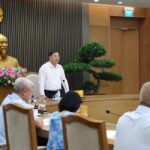
Speaking during an unannounced inspection tour in Malang, East Java, the Deputy Minister reassured the agricultural sector and the public alike, stating, “Per 22 October, fertilizer prices have officially been lowered. Compensations are in place. Worry not, everything is under control,” emphasizing the systematic planning behind the implementation. This statement sought to alleviate any concerns among distributors regarding potential financial losses due to the sudden price change.
The Ministry of Agriculture undertook these surprise visits with the primary goal of ensuring that maximum retail prices (HET) at the kiosk level immediately complied with the new government regulations. The enforcement of this new policy is rigorous, specifically designed to prevent any violations by distributors or retailers who might attempt to undermine the intended benefits for the farmers.
The Deputy Minister urged all distributors and kiosks to adopt the new, lower rates without delay, confirming that the government is fully prepared to cover all price differences through precisely prepared compensation mechanisms, thereby stabilizing the Finance aspect of the supply chain.
Surge in Farmer Uptake Signals Policy Success
The immediate operational response to the subsidized fertilizer price cut has been demonstrably positive, with Ministry data indicating a significant surge in farmer uptake and utilization across Indonesia. The Deputy Minister engaged directly with farmers during his visit to Pagentan Village, Singosari, Malang, receiving confirmation that the subsidized fertilizer prices have indeed dropped in compliance with the new ceiling prices set by the government.
This direct feedback from the grassroots level validated the effectiveness of the initial policy implementation. Furthermore, the Deputy Minister used the inspection to discuss the complexities of the distribution processes and the quality of customer services provided at the kiosks, reinforcing the government’s firm commitment to ensuring farmers receive not only timely access to their necessary fertilizer supplies but also appropriate and responsive support services from the point of sale.
The 20 percent price reduction is applied universally to all subsidized fertilizer types that are critical for national food production, prominently including urea and NPK compounds, which are the formulations most widely used by farmers across various regions and commodities in Indonesia. Since the official implementation of this strategic pricing policy, fertilizer uptake has increased dramatically.
Ministry data conclusively shows that daily purchases have soared from an average of 42,000 farmers per day to a significantly higher range of between 72,000 and 78,000 farmers per day, representing a nearly doubling of daily engagement. This massive increase in demand underscores the immediate positive impact of the Finance subsidy on agricultural Business practices.
Ensuring Supply Chain Stability and Future Productivity
The Ministry of Agriculture has been actively monitoring the market following the price cut, ensuring that the supply chain remains stable and capable of meeting the sudden surge in farmer demand for subsidized fertilizer. Data compiled by PT Pupuk Indonesia, as reported by Jekvy Hendra, the ministry’s director for fertilizers, powerfully illustrates the initial commercial impact of the price reduction, showing substantial sales volumes of 180,000 tonnes of urea and 266,800 tonnes of NPK Phonska fertilizers.
These high volumes reflect the successful integration of the price change into the Business operations of the distributors and the eager response from the farming community. The Ministry has made clear that continuous and rigorous market monitoring will be maintained to guarantee both sufficient stock availability and stable prices across all regions, thereby sustaining the momentum generated by the policy.
This sustained oversight is essential to prevent localized shortages or price gouging that could undermine the effectiveness of the subsidy and cause disruptions to the planting cycles. This comprehensive effort reflects the Indonesian government’s multi-faceted approach to agricultural support, extending beyond simple Finance subsidies to encompass active supply chain management and policy enforcement.
The ultimate goal of this initiative is to create an environment where Indonesian farmers are equipped with affordable, reliable access to essential inputs, ultimately strengthening agricultural productivity and securing the long-term food sovereignty of the nation’s Economy.
Policy Mechanics and Long-Term Economy Impact
The regulatory action to enforce the 20 percent fertilizer price cut highlights a specific and effective mechanism the Indonesian government employs to manage crucial commodity markets, ensuring that national Economy policies translate directly into consumer benefit rather than being absorbed by intermediary Business layers. The implementation of immediate compensation mechanisms for distributors represents a sophisticated Finance engineering solution, designed to minimize resistance within the supply chain by guaranteeing their margins despite the government-mandated price drop.
This approach successfully accelerates compliance and secures the swift flow of subsidized fertilizer to the end-users. The observed nearly two-fold increase in daily farmer purchases, moving from 42,000 to over 72,000 users, signals a successful shift in the elasticity of demand, unlocking previously dormant or constrained agricultural Investment potential at the farm level.
In the long run, the increased use of fertilizer is projected to raise crop yields, leading to greater farm incomes, stabilizing rural Economy growth, and reducing the country’s dependency on imported foodstuffs, thereby enhancing Indonesia’s Finance stability and food security goals simultaneously. This robust, interventionist policy demonstrates the government’s unwavering commitment to stabilizing the Agriculture sector as a primary pillar of national resilience.
Financial Analyst Commentary: Strategic Inflation Hedge and Regional Competitiveness
This 20 percent fertilizer price reduction is a strategically astute fiscal intervention that transcends a simple subsidy adjustment, acting primarily as a forward-looking hedge against core inflation and a structural enhancement to regional Business competitiveness. The government’s willingness to absorb a greater fiscal burden on the Finance side, by increasing the unit subsidy to compensate for the retail price cut, is economically justifiable if the policy successfully mitigates future surges in the food component of the Consumer Price Index (CPI), which is a key driver of volatility in the Indonesian Economy.
The near doubling of daily farmer uptake following the price cut confirms that the subsidy had previously been too restrictive, preventing optimal fertilizer application and thus depressing national agricultural productivity. This release of latent demand immediately translates into an implicit Investment in higher future crop yields, effectively lowering the per-unit cost of staple food production and improving the Farmers’ Terms of Trade (NTP).
Regionally, by lowering input costs for Indonesian staples like rice and palm oil, the policy fortifies the price competitiveness of Indonesian agricultural commodities against major ASEAN rivals, thereby boosting the country’s trade balance and fortifying the stability of the rupiah. The operational challenge now pivots to the state-owned enterprise (SOE) distributor, PT Pupuk Indonesia, which must demonstrate the logistical capacity to manage a nearly 100% surge in demand without creating artificial shortages or distribution bottlenecks, as failure here would negate the Finance benefit and lead to market distortion.