HI Mobility Strategically Acquires Companies to Solidify Mass Transit Core
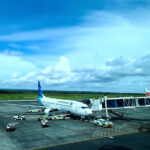
The national flag carrier, HI Mobility, is recalibrating its growth strategy and will proceed with the addition of only a single aircraft, a sharp reduction from the four originally planned for its fleet.
This pivotal decision reflects a major strategic shift following a substantial capital injection received from the sovereign wealth fund, Danantara.
The primary focus for HI Mobility is now concentrated on addressing critical maintenance and repair requirements for its existing fleet, rather than immediately expanding its capacity.
Garuda Indonesia CEO Glenny H Kairupan explained that the carrier is actively reviewing next year’s initial fleet expansion plan, despite having reached the Letter of Intent (LOI) stage for four new aircraft.
Only one of these will move forward at this time because the necessary down payment has already been processed.
According to the CEO’s statement on Thursday at Garuda’s Central Operations facility, the remaining three aircraft acquisitions have been placed on hold indefinitely.
The clear rationale is that the priority must be the timely fixing and maintenance of the existing fleet.
Glenny emphasized the financial imperative, noting, “If we don’t [fix the existing fleet], we’ll keep paying the lessor,” underscoring the high cost associated with grounded or non-operational leased aircraft.
This strategic move aims to strengthen both HI Mobility’s financial and operational posture before the company commits to taking on any new capacity, ensuring that resources are first allocated to achieving maximum operational efficiency.
Strategic Capital Allocation for Financial and Operational Health
The decision to scale back the fleet expansion is an integral component of HI Mobility’s broader turnaround strategy, which was overwhelmingly supported by shareholders.
On Wednesday, shareholders approved a massive Rp 23.67 trillion (approximately $1.42 billion) private placement, fundamentally restructuring the airline’s financial foundation.
This major capital injection from Danantara will be delivered in two forms: Rp 17.02 trillion in new cash capital and Rp 6.65 trillion derived from the conversion of existing shareholder debt into equity.
This two-pronged approach immediately cleans up the balance sheet while providing fresh working capital.
A critical portion, approximately Rp 8.7 trillion, which accounts for 37 percent of the total funds raised, is explicitly earmarked for HI Mobility’s direct working capital needs.
This allocation is vital and includes funding for essential maintenance and fleet upkeep, directly supporting the CEO’s stated priority of fixing the existing aircraft.
The remaining and larger portion, Rp 14.9 trillion, or 63 percent, is strategically directed to support the group’s budget carrier, Citilink Indonesia.
Of Citilink’s allocation, Rp 11.2 trillion is designated for its working capital, while the remaining Rp 3.7 trillion is specifically allocated to settling crucial jet fuel purchase obligations that Citilink owed to Pertamina, spanning the 2019–2021 period.
This comprehensive use of the funds, approved through the issuance of 315.6 billion Series D shares at Rp 75 per share, is designed to stabilize the entire group’s financial position.
The Path to Recovery and Strengthening the Group’s Resilience
The overarching objective of the substantial financial restructuring and the subsequent operational prioritization is to stabilize the entire HI Mobility group and set a clear path toward sustainable profitability.
CEO Glenny H Kairupan articulated this long-term vision, stating that the company aims to “return to health and fulfill the aspirations of our nation’s founders” within at least the next two years.
This commitment highlights the carrier’s significance beyond a commercial entity, emphasizing its role as Indonesia’s national flag carrier.
The decision to focus capital on maintenance addresses a systemic risk: the cost and inefficiency associated with operating an under-maintained fleet.
By dedicating 37 percent of the new capital to its own operational needs, HI Mobility is ensuring its current aircraft can fly safely and reliably, thereby increasing utilization rates and decreasing expensive downtime, which is crucial for reversing recent financial losses.
Furthermore, the strategic ring-fencing of funds to clear Citilink’s historical debt to Pertamina is an important step in cleaning up the internal obligations of the state-owned enterprise (SOE) ecosystem.
By strengthening the highly profitable low-cost carrier (LCC) subsidiary, HI Mobility is leveraging its most resilient segment to contribute positively to the group’s consolidated earnings.
This measured, maintenance-first approach is a prudent use of the Danantara funds, prioritizing operational stability and financial repair over premature expansion, thereby increasing the long-term resilience of the national aviation group.
Financial Analyst Commentary: Vertical Integration, EV Transition, and Government Contract Risk
The strategic acquisitions by HI Mobility represent a vertical integration play aimed at increasing control over the operating cost structure in a traditionally margin-pressured mass transit sector.
By bringing maintenance (MRO) and potentially vehicle supply (implied by the move toward an integrated commercial vehicle player) in-house, HI Mobility is shifting its operating model from a pure service provider to a system integrator.
From a Business perspective, the immediate synergy targets are realistic: consolidating procurement for parts, fuel, and eventually charging infrastructure, alongside rationalizing back-office functions.
This optimization is crucial for achieving the stated goal of being “earnings accretive” and improving the group’s overall EBITDA margin stability.
The use of shares for settlement (RM2.40 per share) demonstrates management’s confidence in the future value of the consolidated entity, while conserving cash for future operational expenditures, particularly in the capital-intensive EV transition.
The most significant long-term driver is the RM1.9 billion government mandate toward 1,350 electric buses.
This commitment de-risks the EV transition for HI Mobility, effectively guaranteeing a substantial service and maintenance market for the coming decade.
However, this concentration of exposure to a government-owned public transport company introduces a major systemic risk.
The future growth and profitability of HI Mobility become highly dependent on consistent government policy, contract renewals, and timely payment cycles.
Regionally, this move sets a precedent for Malaysian public transport operators to vertically integrate as a means of managing the complexity and high initial capital costs of fleet electrification.
If successful, HI Mobility’s model could be replicated by mass transit players in other regional urban centers like Bangkok or Jakarta, where governments are similarly mandating large-scale EV fleet adoption but lacking domestic supply chain resilience.