Accelerating The Disbursement Of Housing Funds For Sumatra Disaster Recovery
Indonesia is taking decisive steps to support disaster survivors in Sumatra by ensuring the availability of critical housing funds for both temporary and permanent residential structures. Finance Minister Purbaya Yudhi Sadewa recently confirmed that the national budget is fully prepared to cover the costs of building temporary shelters and permanent homes for those displaced.
The government has prioritized the swift allocation of these resources to regions including Aceh North Sumatra and West Sumatra where the need for stable living conditions is most urgent. Currently a substantial amount of approximately one point fifty-one trillion rupiah remains available in the national contingency reserve specifically designated for recovery efforts that prioritize human welfare.
The Finance Minister emphasized that as long as the construction processes are underway and properly documented the treasury is ready to release the necessary housing funds. This financial commitment reflects a broader national strategy to integrate social safety nets with infrastructure development in disaster-prone provinces across the island of Sumatra.
By focusing on a single-channel disbursement method through the National Disaster Mitigation Agency the government aims to maintain high levels of transparency while preventing bureaucratic delays. This streamlined approach ensures that local governments can focus on the physical construction of houses rather than navigating complex administrative hurdles to return to normalcy.
Centralized Financial Coordination And Emergency Fund Management
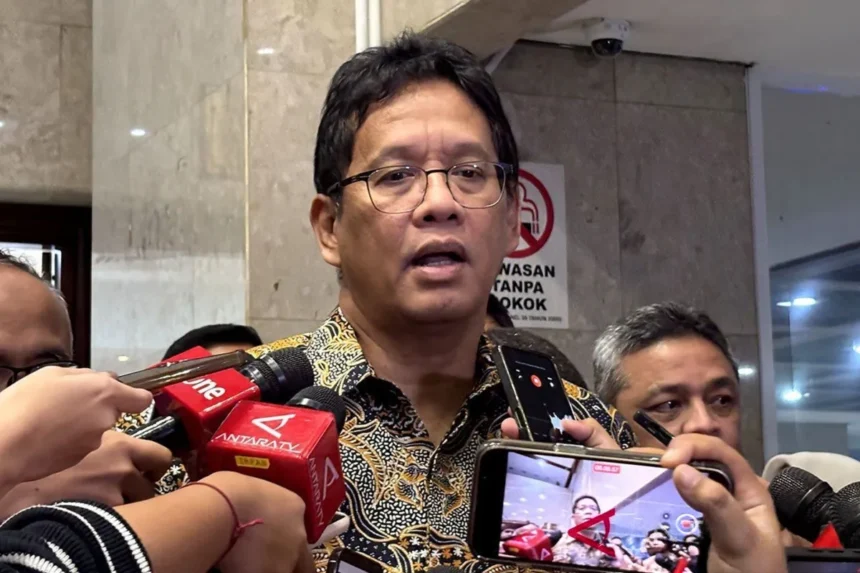
The strategy for post-disaster recovery relies heavily on a centralized coordination mechanism designed to verify the legitimacy of every rupiah spent on reconstruction and relief. During a high-level meeting with the House of Representatives and regional leaders Minister Purbaya reiterated that all state funds are being managed through a unified gateway.
This single-channel system via the National Disaster Mitigation Agency allows for rigorous auditing while maintaining the speed required for emergency responses in crisis situations. To date the government has already successfully disbursed two hundred and sixty-eight billion rupiah in emergency funds to three provinces and fifty-two regencies and cities that were affected.
Under the President’s specific directive each affected regency received four billion rupiah while each province was granted twenty billion rupiah to address immediate humanitarian needs. These initial payments served as a critical bridge before the larger-scale housing funds could be mobilized for long-term permanent housing projects and infrastructure rehabilitation.
The Finance Ministry is working in close tandem with cabinet members and regional heads to monitor the progress of these funds on the ground and ensure transparency. The focus on accelerated response is not just about the volume of money but the efficiency of the delivery system as the Palace expressed keen interest in the results.
Future Budgetary Allocations And Infrastructure Resilience Goals
Looking ahead the government remains committed to providing additional financial support as the recovery phase transitions from emergency relief to long-term sustainable development. The National Disaster Mitigation Agency recently submitted a request for an additional one point four trillion rupiah to bolster disaster response in Sumatra which is currently being processed.
With over one point fifty-one trillion rupiah still sitting in ready-to-use contingency accounts there is no shortage of liquidity to support the ongoing construction of permanent units. Minister Purbaya has urged all relevant administrative bodies to complete their paperwork immediately so that the funds can be released as soon as the documentation is finalized.
This push for administrative speed is matched by a desire to build back better ensuring that new housing units are more resilient to future environmental shocks. The availability of these significant housing funds provides a unique opportunity for regional planners to implement modern safety standards and better land-use policies in disaster-affected zones.
By investing in high-quality temporary and permanent housing now Indonesia is reducing the long-term economic burden of future disasters and fostering security among its northern populations. The commitment to full transparency and rapid disbursement serves as a model for how emerging economies can handle large-scale internal crises through prudent fiscal management.
Strategic Analysis Of Regional Fiscal Resilience And Reconstruction Dynamics
From a professional financial and analytical perspective the Indonesian government’s approach to disaster recovery funding demonstrates a sophisticated understanding of fiscal mobilization and risk mitigation. We observe that the use of a single-channel disbursement system is a critical move to minimize the agency costs and information asymmetry that typically arise in emergency public spending.
By utilizing the National Disaster Mitigation Agency as the sole intermediary the Finance Ministry can maintain a high degree of auditability while ensuring that housing funds are not diverted. The maintenance of a one point fifty-one trillion rupiah contingency fund also suggests a robust proactive budgeting strategy allowing the state to absorb shocks without reallocating essential funds.
This fiscal headroom is a positive indicator of sovereign credit stability as it shows the government can manage localized crises through existing reserves and liquidity. Furthermore the rapid injection of two hundred and sixty-eight billion rupiah into local economies helped prevent a secondary economic collapse in the affected regions during the height of the emergency.
Investors and international observers should view this as a sign of maturing institutional capacity in Indonesia where the transition from emergency aid to structured development is handled with rigor. The focus on Sumatra is particularly strategic as these northern provinces represent vital economic corridors for agricultural and energy exports that contribute significantly to the national gross domestic product.
However the long-term success will depend on the regional governments’ ability to execute these projects on schedule as any delay in construction will lead to increased carrying costs. Ultimately the proactive management of the capital structure reinforces the firm’s position as a regional leader in environmental solutions and provides a robust foundation for navigating the future demands.