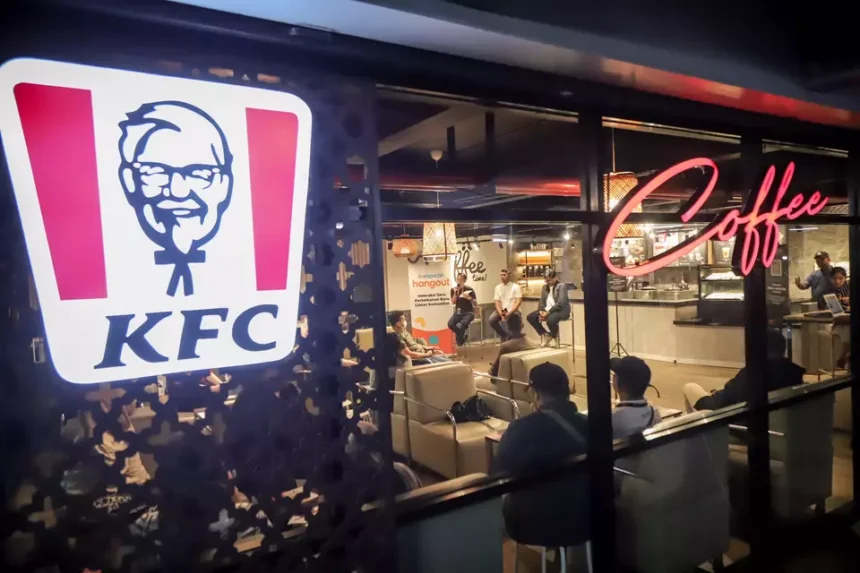
Operational Realignment and Strategic Consolidation for KFC Indonesia
The latest financial disclosures from PT Fast Food Indonesia reveal a significant operational shift as the official operator of KFC outlets across the archipelago decided to close 25 restaurant locations during the 2025 fiscal year. This strategic consolidation reduced the total number of active storefronts from 715 in the previous year to 690 by the end of December. Such a reduction in physical presence is often a calculated move by large scale food and beverage conglomerates to optimize their portfolio and focus resources on high performing urban centers while phasing out underperforming regional sites.
The company reported that this contraction was also mirrored in its total workforce numbers, which saw a decline from 13,106 employees in 2024 to 11,664 workers by the conclusion of 2025. This workforce reduction of over 1,400 positions reflects the broader challenges faced by the fast food industry as it navigates shifting consumer behaviors and rising operational costs in the local market. Despite the reduction in physical footprint, the brand remains a dominant force in the Indonesian casual dining sector, continuing to serve millions of customers through its streamlined network of outlets.
Management emphasized that these closures are part of a broader effort to ensure long term organizational health and agility in an increasingly competitive dining landscape. By focusing on efficiency and site optimization, the operator aims to create a more sustainable business model that can withstand fluctuations in raw material prices and labor market dynamics while maintaining the quality of service that customers expect from the famous fried chicken chain. This period of transition is a significant test of the sector’s agility and its capacity to adapt to a world where fiscal discipline is the only path to sustained prosperity.
Financial Recovery and Revenue Stability Amidst Store Closures
A deeper dive into the group’s financial performance shows that while the total number of outlets decreased, the overall fiscal health of the company showed signs of notable improvement throughout the year. The net loss reported by the operator for 2025 was recorded at 366 billion rupiah, which represents a significant 54% improvement compared to the much larger loss of 796.9 billion rupiah documented in the prior fiscal period. This reduction in losses suggests that the decision to streamline the KFC network and reduce overhead costs is beginning to yield positive results for the bottom line.
Interestingly, revenue remained remarkably stable despite the smaller number of operating locations, edging slightly higher to 4.88 trillion rupiah from 4.87 trillion rupiah in the previous year. This indicates a higher revenue per outlet ratio, suggesting that the remaining stores are performing more efficiently or capturing a larger share of local demand. The company’s total assets also saw a substantial increase, rising to 4.9 trillion rupiah from 3.5 trillion rupiah a year earlier, providing a stronger foundation for future growth initiatives.
However, total liabilities were recorded at 4.5 trillion rupiah, leaving equity at 435 billion rupiah at the end of the reporting cycle. Investors have responded to these mixed signals with caution, as seen in the recent stock market performance where shares closed 2.26% lower at 346 rupiah per share. The management team is now tasked with balancing this debt profile while continuing to drive operational efficiencies across its remaining restaurant portfolio to ensure that the path toward profitability remains consistent in the coming years.
Navigating Labor Dynamics and Market Competitiveness in 2026
The ongoing evolution of the labor force within the casual dining industry is a critical factor for the future success of the KFC brand as it adapts to new economic realities in Indonesia. The reduction of 1,442 jobs over the past year highlights a shift toward leaner operational structures and potentially higher integration of automated systems within the service delivery chain. Maintaining a high level of employee morale and service quality with a smaller workforce is a primary challenge for the management of PT Fast Food Indonesia as they enter the 2026 fiscal year.
Furthermore, the company must continue to innovate its menu offerings and marketing strategies to defend its market share against emerging local competitors and established international rivals. The stability in top line revenue suggests that customer loyalty remains strong, but the competitive pressure in the quick service restaurant segment requires constant adaptation. Ensuring that the remaining 690 KFC locations are equipped with the latest technology and trained staff is essential for improving the customer experience and driving repeat visits.
The broader economic context of Indonesia, characterized by a growing middle class and increasing urbanization, provides a fertile ground for growth if the company can successfully manage its liability levels and operational costs. Looking forward, the focus will likely shift toward digital transformation and enhancing delivery capabilities to meet the needs of a more tech-savvy consumer base. Success in these areas will be the ultimate determinant of whether the organization can return to a position of net profitability and provide sustainable returns to its shareholders.
Fast Food Consolidation and Indonesian Market Resilience
The operational downsizing observed at PT Fast Food Indonesia offers a significant insight into the structural recalibration currently taking place within the Indonesian B.I.F.E. landscape. We analyze that the closure of 25 outlets while simultaneously increasing total revenue serves as a classic indicator of high level portfolio optimization, where management prioritizes unit level profitability over sheer market volume. From a professional analytical perspective, the 54% reduction in net losses suggests that the firm is successfully moving through the trough of a post-pandemic recovery cycle, utilizing store closures as a strategic tool to excise capital-draining assets. We observe that the increase in total assets to 4.9 trillion rupiah, even amidst a loss-making year, likely reflects strategic reinvestments in digital infrastructure or the acquisition of more favorable long-term lease agreements in high-growth urban corridors.
Furthermore, the significant reduction in the workforce underscores a broader trend of labor rationalization within the ASEAN service sector, where firms are increasingly turning to technology to mitigate rising minimum wage pressures. We analyze that for KFC to maintain its dominant position, it must successfully transition from a footprint-heavy model to one defined by higher throughput and digital integration. Professional analysts suggest that the high liability-to-equity ratio remains a point of concern for institutional investors, as it limits the group’s ability to aggressively pursue capital-intensive expansion in the short term. We anticipate that as interest rates stabilize in 2026, the company will likely look to refinance its debt obligations to further improve its cash flow position.
The resilience of the brand’s revenue in a year of contraction demonstrates a robust consumer demand that, if paired with continued operational discipline, could lead to a full fiscal turnaround by 2027. Regionally, this trend highlights a pivot toward qualitative growth in the Indonesian F&B sector, where successful players are those capable of navigating the delicate balance between price sensitivity and rising raw material costs. We analyze that the integration of localized supply chains and a shift toward franchise-heavy models may offer the necessary flexibility to navigate future macroeconomic headwinds. Ultimately, the ability of large-scale franchisees to navigate the balance between debt management and consumer-facing innovation will be the primary driver of valuation for the regional hospitality and retail sectors as they compete for a share of the burgeoning middle-class wallet in Southeast Asia.