Strengthening Indonesia-Russia Industrial Ties for Economic Growth
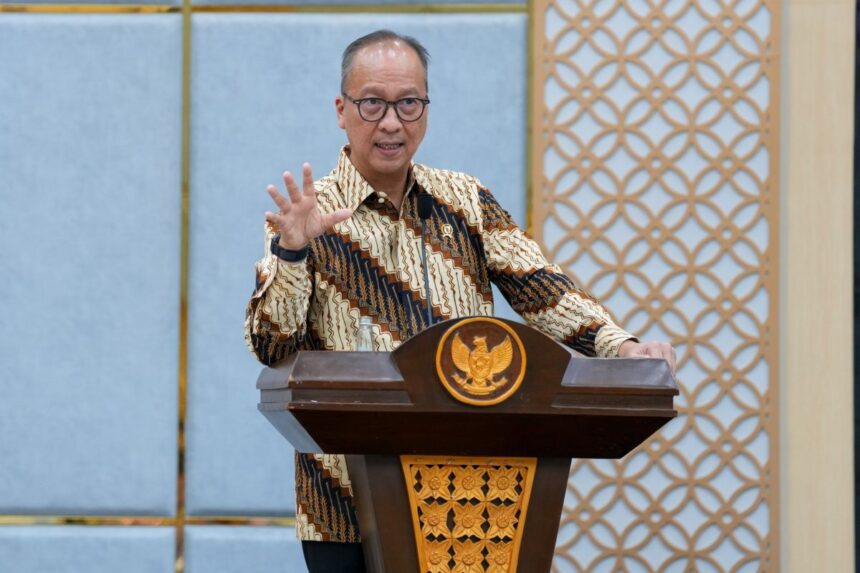
The Minister of Industry, Agus Gumiwang Kartasasmita, conveyed strong confidence in the further deepening of industrial ties between Indonesia and Russia.
This signals a new era of strategic economic cooperation.
This positive outlook was shared during a bilateral meeting and the opening of the Indonesia-Russia Business Matching event held in early December 2025.
The event underscores a commitment to bilateral trade and investment expansion.
The Minister highlighted that the relationship between the two nations has significantly moved toward a more substantive and comprehensive direction.
This shift is largely fueled by the high-level meeting between Indonesian President Prabowo Subianto and Russian President Vladimir Putin.
This crucial presidential meeting successfully strengthened bilateral coordination.
It effectively broadened the scope for strategic cooperation across multiple sectors, moving beyond traditional trade arrangements.
Economic data supports this positive narrative of deepening relations.
In 2024, the total non-oil and gas bilateral trade volume reached a robust US$3.9 billion, an impressive increase of 18.69 percent compared to 2020 figures.
The growth momentum continued strongly into 2025, with trade between Indonesia and Russia escalating further to US$4.04 billion by October.
Beyond trade, Russian investment in Indonesia has also demonstrated consistent and growing confidence.
Total investment stood at US$262.7 million in 2024, with another US$147.2 million invested by September 2025.
These compelling figures reflect a high degree of confidence from Russian industry players in both the stability of the Indonesian economy and the substantial potential for future industrial development.
Finalizing Cooperation Frameworks and Resolving Technical Hurdles
A significant focus of the current industrial ties and bilateral discussions is the finalization and implementation of key industrial cooperation documents.
These are essential for providing a clear, supportive framework for businesses in both countries.
Minister Kartasasmita explicitly mentioned the exploration of two important memoranda of understanding (MoUs).
One is dedicated to Cooperation in the Field of Shipbuilding, and another concerns Cooperation in the Field of Scientific Research on the Safe Use of Chrysotile Asbestos.
The latter MoU, which addresses scientific research on the safe handling and application of chrysotile asbestos.
It has already been signed by Minister Kartasasmita and his Russian counterpart, Minister of Industry and Trade Anton Alikhanov, during a visit to Moscow on December 8, 2025.
Indonesia eagerly anticipates the swift finalization of the shipbuilding MoU to complete the foundational framework necessary for collaboration.
This is especially important for both large industries and Small and Medium Enterprises (SMEs) in both countries.
Addressing technical obstacles remains a crucial element in strengthening the trade and investment relations.
This particularly involves tackling logistical costs exacerbated by the considerable geographical distance between Indonesia and Russia.
To facilitate this necessary dialogue, the Minister welcomed the successful convening of the 6th Working Group on Trade, Investment, and Industry.
This took place in March 2025, preceding the joint commission meeting in Jakarta in April 2025.
This Working Group served as a vital forum, resulting in several technical agreements that covered key industrial issues.
It focused on enhancing the halal supply chain integrity, trade facilitation, logistics efficiency, standardization, certification, agriculture cooperation, and the financial sector, all of which are critical to fortifying industrial ties.
Expanding Multilateral Scope and Free Trade Access
The future trajectory of industrial ties is set to be accelerated by expanding multilateral cooperation and securing crucial free trade agreements.
This moves beyond the immediate bilateral scope.
Indonesia is an emphatic supporter of the accelerated completion and signing of the Indonesia-Eurasian Economic Union Free Trade Agreement (IEAEU FTA).
This agreement is viewed as pivotal for Indonesian industry players.
The IEAEU FTA is expected to be a game-changer by significantly opening broader market access.
This is achieved through increased tariff competitiveness for Indonesian exports and the reduction of complex non-tariff barriers across the Eurasian region.
Minister Kartasasmita underscored the strategic importance of this agreement.
He expressed the hope that the FTA would be signed swiftly to serve as a vital instrument for strengthening supply chain resilience and expanding the penetration of Indonesia’s national industrial products across the vast Eurasian market.
In the multilateral sphere, Indonesia has firmly committed to supporting programs under the BRICS grouping.
This specifically involves lending its backing to the BRICS Center for Industrial Competences (BCIC).
This multilateral collaboration is strategically focused on developing several forward-looking industrial sectors.
These include industrial digitalization, advanced new mobility technologies, unmanned transportation systems, industrial human resource development, effective empowerment of SMEs, digital transformation processes, the application of artificial intelligence (AI) in manufacturing, and the burgeoning bioindustry sector.
This ensures that industrial ties are technologically relevant and future-proof.
The concerted effort across bilateral MoUs, the IEAEU FTA, and BRICS initiatives demonstrates Indonesia’s multi-pronged strategy to use economic diplomacy to secure deeper, more technologically advanced, and geographically diversified opportunities for its industrial sector.
Strategic Rationale and Geoeconomic Implications for ASEAN
The strengthening of industrial ties between Indonesia and Russia, particularly through the aggressive pursuit of the IEAEU FTA and engagement with the BRICS Center for Industrial Competences.
It holds significant geoeconomic implications that extend beyond the immediate bilateral benefit and reshape the regional ASEAN calculus.
From an investment perspective, the formalized shipbuilding MoU could strategically unlock Russian expertise and capital for Indonesia’s ambitious maritime industrial policy.
This specifically targets the expansion of ferry manufacturing, ship repair, and naval support capabilities—sectors where Indonesia traditionally seeks foreign technology transfer.
The key financial leverage lies in the IEAEU FTA.
Achieving preferential market access to the Eurasian Economic Union (EAEU) grants Indonesian manufacturers a critical competitive advantage over ASEAN peers like Malaysia and Thailand.
This applies to sectors like palm oil derivatives, textiles, and potentially processed natural resources, which currently lack similar comprehensive FTAs with the bloc.
This effectively diversifies Indonesia’s trade exposure away from reliance on China and the US/EU axes, offering a high-growth, albeit logistically challenging, alternative.
Furthermore, Indonesia’s commitment to the BRICS BCIC, focusing on industrial digitalization and AI, is a proactive strategy to leapfrog regional competitors in high-tech manufacturing integration.
By aligning with a technologically capable, non-Western bloc, Indonesia secures access to alternative funding and talent pools for its industrial transformation goals.
This mitigates geopolitical risk and positions itself as a leader in industrial technological adaptation within ASEAN.
This strategy solidifies Indonesia’s non-aligned stance in economic policy while strategically utilizing its large domestic market size to attract diverse investment flows, creating a complex, multi-vectored trade environment for its ASEAN neighbors to navigate.