Optimizing Logistics Compliance During the Peak 2026 Eid Return Flow
Indonesia’s Transportation Minister Dudy Purwagandhi has issued a critical appeal to all logistics companies to strictly adhere to the joint decree on freight vehicle restrictions during the 2026 Eid al-Fitr period. This regulatory measure is essential for managing the massive influx of travelers expected to populate the nation’s primary transit corridors. According to recent government projections, the peak of the return flow is anticipated to occur in several distinct waves, specifically on March 24, 25, and 27, 2026. The decree was developed as a collaborative effort involving the Ministry of Transportation, the National Police, and the Ministry of Public Works to regulate traffic and crossings during this high-intensity holiday window.
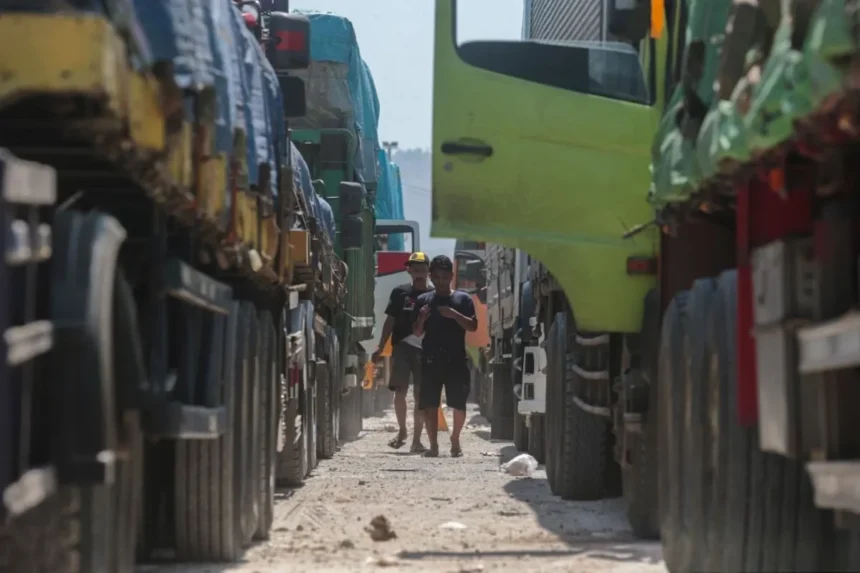
Under the current policy, freight vehicles with three or more axles are restricted from operating on major toll roads and national highways from March 13 to 29. Minister Dudy emphasized that compliance from logistics operators is not merely a legal requirement but a vital contribution to maintaining the overall traffic flow and ensuring the safety of millions of road users. By removing heavy vehicles from the equation during peak hours, the government hopes to minimize the risk of accidents and significant bottlenecks that often characterize major religious holidays. This step is a fundamental component of the state’s strategy to provide a seamless travel experience for the public as they conclude their holiday celebrations and return to their respective urban centers for work.
Strategic Planning for Millions of Travelers Amid Significant Infrastructure Pressure
The Ministry of Transportation has projected that an staggering 143.9 million people will participate in the tradition of traveling during the 2026 Eid al-Fitr holiday period, placing unprecedented pressure on the country’s transport infrastructure. To mitigate the potential for extreme congestion, the minister has urged travelers to plan their return trips with extreme care and to consciously avoid the forecasted peak travel periods whenever possible. Spreading out travel times across the designated return window is expected to significantly reduce the density of vehicles on the road, thereby improving the safety and comfort of the journey for everyone involved.
The government is actively encouraging the public to follow all traffic rules and the specific instructions provided by officers on the ground, while the Ministry continues to monitor and evaluate the movement of the return flow in real-time. This collective effort involves not only the government and the police but also the cooperation of the private sector, specifically the logistics companies that have been praised for their support in enforcing these temporary operational bans. Compliance with these rules reflects a shared responsibility to ensure that mobility remains safe, orderly, and smooth throughout the archipelago. The transition from the celebratory period back to regular economic activity requires a highly coordinated logistical ballet, where the absence of heavy freight during the most crowded days allows for a much more efficient movement of passenger vehicles and public transportation buses.
Long Term Implications of Transport Management on National Mobility Standards
The proactive management of the Eid holiday traffic serves as a benchmark for Indonesia’s evolving transportation policy and its ability to handle large-scale domestic migration events. Minister Dudy noted that the government’s commitment to evaluating and monitoring these flows provides valuable data that will inform future infrastructure developments and traffic management protocols. The successful implementation of freight restrictions demonstrates a growing maturity in the nation’s logistics sector, where companies recognize the long-term benefits of a safer and more predictable road network. As the government continues to refine its approach to holiday mobility, the emphasis remains on technology-driven monitoring and inter-agency collaboration to prevent the gridlock that has historically plagued the region.
Furthermore, the minister expressed deep appreciation for the National Police and other law enforcement agencies for their tireless work in maintaining order during this demanding period. For the millions of citizens returning home, the presence of clear regulations and dedicated officers provides a necessary sense of security and structure. Looking forward, the lessons learned from the 2026 return flow will likely lead to even more sophisticated travel advisories and a further integration of digital tools to help the public make informed decisions about their transit timing. The goal is to move toward a future where the annual holiday migration is characterized by efficiency and minimal disruption, ensuring that the spirit of the festive season is preserved through to the very end of the journey.
Logistics Decoupling and the Institutionalization of Seasonal Supply Chain Resilience
The 2026 Eid al-Fitr mobility strategy represents a critical inflection point in the Indonesian domestic logistics landscape, signaling a transition toward a high-density institutional coordination model. We analyze that the mandatory freight restrictions are not merely a temporary traffic measure but a structural effort to prioritize the efficiency of the national consumer economy during peak demand periods. From a professional financial perspective, the government’s ability to coordinate 143.9 million travelers indicates a significant upgrade in the nation’s operational resilience, which is a key metric for institutional investors assessing sovereign risk and infrastructure maturity. This suggests that the local market is currently entering a phase of institutional re-rating, where the ability to manage massive internal migration without systemic economic paralysis enhances the predictability of the retail and services sectors.
Furthermore, we project that the current regulatory focus on road safety and traffic flow will act as a localized catalyst for a re-valuation of the domestic logistics and supply chain technology sectors. For institutional investors, the successful execution of such a large-scale transport mandate provides a unique entry point into the Indonesian infrastructure narrative, as it proves the efficacy of the joint decree framework between the Ministry of Transportation and the National Police. We observe that the market is already beginning to price in a stability factor for companies that can adapt their inventory and distribution cycles around these predictable holiday restrictions. The ability to maintain orderly movement across the archipelago proves that the institutional framework of Indonesia’s transport governance has reached a level of sophistication that is highly attractive to long-term global funds focused on emerging market connectivity.
The long-term impact on the regional market will manifest as a structural stabilization of the domestic consumption cycle, as standardized holiday management protocols gain the institutional credibility required to reduce the friction cost associated with seasonal labor movements. This transition toward a more predictable development model reduces the concentration of operational risk for manufacturers and retailers alike. As corporate governance in the logistics sector is strengthened through the alignment of private operations with government-mandated safety windows, we expect a narrowing of the risk premium for assets related to Indonesian toll roads and transit-oriented developments. The proactive financial and operational stance observed in this 2026 return flow sets a new regional standard for how a developing economy can transform massive social events into localized institutional stability and long-term economic resilience.