Strategic Traffic Management At Merak Port During Holiday Peak
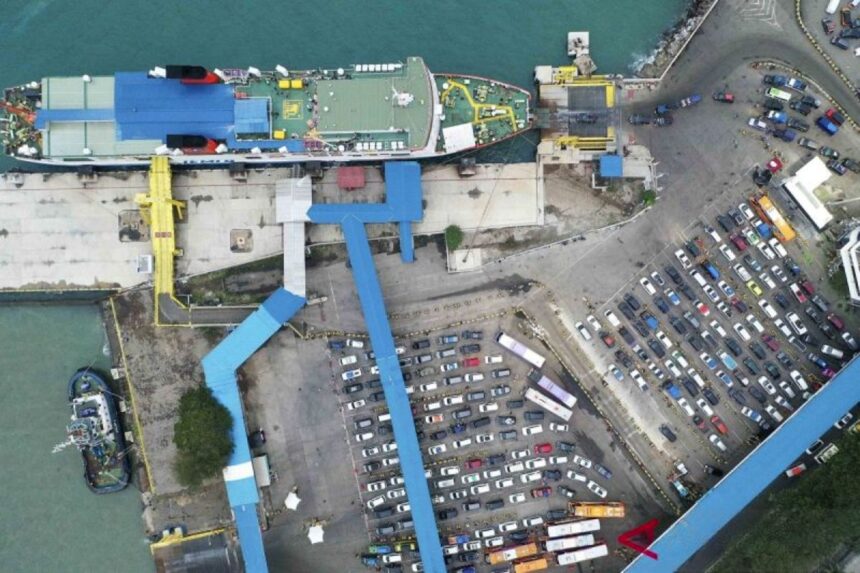
The Indonesian Ministry of Transportation has officially initiated comprehensive traffic management protocols at the Merak Port facility in Banten to mitigate severe congestion during the busy year end holiday season. Within the first sixty words of this operational update, it is confirmed that the Merak Port serves as the critical maritime gateway for millions of travelers crossing the Sunda Strait toward Bakauheni.
Director General of Land Transportation Aan Suhanan explained that the ministry is currently optimizing various delaying systems and dedicated buffer zones to handle the surge in vehicle volumes efficiently. This strategic intervention is essential to maintain the vital logistics link between the islands of Java and Sumatra while ensuring that passenger safety remains the highest priority for the state.
The operation involves a multi agency coordination effort between the National Police and the state owned ferry operator to synchronize land based screening with actual maritime departure schedules. Officials have observed that the increased traffic is not only composed of seasonal holiday travelers but also a significantly high volume of heavy logistics vehicles transporting essential goods.
To address the growing backlog, the government has mandated the deployment of larger capacity vessels across all available docks to maximize the throughput of cars and trucks during peak hours. The success of these measures depends heavily on the real time data sharing between port authorities and the meteorological services to adjust the flow of incoming traffic based on weather conditions.
By implementing these rigorous screening and delaying protocols, the administration seeks to prevent the surrounding road networks from becoming completely paralyzed by the massive influx of motorists.
Impact Of Adverse Weather On Maritime Docking Operations
The implementation of these traffic control measures became an urgent necessity as challenging environmental conditions in the Sunda Strait began to disrupt standard ferry docking procedures last Sunday. Strong winds and high waves have reached critical levels, triggering early warning notifications that necessitate the immediate activation of the secondary delaying systems for all vehicles at Merak Port.
When maritime safety is compromised by turbulence, the port authorities must prioritize the security of the vessels and their passengers over the speed of the boarding process for waiting queues. This precautionary approach is designed to prevent accidents during the delicate maneuvers required to secure large ferries to the piers under heavy sea conditions and unpredictable gusts.
Under the current safety protocols, the delaying system acts as a release valve that keeps the immediate harbor area clear while vehicles are held in designated zones further inland. PT ASDP has provided formal assurance to all passengers that their digital tickets will remain fully valid even if their scheduled departure is delayed by these mandatory safety interventions.
The integration of specialized vehicle screening helps identify priority logistics such as food and medical supplies that may need expedited passage once the weather conditions show signs of improvement. Travelers are being strongly advised to monitor the latest meteorological forecasts provided by the national agency to better plan their departure times and avoid the longest waiting periods.
Maintaining close coordination with local maritime stakeholders allows the ministry to provide accurate and timely updates to the public regarding the operational status of the crossing. This collaborative framework ensures that the complex logistics of the year end transition are managed with a high degree of technical precision and care for the welfare of the traveling public.
Professional Commentary On Regional Logistics And Economic Resilience
From a professional financial and infrastructure perspective, the operational efficiency of the Merak Port corridor is a significant indicator of the national economic resilience during peak demand cycles. The ability of the Ministry of Transportation to manage the dual pressure of seasonal tourism and heavy freight transport demonstrates the maturity of the Indonesian logistics and maritime framework.
By utilizing sophisticated delaying systems and buffer zones, the government effectively protects the domestic supply chain from the systemic risks associated with severe weather and infrastructure bottlenecks. Maintaining the flow of goods across the Sunda Strait is vital for the price stability of essential commodities in the provinces of Sumatra, which rely heavily on manufacturing inputs from Java.
Analysts observe that the deployment of higher capacity vessels represents a significant capital allocation intended to maximize the utilization of existing port assets during high volatility periods. The focus on maritime safety protocols serves to protect the long term reputation of the national ferry system as a reliable and secure mode of transportation for international and domestic commerce.
Furthermore, the transparency provided by the state owned operator regarding ticket validity helps maintain consumer confidence in the digital booking systems implemented in recent years. This integrated approach to transport management will likely serve as a benchmark for future infrastructure developments along the Trans Sumatra highway and other primary maritime corridors.
In the long run, the modernization of these transit hubs through better screening technology and weather responsive systems will significantly reduce the hidden costs of logistics and transportation. The strategic importance of this crossing cannot be overstated, as it remains the primary artery for the movement of people and wealth between the two most populated islands in the archipelago.
Analytical Commentary On Infrastructure Stress Testing And Intermodal Synergies
From an expert analytical perspective, the current operational strain at the Merak Port corridor serves as a real world stress test for Indonesia’s integrated intermodal transport network. The strategic deployment of the delaying system identifies a critical shift from reactive congestion management to a more sophisticated predictive logistics model that accounts for environmental externalities.
For market participants, the efficiency of this maritime bottleneck is a primary determinant of inventory carrying costs and supply chain reliability for the entire Sumatran industrial belt. The synchronized intervention by multiple state agencies effectively mitigates the risk of stagflationary pressure by ensuring that logistics disruptions do not lead to localized scarcity of consumer staples.
Furthermore, the use of large capacity vessels as a surge capacity measure highlights a tactical flexibility in capital asset utilization that optimizes the throughput per docking cycle. This approach directly supports the regional gross domestic product by maintaining the velocity of trade during high consumption periods despite the onset of adverse seasonal weather patterns.
We observe that the integration of digital ticketing and buffer zone screening significantly reduces the informal costs associated with traditional port congestion, such as fuel waste and driver fatigue. As the government continues to expand the Trans Sumatra toll road network, the pressure on these maritime nodes will only intensify, necessitating further investment in automated docking and berth management.
Ultimately, the success of the Merak Port strategy reinforces investor confidence in the sovereign ability to maintain critical infrastructure continuity under extreme peak load conditions. This coordinated response demonstrates a robust alignment between transportation policy and national economic security interests in a highly dynamic geographical context.