Strategic Implementation Of New Export Bans For Industrial Growth
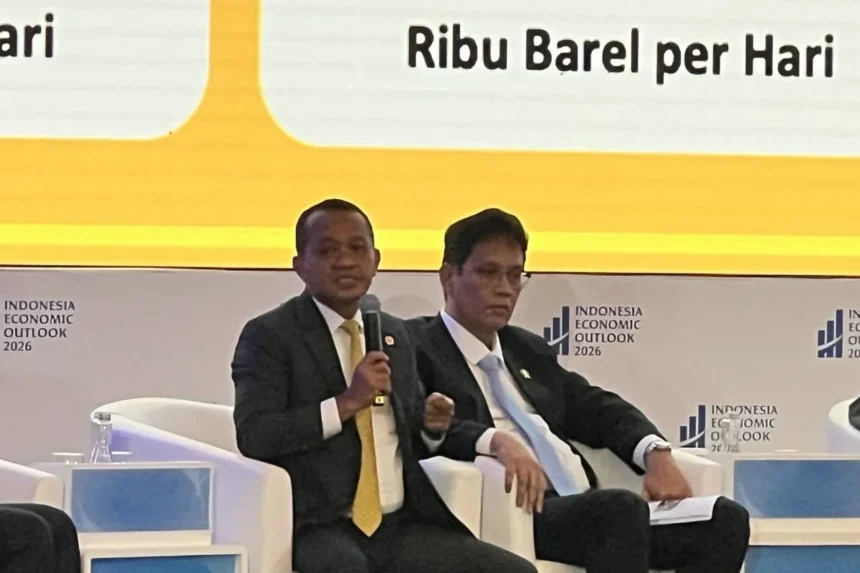
The Indonesian government is actively intensifying its resource nationalism strategy by exploring the implementation of further export bans across several critical mining sectors in 2026. During the Indonesia Economic Outlook forum held at Wisma Danantara, Energy and Mineral Resources Minister Bahlil Lahadalia confirmed that the administration is currently reviewing a list of several other commodities to be added to the existing prohibition list.
The primary objective behind these stringent export bans is to replicate the monumental success observed in the domestic nickel industry, where the transition from raw ore shipments to high-value processed exports has transformed the national trade balance. By restricting the outflow of unprocessed minerals, the government aims to force a paradigm shift that compels global investors to establish smelting and refining facilities directly within Indonesian borders.
This policy framework is designed to ensure that the nation no longer functions merely as a supplier of cheap raw materials but instead evolves into a sophisticated industrial hub that captures the maximum economic value of its geological wealth. The government expects these measures to drive substantial foreign direct investment into the manufacturing sector, thereby supporting long-term economic stability and currency strength through a more diversified and value-added export base.
Downstreaming Projects And Regional Economic Integration
To support the successful rollout of these export bans, the government has established a specialized Downstreaming Task Force charged with overseeing eighteen priority industrial projects valued at significant capital levels. These initiatives, managed by the state asset agency Danantara, focus on critical sectors such as coal gasification, aluminum smelting, and copper processing to ensure that domestic industries have the necessary infrastructure to handle increased internal supply.
The integration of these projects is essential for mitigating the short-term economic disruptions that often accompany a sudden halt in raw material shipments, such as localized unemployment or temporary revenue dips. By weaving the focus on domestic market obligations into the broader energy security strategy, the administration is creating a resilient ecosystem where local demand for processed chemicals and metals is met by homegrown production.
This shift is particularly vital as Indonesia moves toward reducing its reliance on imported liquefied petroleum gas and other refined products by converting low-calorie coal into dimethyl ether. The goal is to create a self-sustaining industrial loop that fosters long-term job creation and technological advancement across the various provinces of the archipelago, ensuring that the benefits of mineral wealth are distributed more equitably across the growing national economy.
Navigating Global Trade And Environmental Governance
As Indonesia continues to expand the scope of its export bans, it must carefully navigate the complex landscape of international trade regulations and environmental, social, and governance standards. The move to halt raw mineral exports has historically faced scrutiny from global trade organizations, yet the government remains steadfast in its commitment to utilizing its natural resources for the benefit of the domestic population.
Minister Bahlil emphasized that while the nation welcomes foreign investment, the era of unhindered raw material extraction is over, marking a new chapter of economic sovereignty. The focus is now shifting toward building green industrial parks and ensuring that new smelters adhere to modern ESG benchmarks, which is crucial for attracting high-quality capital from institutional investors who are increasingly sensitive to the environmental footprint of their portfolios.
By aligning its industrial ambitions with global sustainability trends, Indonesia is positioning itself as a key player in the transition to a low-carbon economy, particularly through the domestic production of electric vehicle battery components and renewable energy infrastructure. The success of this transition will depend on the government’s ability to maintain a stable regulatory environment while providing the necessary incentives for the private sector to participate in this ambitious and necessary national transformation.
In-Depth Analysis Of Local And Regional Market Impacts
The strategic expansion of Indonesia’s mineral export restrictions represents a fundamental recalibration of the Southeast Asian commodities market, shifting the regional balance of power from consumers to resource owners. From a professional financial analyst’s perspective, the decision to target specialized minerals for upcoming trade halts indicates that the government is moving beyond the primary success of nickel and bauxite to secure its grip on more complex supply chains.
This move is likely to create significant price volatility in global markets, particularly for industries reliant on Indonesian ores for electronics and specialized manufacturing, thereby increasing the intrinsic value of domestic processing licenses. We observe that the centralization of funding and management under the Danantara agency acts as a de-risking mechanism for large-scale projects, providing a layer of sovereign backing that could lower the cost of capital for international partners.
Furthermore, the regional impact within the ASEAN bloc is profound, as Indonesia’s downstreaming success could pressure neighboring resource-rich nations to adopt similar measures to safeguard their own industrial futures. The influx of investment into these eighteen priority projects will likely result in a temporary fiscal strain on the national budget due to infrastructure subsidies, but the long-term projection suggests a significant multiplier effect on the gross domestic product.
The transition toward producing dimethyl ether from coal is a particularly savvy move for national energy resilience, as it addresses the persistent current account deficit caused by fuel imports. We anticipate that as these projects reach the construction and operational phases throughout 2026, the demand for specialized labor will outpace local supply, potentially leading to a wage push in the industrial sector.
Ultimately, the success of this policy will be measured by its ability to maintain investor confidence during the transition from a mining-led economy to a manufacturing-led powerhouse, ensuring that the added value generated stays within the local economy to fund future social and infrastructure development. The maturation of the domestic smelting industry will likely lead to the emergence of local industrial champions capable of competing on a global scale, further cementing Indonesia’s role as an indispensable pillar of the global green energy supply chain.