Financial Performance Analysis Of Pacific International Lines In 2025
Pacific International Lines reported a 21.7% decrease in net profit reaching approximately US$1 billion for the 2025 fiscal year. This financial transition occurred within a market defined by fluctuating freight rates and complex global logistics challenges. Total revenue for the group settled at US$4.3 billion, representing a marginal 0.8% decline compared to the previous year. Despite these headwinds, the core container shipping segment demonstrated resilience by posting a 1.2% increase in revenue to reach US$3.8 billion.
This specific growth was anchored by a significant 17% year on year surge in shipping volumes, totaling roughly 2.6 million 20-foot-equivalent units. High vessel utilization rates across primary trade corridors allowed Pacific International to maintain a strong operational presence despite broader industry pressures. The company remains the 12th largest container shipping line globally, managing a diverse fleet of over 100 vessels. Earnings before interest and tax for the shipping division moderated to US$1 billion from US$1.3 billion in 2024, reflecting a shift in Ebit margins from 35% to 27%.
When compared to international peers such as Maersk, which saw a 4% margin, or HMM at 14%, the performance of Pacific International remains highly competitive. The company serves a wide geographic footprint including Asia, Africa, the Middle East, and Latin America. By catering to small and medium sized shippers with specialized cargo options like refrigerated and breakbulk services, the firm has carved out a unique market niche. This strategic focus on underserved regions and specialized logistics needs continues to provide a buffer against the volatility of major transpacific and trans-Atlantic trade lanes.
Strategic Operational Efficiency And Fleet Expansion Plans
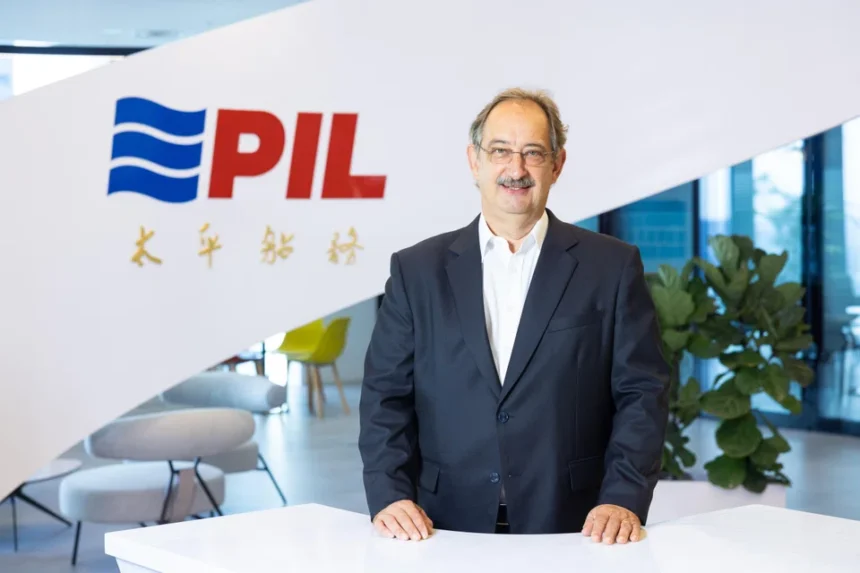
CEO Lars Kastrup attributed the 2025 performance of Pacific International to a combination of rigorous cost discipline and the flexible deployment of assets. One primary strategy involves upsizing ships to capture greater economies of scale, which significantly improves fuel efficiency and reduces per unit costs. The company has also prioritized direct port-to-port routing to minimize the additional handling and feeding charges typically associated with transhipping. This direct approach is not only cost effective but also aligns with customer preferences for faster and more reliable transit times.
Throughout 2025, the firm achieved total utilization, with every deployed ship being completely filled to capacity. Looking toward future growth, Pacific International is aggressively expanding its footprint in Southeast Asia and South Africa with new service offerings. The current order book includes 20 new vessels scheduled for delivery through 2028. These new builds will utilize liquefied natural gas dual-fuel technology, supporting the broader industry goal of decarbonization. Financing for these advanced ships will be sourced through a combination of internal capital reserves and strategic bank loans.
By integrating larger and more efficient tonnage into the fleet, the company ensures it can maintain competitiveness against larger global carriers. Smaller vessels from the current fleet will be cascaded into regional routes in Asia and Africa to optimize local network density. This systematic fleet renewal program is essential for long term sustainability, allowing the company to deliver better fuel economy while meeting increasingly strict environmental regulations. The focus remains on maintaining a modern fleet that can adapt to rapid shifts in global trade patterns.
Global Market Disruptions And The Impact Of Fuel Volatility
The global shipping landscape has been significantly impacted by geopolitical tensions and supply chain disruptions throughout early 2026. While Pacific International was not directly impacted by new US tariffs due to its lack of direct US port calls, it felt the indirect effects of capacity shifts. As other carriers diverted vessels from Asia-US lanes to the routes served by Pacific International, local supply temporarily increased. Furthermore, persistent threats in the Red Sea and military actions in the Gulf have removed approximately 20% of global capacity from active service.
These disruptions, including congestion at major hubs, have actually helped support freight rates by mitigating what would otherwise be a severe oversupply imbalance. Fuel costs have emerged as a dominant financial concern, now accounting for 50% of total operating expenses, up from 30% in previous quarters. Global fuel prices surged following the de facto closure of the Strait of Hormuz, which traditionally handles 20% of the world’s oil volume. Asia has been particularly hard hit due to its heavy reliance on Gulf energy imports.
Although the company does not engage in traditional hedging, it manages risk by purchasing 50% of its monthly fuel requirements in advance. Approximately 60% of refuelling activities for Pacific International take place in Singapore, the world’s largest marine bunkering hub. The company successfully implemented fuel surcharges in April and May to recover these increased costs from customers. While the industry faces an oversupply risk as new ships enter the market, the CEO maintains that ongoing investment in new tonnage is necessary for fuel economy.
Strategic Assessment Of South-South Trade Corridors
The financial results of Pacific International indicate a structural shift toward the South-South trade axis, moving away from traditional East-West dominance. The 27% Ebit margin achieved by the company is an anomaly in the current global shipping landscape, largely driven by its concentration in high barrier markets across Africa and Latin America. While Tier 1 carriers are suffering from overcapacity on transpacific lanes, the focus on Oceania and the Pacific Islands allows for a premium pricing strategy based on network exclusivity and specialized breakbulk handling. This regional specialization acts as a protective moat against the predatory pricing often seen in highly commoditized container routes.
The surge in fuel costs to 50% of operating expenses presents a significant risk to the regional economy, but it also accelerates the competitive advantage of Singapore based refuelling operations. We analyze that the 0.21% global emission targets and the 9.5% regional growth in green sectors will further polarize the market between carriers with modern LNG dual-fuel fleets and those with aging, less efficient tonnage. The 20 vessels on order are a strategic hedge against carbon pricing mechanisms that are likely to be introduced in major ASEAN ports by 2028. This capital expenditure is a prerequisite for maintaining regional market share as environmental compliance becomes a core financial metric.
Furthermore, the de facto closure of the Strait of Hormuz has transformed the ASEAN logistics corridor into a critical energy bottleneck, increasing the strategic importance of the Malacca Strait. Pacific International is well positioned to leverage its 41.7% stake in Singamas Container to capitalize on the rising demand for specialized storage as regional supply chains become increasingly fragmented. We conclude that the company is transitioning from a traditional carrier to a specialized logistics integrator for emerging markets. This evolution will likely drive a revaluation of the group’s assets as it moves to consolidate its presence in high growth regional clusters that are less sensitive to Western trade policy shifts.