Thailand’s Economy Faces Unexpected Downturn and Potential GDP Contraction
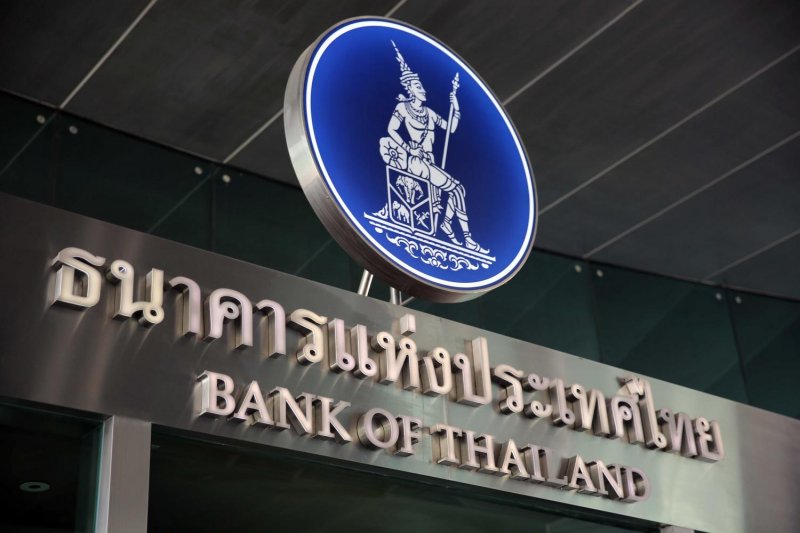
The Bank of Thailand (BoT) has recently issued a significant warning, alerting the tariff-impacted nation that its economy is currently suffering a much deeper-than-expected downturn.
This alarming assessment suggests the economy has likely posted its first quarterly GDP contraction since the final quarter of 2022, signaling a sharp reversal of recent growth trends.
The central bank underscored this precarious position by revising down its third-quarter output projection to minus 0.5% compared to the second quarter, as outlined in its latest forecasts published on Wednesday. This negative revision highlights a significant deceleration in national economic activity, placing immediate and considerable pressure on fiscal planning and monetary policy responses.
The BoT is now cautiously anticipating a modest recovery, projecting a slight 0.5% expansion for the period spanning October to December 2025.
This expectation is heavily buoyed by the planned introduction of domestic stimulus measures.
BoT senior director Pranee Sutthasri specifically detailed the root causes of the anticipated GDP contraction, attributing the poor performance to a confluence of detrimental factors.
These factors range from the adverse effect of temporary closures at key manufacturing plants across the country to the palpable and detrimental impact of escalating tariffs imposed by the United States government on various Thai exports.
Sutthasri offered a strategic note of guarded optimism, asserting that, “The economy will recover in the fourth quarter as plants reopen and the government’s stimulus measures boost consumption,” indicating that the recovery strategy relies heavily on the normalization of industrial activity coupled with internal demand-side policies to successfully reverse the current slump.
Tariffs and Baht Strength Amplify the Risk of Contraction
The recent confirmation of the potential for a GDP contraction confirmed by the central bank arrives just one day after Thai manufacturers had issued their own public, urgent warning.
Manufacturers expressed profound concern that they are being severely hit by a difficult and debilitating double-whammy of the aforementioned US tariffs and the negative competitive effect posed by a relatively strong national currency, the baht.
The strength of the currency makes Thai exports inherently more expensive and less competitive in crucial international markets.
The Thai economy’s recent struggles, characterized by the projected negative output and the combined negative pressure from US trade tariffs and the high baht, emphatically underline the nation’s pronounced vulnerability to sudden external demand shocks and the rising tide of global protectionism.
Manufacturers have voiced significant concerns that the convergence of these two challenging factors—increased trade barriers and a strong local currency—is systematically eroding their overall profitability and severely weakening their competitiveness in key international markets.
This dual pressure has unfortunately forced many firms to implement temporary production shutdowns or significantly slow down their active production lines. This scenario highlights a major, immediate challenge for the BoT and the government as they urgently seek to stabilize export performance and restore widespread investor confidence through a series of targeted, decisive fiscal and monetary measures.
The central bank’s declared reliance on targeted government stimulus to boost domestic consumption in the fourth quarter is a critical and essential component of its overall recovery strategy, aiming to successfully create internal economic momentum strong enough to effectively offset the deep and persistent weakness evident in the external sector, which has driven the GDP contraction risk.
Divergent Regional Outlooks and Navigating Global Trade Uncertainty
The clear risk of GDP contraction in Thailand presents a stark and noticeable contrast to the highly ambitious economic outlook of its immediate regional neighbor, Vietnam, underscoring significantly divergent regional strategies for effectively navigating the current era of global trade uncertainty.
The BoT’s downward revision and the clear concerns raised by Thai industry highlight the immediate necessity for effective policy responses that extend well beyond mere adjustments to the interest rate.
While the central bank forecasts a recovery driven by plants reopening and the government stimulus in the fourth quarter, the long-term sustainability hinges entirely on addressing the deep structural pressures facing its export sector, particularly the enduring impact of the tariffs and the currency’s strength.
The pressing need to mitigate the economic damage emanating from the US tariffs requires a multifaceted and adaptive approach from policymakers.
This approach could potentially include aggressively seeking new international trade partners, increasing focused investment in building stronger domestic value chains, and actively seeking diplomatic solutions to trade disputes, all while efficiently managing the complex monetary policy challenges posed by the persistent strength of the baht.
In sharp relief, Vietnam’s publicly stated bold 10% growth target is highly indicative of a government aiming to proactively leverage ongoing structural reforms and its continued attractiveness to Foreign Direct Investment (FDI) to overcome the current global turbulence and achieve rapid expansion. This comparative regional positioning clearly shows that while both nations are deeply exposed to the risks of global trade uncertainty, their strategic policy responses and expected growth trajectories have diverged significantly, with Thailand focusing heavily on immediate stabilization and Vietnam prioritizing accelerated, long-term expansion to cement its place in the rapidly shifting Asian manufacturing landscape despite the clear risk of GDP contraction in its neighbor.